





Is using a microwave really harmful?
 Author:
 Cooking in the microwave is very convenient because it is simple and incredibly fast. However, many people believe that by cooking food in the microwave, the food loses its quality, that microwaves produce harmful radiation and are therefore very dangerous. But what is the reality, should we be afraid of using microwaves? Does their use actually cause cancer and degrade the nutrients in food?
Theoretical window - what is a microwave?
Microwave ovens are kitchen appliances that convert electricity into electromagnetic waves otherwise known as microwaves. These waves can stimulate the molecules in food, causing them to spin around and the molecules in the food to rub against each other, which turns the energy into heat and heats the food as a result. This process can be likened to rubbing your hands together in the winter to warm them up. Microwaves primarily affect water molecules, but they can also heat fats and sugars, but certainly to a lesser extent than water.
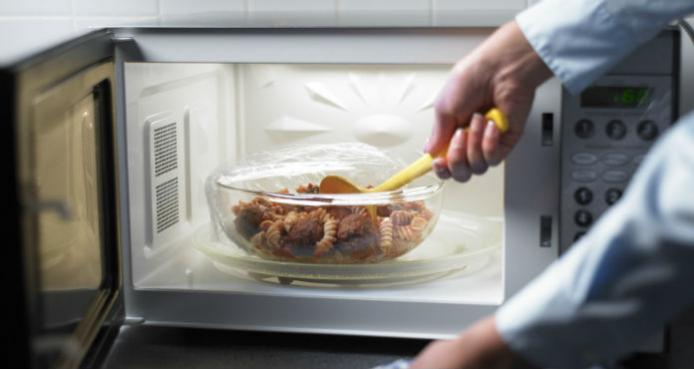
Are the radio waves produced by microwaves harmful?
Microwave ovens produce electromagnetic radiation. This can cause confusion around its harmfulness. However, this radiationis certainly not the type of radiation you think of in connection with atomic bombs and nuclear disasters. Microwave ovens produce non-ionising radiation that is similar to the radiation from your mobile phone - although actually much stronger. However, light is also electromagnetic radiation, so rest assured that not all electromagnetic radiation is harmful.
The design of the microwave ensures that microwaves, which are necessary for microwaves to 'work', can only be present under the conditions that the door is closed and the microwave is on. So if you think that if you open the microwave, radiation will escape straight away, that's nonsense. The leakage around the glass door and its permeability is limited by design to a level well below that recommended by international standards.
Microwave ovens have metal covers and metal shields that prevent radiation from emanating from the oven, so the risk of any radiation leakage should be virtually zero. However, to be on the safe side, do not get too close to a microwave oven that is switched on; the minimum safe distance is 30 cm. Radiation fades with increasing distance. Also, of course, it depends on the condition of your microwave - make sure the product has no defects, if it's old, broken or has a problem closing, you'd better consider a new one.
Does using a microwave have any negative impact on the quality of the food or its nutritional value?
Now we come to the key point. Absolutely every form of heat treatment degrades the nutrients in food to a greater or lesser extent, so the microwave is no exception. However, the impact on food quality when using microwaves is often over-dramatised. The main factors that contribute to nutrient degradation are:temperature, cooking time and cooking method. During cooking, water-soluble nutrients can leak out of the food, and the longer you cook it, the more nutrients it releases into the water. When it comes to microwave ovens, the cooking time is generally short and the temperature is relatively low, which is very beneficial for preserving the nutritional content.
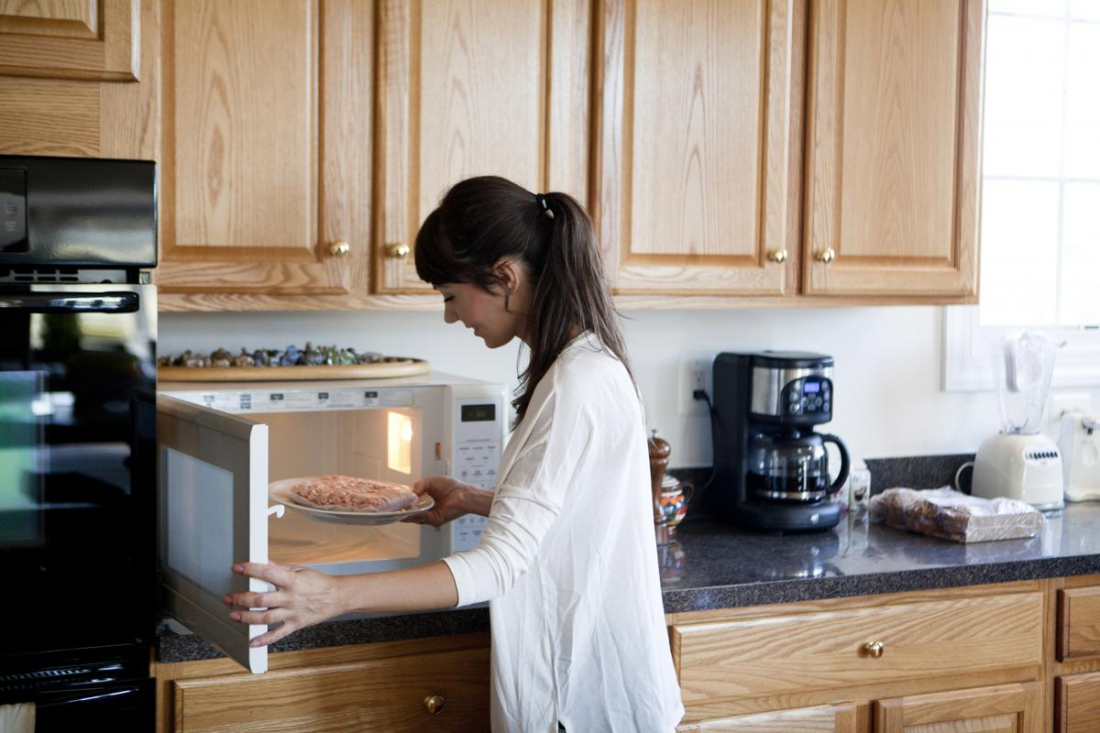
This statement would suggest that microwaving, on the other hand, is more gentle than other methods of cooking food and retains more nutrients than boiling or frying. Indeed, studies suggest that the use of microwave ovens does not reduce the value of food more than other types of heat treatment. And there are cases where microwaving even slightly increases the mineral content.
There are also studies that have concluded that microwaving is more friendly to the preservation of nutrients in food than cooking. However, you have to bear in mind that it always depends firstly on the type of food, and therefore the nutrients, and secondly on the cooking time. Not all foods behave the same way when cooked and heat up at the same rate. However, with a few minor exceptions, the microwave can be considered a good way to cook food, which tends to preserve the nutrients in it fairly well. Beware, for example, of eggs, which can explode and make quite a mess if handled carelessly.
The only time that microwaving food is 100% destructive to the nutrients in the food is when you heat it too long and too intensely, which will dry it out and degrade the nutrients, which is not the case with long cooking or baking. I'm sure you've overcooked meat so that it's dried out, and that's the case here. But the wool itself has no effect on the quality of the heated food.
Microwave energy does not penetrate well into thicker pieces of food and can cause uneven cooking. So if you're microwaving meat, for example (even though it's not exactly appetizing, what are we going to do...), make sure it's cooked sufficiently. Food cooked in the microwave is just as safe and has the same nutritional value as food cooked in a conventional oven. The main difference between the two cooking methods is that microwave energy penetrates deeper into the food and reduces the time it takes for heat to be distributed throughout the food, reducing the overall cooking time.
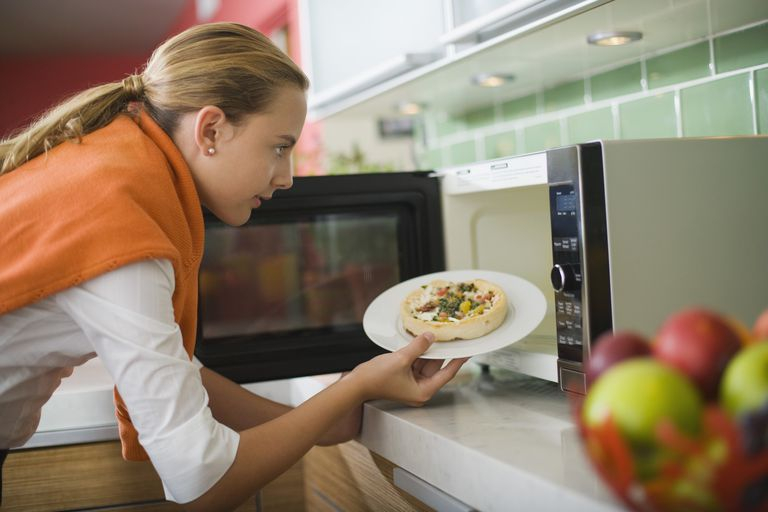
The microwave, a device shrouded in myth.
Claims that microwave irradiation and subsequent biochemical reactions produce some kind of by-products of substances in food that are explicitly dangerous are , based on real studies, just fairy tales with no real scientific basis. Similarly, for example, the claim that minerals are converted into dangerous free radicals when cooked in a microwave. Minerals are chemical elements and you can't just change their structure with heat alone. Microwaves really can't do anything like that. Microwaves can only heat food like other cookers do, just using a different physical principle. Food heated in a microwave can only transfer heat to a person, not much else. And no, if you take the food out of the microwave, it's not actually radioactive.
One of the advantages of a microwave oven is that it doesn't heat the food as much as other cooking methods, such as frying. Usually the temperature does not exceed
100 °C, which, as you know, is the boiling point of water. This prevents the food from drying out or breaking down, and the food retains its nutritional value much better. It is very important to cover the food while it is being heated, and the choice of cookware you use to heat the food in the microwave is also important. Beware, one peculiarity of microwave cooking is that in other types of cooking, the water and steam produced during heating evaporate freely. Because of the way microwaves are designed, there is a risk that if you heat it up too much, you may scald yourself when you take the food out with the liquid that settles on the walls of the microwave during heating.
Beware of plastic packaging?
You should avoid heating food in plastic packaging. Many plastics contain compounds that can release harmful substances into the food when heated. A notable example is bisphenol-A (BPA), which mimics the hormone oestrogen in the body and has a negative effect on hormonal stability in particular. If present in the body at high levels, it can lead to serious health problems. However, even here, research suggests that the amount of this adverse substance released by heating plastic is not as dramatic as some sources claim. However, we are certainly not saying that it is healthy to heat food in plastic boxes, but there are situations where it is simply not possible to do otherwise. If you reheat plastic containers over and over again, they release more and more chemicals, but these amounts are still in line with current safety guidelines, according to studies. If you want to avoid the release altogether, simply transfer the food to another container before you go to reheat it.
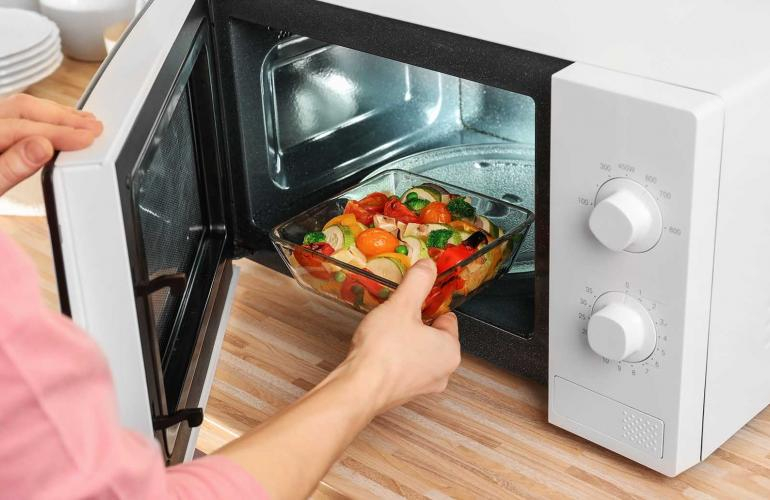
What can I take away from this article?
The microwave is a perfectly safe way to cook food and produces no radiation that should be of any concern to you. Cooking in the microwave certainly does not destroy nutrients any more than other methods of cooking, and there is even some research to the contrary. Make sure your microwave is in good condition, don't heat food for too long and avoid plastic packaging. The microwave is a great tool for anyone who needs to save time and is actually not nearly as harmful as you might read on the internet. There is no radiation released or excessive nutrient degradation when heating.
Recommended
Regel 80g 5+1
HMS Twist stepper s lanky S 3033

Czech Virus Kidney MAX

Nebbia Cyklistické šortky s vysokým pasem ELITE 467
Sources:
https://www.who.int/peh-emf/publications/facts/info_microwaves/en/
https://www.sciencefriday.com/articles/demystifying-the-microwave/
https://www.ncbi.nlm.nih.gov/pubmed/7047080
https://www.ncbi.nlm.nih.gov/pubmed/3894486
https://www.ncbi.nlm.nih.gov/pubmed/19397724
https://www.ncbi.nlm.nih.gov/pubmed/11238815
https://onlinelibrary.wiley.com/doi/abs/10.1002/jsfa.1585
https://www.ncbi.nlm.nih.gov/pubmed/18226065
https://www.ncbi.nlm.nih.gov/pubmed/17956155
https://www.ncbi.nlm.nih.gov/pubmed/23147575
https://www.health.harvard.edu/staying-healthy/microwave-cooking-and-nutrition
https://www.healthline.com/nutrition/microwave-ovens-and-health#harmful-compounds
No posts have been made yet.








