





Forget about salting the water... When are electrolytes a necessity and when are they just viral bull*hit?
 Author:
 You'll find plenty of guaranteed health advice on social media. One of the recent viral trends is the claim that plain, clean water just "flows" through your digestive system without being absorbed. The solution, according to these internet experts? You need to add a pinch of salt to every glass.
It may sound scientific, but if this has made you doubt plain water, you can rest easy. Here 's a look at how hydration really works, why plain water is plenty sufficient, and in what situations you should really reach for electrolytes.
Article content:
- Why your body doesn't need to salt every glass
- When do electrolytes really make sense?
- The magic of recovery: why drink sodium after a workout
- Don't look for science
Why your body doesn't need to salt every glass
The claim that without added salt or sugar, the body won't absorb water takes one small scientific fact and completely misrepresents it. Yes, glucose and sodium can slightly speed up the passage of water through the small intestine. But that doesn't mean at all that water won't get into the body without them.
- Passive osmosis: Roughly 90% of the water you drink is absorbed naturally in the small intestine - the water simply follows the substances your body is already digesting.
- Your body's own stores: Your intestines are not an empty reservoir. Your body expels about 8 litres of digestive juices into them every day, which are themselves very rich in sodium. Your digestive system therefore has plenty of "own" salt available to process the water without any problems.
- The "pee" myth: The argument that if you go to the toilet after drinking water, it means it hasn't been absorbed completely contradicts human anatomy. Urine is filtered by your kidneys from your blood. Therefore, in order for the water to get out of your body as urine, it had to be absorbed into your bloodstream first. Urination is evidence of successful hydration, not its failure.
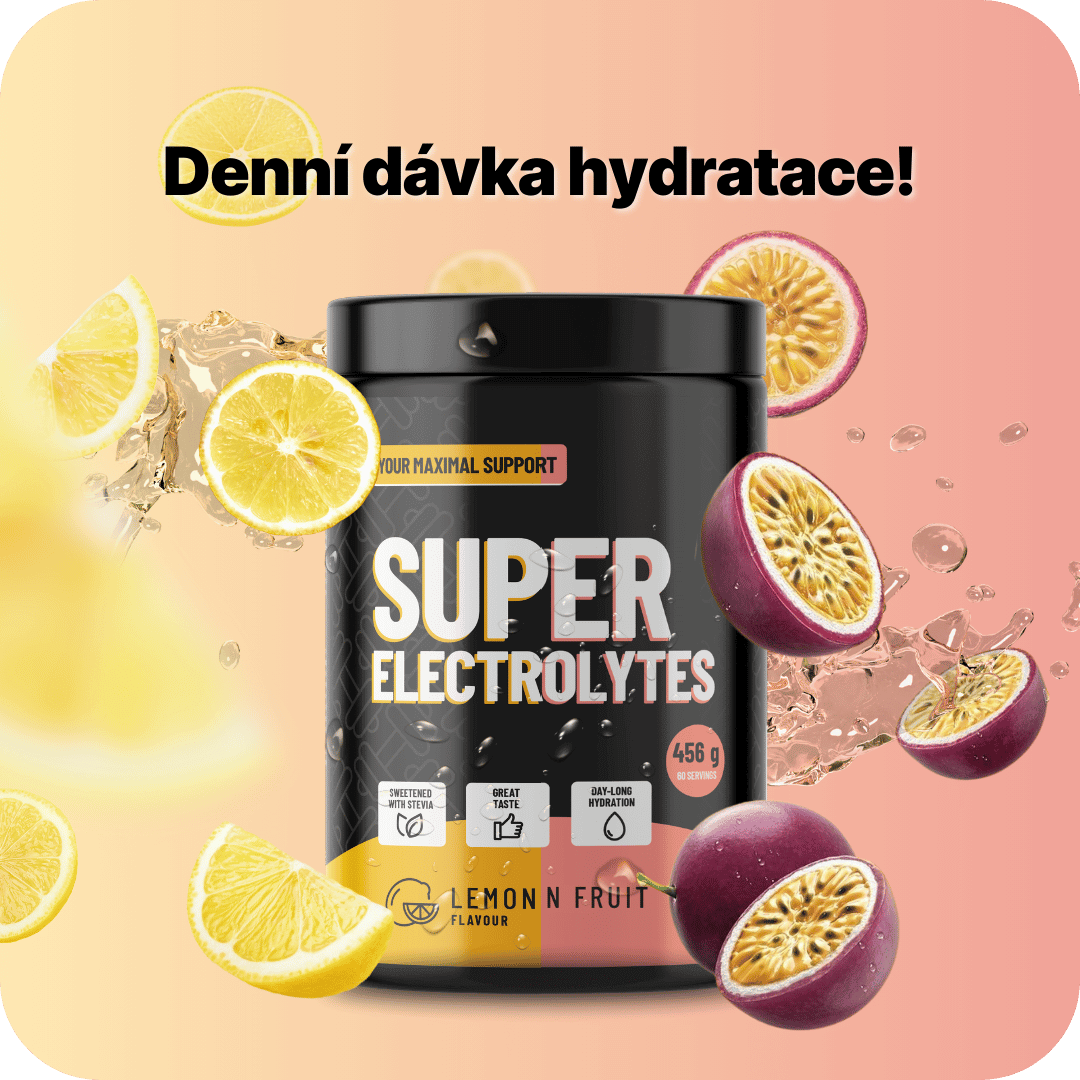
When do electrolytes really make sense?
Just because you don't have to salt your water in front of the computer or TV doesn't mean electrolytes are useless. They are absolutely essential - but only when you earn them through physical exercise.
You lose a surprising amount of sodium when you sweat. If you don't replenish these losses, you'll pay a toll on your performance and recovery. You should reach for electrolytes in the following cases:
- Long training: when physical activity lasts longer than 60 to 90 minutes.
- High heat: If you play sports during the summer months and your shirt is literally dripping.
- Fluid loss: Once you sweat out more than 2% of your body weight, your performance demonstrably decreases. Your blood thickens, your heart has to work much harder, it's harder to dissipate heat, and the same pace suddenly seems much harder.
The magic of recovery: why drink sodium after a workout
If you only drink a liter of pure water after a hard and sweaty workout, one unpleasant thing happens: you dilute your blood. Your kidneys evaluate this as "watch out, there's too much water in your body" and give the command to excrete it quickly. So you expel much of what you just drank before your body has a chance to return to normal.
Sodium in this case acts as a signal. It's telling your body
"Hold this fluid, we need it."
That's why a sodium-containing drink will rehydrate you more effectively and completely than plain water after heavy sweat loss.
Don't look for science in this.
Unless you're sitting sweating on a bench after a two-hour trail run or a hard leg workout in a stifling gym, you don't need sports drinks and salt in your water. Solve common thirst during the day with plain water. It's cheap, healthy and works perfectly. But if you give it your all in your workout and your shirt is drying into white salt maps, that's when it's time for quality electrolytes. Your body will thank you for them.
Recommended
No posts have been made yet.








