Experience with MCT oil
 Author:
 MCT oil has become one of the most discussed dietary supplements in the world of fitness and bodybuilding in recent years. But what do we really know about its effects based on scientific studies? In this article, we'll take a look at real-life experiences with MCT oil and explore what current science has to say about it.
Article Content:
- What is MCT oil and how does it work
- Effects of MCT oil on metabolism
- MCT oil and body composition
- Athletes' experiences with MCT oil
- Neuroprotective effects of MCT oil
- Safety and side effects
- Practical uses of MCT oil
What is MCT oil and how does it work
Definition and basic properties of MCT
MCTs (Medium Chain Triglycerides) or medium chain triacylglycerols are a specific type of fats that are characterized by rapid absorption and metabolism. Unlike long-chain fats, MCTs are rapidly absorbed directly into the portal circulation and transported to the liver where they are immediately metabolized into energy¹.
Types of MCT acids and their effectiveness
The most commonly used MCTs contain acids with 8-12 carbon atoms (C8-C12), with caprylic (C8) and capric (C10) acids being the most effective.

Effects of MCT oil on metabolism
Effect on energy expenditure
A study published in the American Journal of Clinical Nutrition showed that a diet rich in MCTs resulted in significantly higher energy expenditure compared to a diet containing long-chain fats². Specifically, the results showed a 5-10% increase in energy expenditure over 24 hours and significantly increased oxidation of fats as a primary energy source.
The thermogenic effect of MCTs
This effect is due to the thermogenic effect of MCTs, where their metabolism requires more energy than the processing of normal fats. For bodybuilders, this means a potential boost in body fat reduction.
MCT oil and body composition
Research conducted on overweight men showed that consumption of MCT oil led to greater loss of fatty tissue in the upper body compared to the control group³. Key findings pointed to a greater loss of adipose tissue specifically in the trunk area, which is especially important for bodybuilders when working on definition.
However, it is important to stress that MCT oil is not a miracle weight loss solution. The effects are mild and are best when combined with an appropriate diet and regular exercise.

Athletes' experiences with MCT oil
Performance during endurance exercise
Many endurance athletes and bodybuilders report positive experiences with MCT oil. Scientific studies support these subjective feelings - MCT can actually improve performance during endurance exercise⁴. The mechanism of action lies in the rapid availability of energy to the muscles and significant sparing of glycogen stores.
Use during definition
Bodybuilders often use MCT oil during definition when they want to maintain energy with lower carbohydrate intake. The rapid conversion of MCTs to ketones provides the brain and muscles with an alternative fuel source.
Neuroprotective effects of MCT oil
In vitro studies have shown that MCT oil has antioxidant properties and can inhibit cholinesterase, an enzyme associated with the development of neurodegenerative diseases⁵. Observed effects include significant antioxidant activity that helps protect neurons from free radical damage.

Safety and side effects
Possible side effects
Although MCT oil is generally considered safe, some people may experience gastrointestinal upset, including diarrhea and cramping, which usually subsides as the dose is gradually increased. Systematic reviews show that MCT oil does not have a significant effect on cholesterol, but may cause a slight increase in triglyceride levels¹.
Contraindications
Contraindications include liver disease, fat digestion disorders and allergies to coconut or palm oil. People with existing lipid metabolism disorders should consult a physician for use.
Practical uses of MCT oil
Recommended dosage
A gradual increase in the dose of MCT oil is recommended. Start with one teaspoon (5 ml) per day and gradually increase to 1-2 tablespoons (15-30 ml) per day, divided throughout the day for better tolerance.
Tips for optimal use
Practical tips include adding MCT oil to your morning coffee or smoothie. Many athletes use MCT oil before training for immediate energy availability, while on low-carbohydrate diets it is combined with ketogenic eating for maximum effect.
Conclusion.
MCT oil is an interesting dietary supplement with scientifically supported effects on energy metabolism. The strongest evidence supports its use for increasing energy expenditure by 5-10% and promoting fat oxidation during exercise.
However, it is important to have realistic expectations - MCT oil is not a miracle solution for rapid weight loss or dramatic performance improvement. Its effects are mild but consistent, and it works best as part of a comprehensive approach to nutrition and training.
For bodybuilders and fitness enthusiasts, MCT oil can be a useful tool, especially during definition or low-carbohydrate diets. The key to success is to gradually increase the dose, monitor individual tolerance and combine with a balanced diet and regular exercise.
Recommended
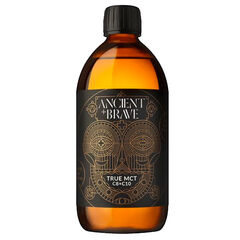
Ancient Brave True MCT
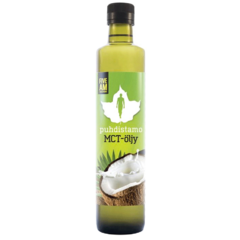
Puhdistamo MCT Oil
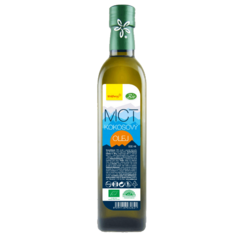
Wolfberry Kokosový olej MCT BIO
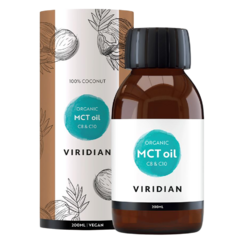
Viridian MCT Oil Organic
Sources:
- ¹ Mumme, K., & Stonehouse, W. (2015). Effects of medium-chain triglycerides on weight loss and body composition: a meta-analysis of randomized controlled trials. Journal of the Academy of Nutrition and Dietetics, 115(2), 249-263.
- ² St-Onge, M. P., & Jones, P. J. (2003). Greater rise in fat oxidation with medium-chain triglyceride consumption relative to long-chain triglyceride is associated with lower initial body weight and greater loss of subcutaneous adipose tissue. International Journal of Obesity, 27(12), 1565-1571.
- ³ Clegg, M. E. (2017). They say coconut oil can aid weight loss, but can it really? European Journal of Nutrition, 56(4), 1427-1438.
- ⁴ Nosaka, N., Suzuki, Y., Nagatoishi, A., Kasai, M., Wu, J., & Taguchi, M. (2009). Effect of ingestion of medium-chain triacylglycerols on moderate- and high-intensity exercise in recreational athletes. Journal of Nutritional Science and Vitaminology, 55(2), 120-125.
- ⁵ Ashraf, G. M., Greig, N. H., Khan, T. A., Hassan, I., Tabrez, S., Shakil, S., ... & Kamal, M. A. (2014). protein misfolding and aggregation in Alzheimer's disease and type 2 diabetes mellitus. CNS & Neurological Disorders-Drug Targets, 13(7), 1280-1293.
- ⁶ Rial, S. A., Karelis, A. D., Bergeron, K. F., & Mounier, C. (2016). Gut microbiota and metabolic health: the potential beneficial effects of a medium chain triglyceride diet in obese patients. Nutrients, 8(5), 281.
No posts have been made yet.