





Digestive enzymes | What are they good for and where to get them?
 Author:
 Every movement we make requires a certain amount of energy, which we get from food. However, the process by which the energy required for our daily functioning is directly obtained from food is quite complex. And in any case, it would not do without digestive enzymes. So what are they? What kinds are there and where do we get them from? And what are they actually good for? We will tell you all this in our article today.
Article content:
- What are digestive enzymes?
- What are the sources of digestive enzymes?
- Do digestive enzymes have any disadvantages? Are they safe?
- Are they worth supplementing?
What are digestive enzymes?
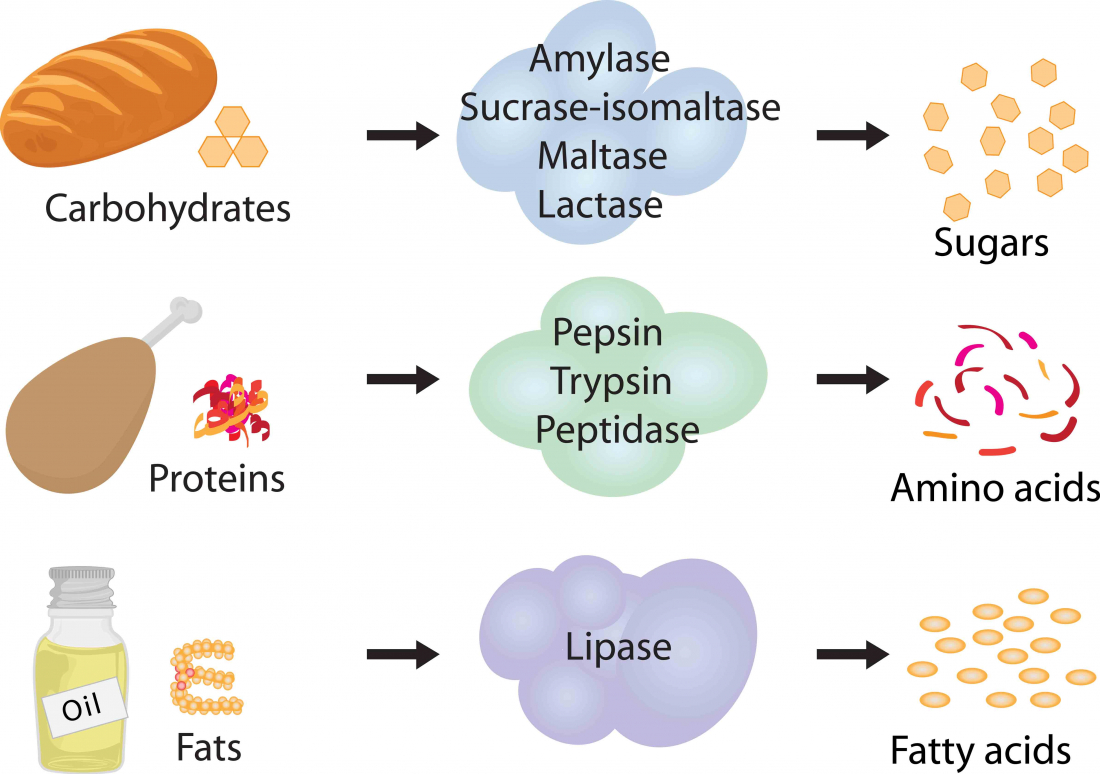
We refer to enzymes as protein molecules that have the ability to influence the rate of chemical reactions that take place in our bodies. Digestive enzymes are a specific subset that are responsible for breaking down complex molecules into simpler building blocks that are then well absorbed by the body. Modern science recognizes thousands of different enzymes, but most digestive enzymes can be classified into one of these categories, according to professional websites:
- Proteases - for protein digestion - are often added to various supplements and some studies suggest a possible effect on reducing muscle soreness after training.
- Lipases - for fat digestion
- Nucleases - for the breakdown of nucleic acids (DNA and RNA)
- Saccharases, amylases, maltases, etc. - for digesting carbohydrates
The digestive enzymes themselves are then produced in several places in the body. The pancreas (pancreas), stomach and small intestine are the other producers of these substances. It is not true that all enzymes are produced in all of these organs. The metabolism of proteins, carbohydrates and fats is slightly different and therefore different enzymes produced in other parts of the body act on them. This is better illustrated in the following figure:
What are the sources of digestive enzymes?
Digestive enzymes are naturally occurring in a wide range of foods, making them easier to digest. The most famous example is pineapple, which contains an enzyme called bromelain. Since it has been shown to help with protein digestion, it is popularly added to pizza, for example. But there are other foods to mention, especially:
- Kefir - It is often mentioned, especially in connection with various probiotics that are beneficial for the intestinal microflora. However, since it is a fermented product and the word enzyme itself refers to the Greek word for fermentation, there are also substances that promote digestion, especially lactase.
- Honey - Unlike white sugar, which is very poor in antioxidants or other potentially health-promoting substances, honey is literally loaded with positive substances. It has been shown to contain, among other things, enzymes that help with digestion. However, you need to buy honey that has not undergone any heat treatment, as this would negatively affect the activity of the enzymes.
- Fruit - It more or less doesn't matter what fruit you choose, as most of them contain some amount of digestive enzymes. Avocado, banana, papaya, kiwi or the aforementioned pineapple are particularly rich in them.
- Fermented products - Fermented products also have their reasons. For example, sauerkraut or Korean kimchi are great choices. It is the one that research suggests may have a cholesterol-lowering effect even in healthy individuals.
- Ginger - While ginger has a variety of benefits, current evidence suggests that it may also speed up the digestion of food. Zingibaine, a digestive enzyme found in it, is believed to be responsible for this.
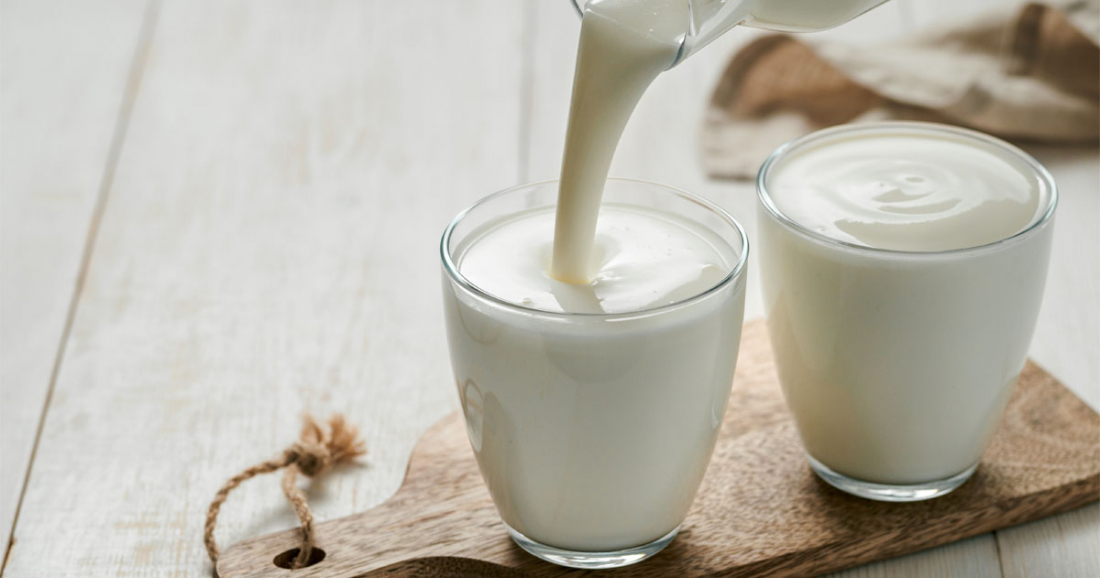
Drinking kefir regularly is very important for a healthy gut flora. In addition, it will help with digestion.
Do digestive enzymes have any disadvantages? Are they safe?
Digestive enzymes are, of course, quite common substances that are perfectly safe in small amounts and have no disadvantages. If you take them from your normal diet, you certainly don't need to limit yourself in any way. But there is no specific recommended daily dose, and the truth is that the amount of digestive enzymes your body uses is quite individual (depending, among other things, on portion sizes or meal frequency).
Although digestive enzymes do help with digestion, once you take in too much, it can paradoxically manifest itself in abdominal discomfort, constipation or, conversely, diarrhea, nausea and abdominal cramps. Other negative effects are more related to possible interactions with certain drugs and include, for example, headaches or allergic reactions.
Recommended

Is it worth supplementing?
Do you have any digestive problems? If not, you definitely don't need to take digestive enzymes as a precaution. But if you do have digestive problems and you are sure it's not related to a specific food group (typically lactose or gluten), you can reach for them. However, if you are taking any other medications, it certainly doesn't hurt to check with your doctor to see if these digestive supplements are right for you. If he or she sees fit, he or she may even prescribe stronger versions of digestive enzymes than you can get over the counter.
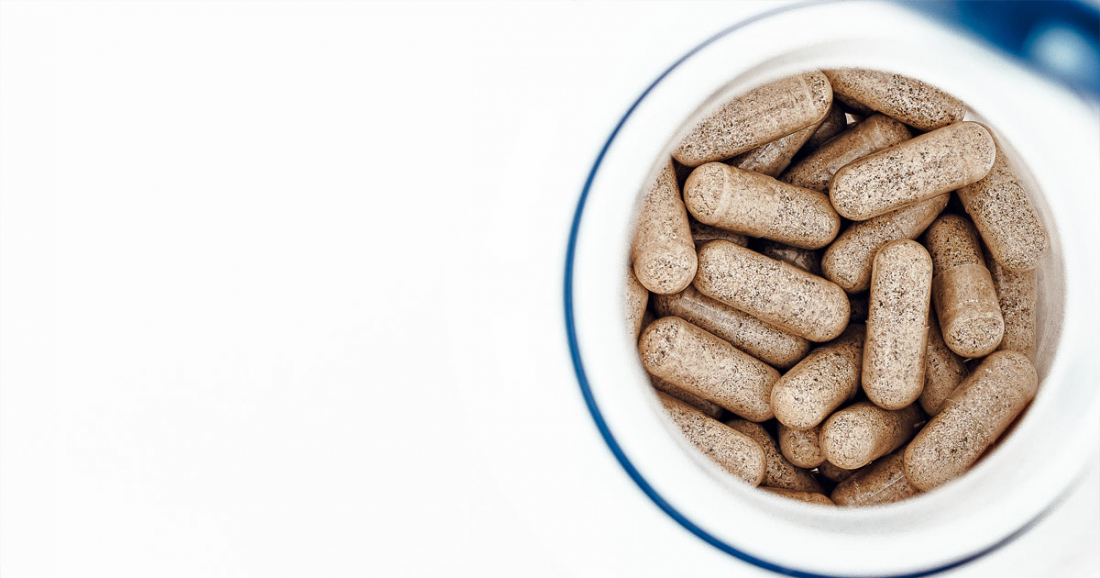
Digestive enzymes are most commonly available in the form of conventional capsules. But if you have more serious problems, your doctor may prescribe stronger versions.
How and when to take digestive enzymes?
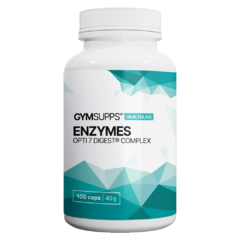
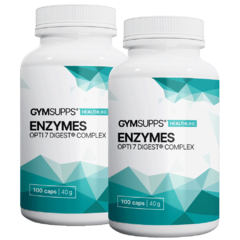
Once you've decided to take digestive enzymes, all you have to do is choose a specific supplement and take it correctly. In our experience, a great choice is GymSupps Enzymes Opti7 Digest® Complex. But whatever you decide, always take the supplement exactly as recommended on the label. Otherwise, you may overdose on digestive enzymes and their effect will be significantly counterproductive. In terms of timing, enzymes should be taken before meals, when they will mimic the function of the enzymes naturally present in food and help optimise digestion.

What to take away from today's article?
The main thing you should take away from today's article is that digestive enzymes are an extremely important part of everyone's diet, as they allow the breakdown of complex structures into more usable molecules. They are found in a wide variety of foods, but especially in fermented dairy products, fermented foods and fruits such as pineapple, avocado, papaya, kiwi and ginger. Supplementing with supplements is no longer necessary unless you have specific problems. When you do have them, it is anyway better to find out before taking digestive enzymes whether you are taking any medications with which they might interact negatively. If there is nothing preventing you from supplementing, they can indeed help with digestion if the recommended dosage is followed, and without side effects.
No posts have been made yet.








