





Diet during injury (calories, macronutrients)
 Author:
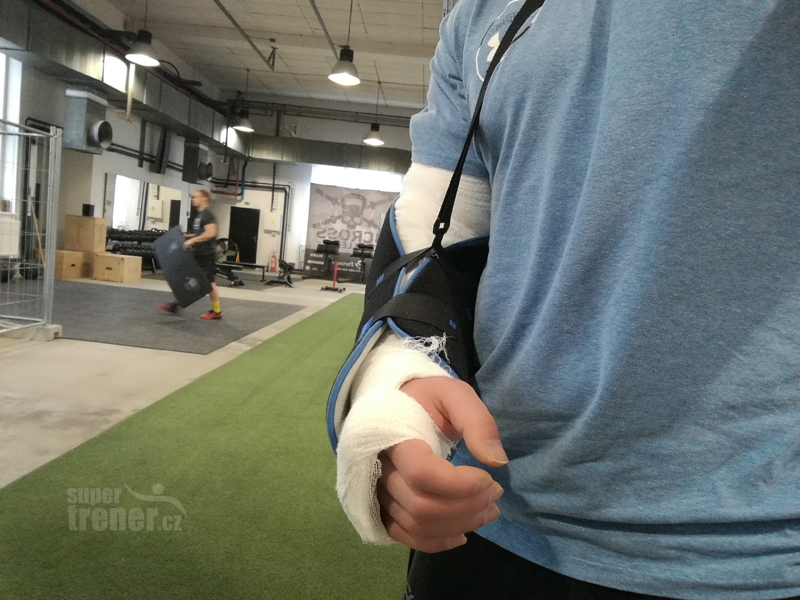
 As you know, I'm currently treating a torn triceps. The doctors hopefully did a good job (remains to be seen), anchored the triceps and now I'm going to have to get treatment. For that I thank them from the bottom of my heart. Fortunately, in the hospital in České Budějovice we have qualified specialists who know what they are doing and use the latest methods to fix the torn muscles. Although I did not avoid remarks right in the operating room, when one is stressed before the procedure itself, like "everything is due to exercise, typical bodybuilder's injury, overloading the muscles, etc." and lecturing like a teenage boy in a tone that I found quite unprofessional. After the surgery, I could understand, but right before the actual surgery, that seemed unfortunate to say the least, plus the injury happened outside of the gym, from a fall on the ice while playing hockey.
On the other hand, the next morning after the surgery, I had a great attitude, where the doctor personally came to me and explained in detail how the surgery went and how they fixed the triceps, including the elbow. I must also praise the nurses who were really perfect!
The procedure took two hours and I was home the next day. I was discharged with the information that three weeks of fixation with a cast, then three weeks of bracing and then rehab. Full load with no restrictions in six months. Well, the outlook's not great. I was also given painkillers and advised to rest. But what's next? What about diet? What supplements or things that can help speed up recovery? Any recommendations? Nothing.
Maybe it's because your doctor can't remember a lot of things or doesn't give as much weight to other things, but whatever the reason, it's a shame because nutrition plays an important role during injury healing. From boosting immunity, to improving collagen deposition, and thus faster return of muscle function, proper nutrition can play a significant role.
 CALORIE REQUIREMENT DURING INJURY
It's no surprise that energy needs increase due to athletic activity, as we simply need more calories due to the effort involved in any sport. As a result, some athletes who intentionally want to lose body weight or unintentionally (through dietary ignorance) may be low on calories and nutrients in general. This can lead to an increased incidence of stress fractures, ligament and tendon injuries, etc.
So on the one hand, too few calories can cause injury when we are healthy and on the other hand, too few calories during recovery from injury can prevent us from healing the injury as soon as possible.
During an acute injury, energy needs increase. In fact, BMR (the amount of energy expended at rest) can increase by 15-50% based on the severity of the trauma. For example, sports injuries and minor surgery can increase BMR by 15-20%, while major surgery and burns can lead to a 50% increase in BMR. Thus, an increase in energy expenditure must be taken into account when recovering from injury.
Of course, an athlete will require fewer calories during treatment when not training than when training. But due to the injury, he cannot take in a small amount of calories as if he were healthy and yet not training.
For example, if your basal metabolic rate is around 1600 kcal/day, your energy needs are as follows:
Healthy without activity: 1600x 1.2 = 1920 kcal/day
during injury recovery: 1600x 1.2 = 1920 + 20% = 2304 kcal/day
As you can see, if energy intake was reduced due to the injury and therefore the period without training and not increased due to the injury by 20%, the body would lack 384 kcal/day to recover, leading to malnutrition, increased muscle loss and impaired healing.
MACRONUTRIENT REQUIREMENTS DURING INJURY
All macronutrients will play an important role, i.e. protein, carbohydrates as well as fats, which we will now discuss a little.
A diet high in trans fats, omega 6 rich vegetable oils and saturated fats will be pro-inflammatory, while a diet high in monounsaturated fats and omega 3 will be anti-inflammatory. Yes, most of you should already know that the ratio of omega 6 to omega 3 in the diet helps us maintain a balanced inflammatory profile, but this lesson needs to be repeated specifically when treating injuries. So, pigging out is not an option because with a good balance of saturated, monounsaturated and polyunsaturated fats (around 1/3 of total caloric intake), the body's control of inflammation will be just right, especially during the period of injury when we need it most.
To that end, the following simple strategy should be the right way to go in healing injuries and even as injury prevention:
Increase your intake of olive oil, mixed nuts, avocados, flaxseed oil, ground flax and other seeds. Make sure you take in every source of fat every day. When you eat these foods, you are likely to balance out the saturated fats that naturally occur in your protein sources, leading to a healthy profile without having to count anything.
Additionally, add around 10g of fish oil each day while reducing your intake of vegetable oils such as corn, sunflower, soybean, etc. This will reduce your omega 6 intake and improve your ratio to omega 3. What is simply meant by all of this is to balance your fat intake by taking in 1/3 of your total caloric intake from all three types of fat so that the omega 6 : 3 ratio drops from about 3:1 to 1:1.
PROTEIN
When it comes to protein, you can't forget about it, just like when you're trying to build muscle. An increase in protein is also desirable during your injury. The recommendation is 1.5-2g/kg, which is what you are used to and should not be a problem.
SUGARIDES
Regarding carbohydrate intake, while glucose is essential for healing athletic injuries, no specific recommendations have been made regarding their intake. But carbohydrates should always be included in your diet in sufficient quantities to ensure adequate intake of micronutrients, as well as stable concentrations of insulin, which as an anabolic hormone can have an effect on wound healing.
CONCLUSION
By translating the above recommendations into practice, these habits should help athletes ensure adequate caloric and macronutrient intake for both athletic recovery and injury treatment. A general summary might look like this:
Meal frequency: eat every 2-4 hours
Protein: every meal and snack should contain complete protein such as lean meat, dairy, eggs or protein supplements.
Vegetables and fruit: each meal should contain 1-2 servings of vegetables or fruit (1 piece), but focus more on vegetables.
Carbohydrates: the athlete should limit carbohydrate intake when not training, but complete or drastic elimination of starches is a mistake. Use sources such as oats, rice, potatoes, beans, quinoa, etc.
Fats: the athlete should consume avocados, olive oil, nuts, and flaxseeds every day. In addition, fish oil should be added to the diet in the amount of 5-10g per day.
In the next installment, we will discuss micronutrients and dietary supplements that can also help our injuries heal better.
Source.
No posts have been made yet.








