





Creatine/beta-alanine: a combination for faster muscle growth
 Author: Šárka Randáčková
 Before we talk about why this combination is so effective, let's take a look at muscle growth in general. Muscles usually grow along with strength because of the adaptations they have to undergo. Unless, of course, you eat enough calories to allow the muscles to grow at all.
So what you want is to be able to train with more volume and shorter breaks - which means increasing the number of sets and decreasing the length of your breaks. Without the right supplements, however, you'll be carried out of the gym on a stretcher when you do something like this.
Are there supplements that have been proven to increase work capacity?
The answer is yes... and there are only two supplements proven to do so: creatine and beta-alanine.
Beta-Alanine
Beta-alanine is one of the best supplements when it comes to increasing the concentration of carosine in muscles, reducing fatigue in athletes, and increasing the overall muscle work done.
As far as carosine supplementation is concerned, its exact role in human health is not yet known. However, carosine appears to be a promising nutrient with great potential and has already been called an anti-aging antioxidant.
Overcoming burning in any given series depends on the concentration of carosine in the muscles.
So how do you increase the level of carosine? It is taking beta-alanine that can increase the level of carosine. If you don't take it, you won't survive such workouts. You can't increase the level of carosine by diet or training; beta-alanine supplementation is the only way to increase its level in the muscles.
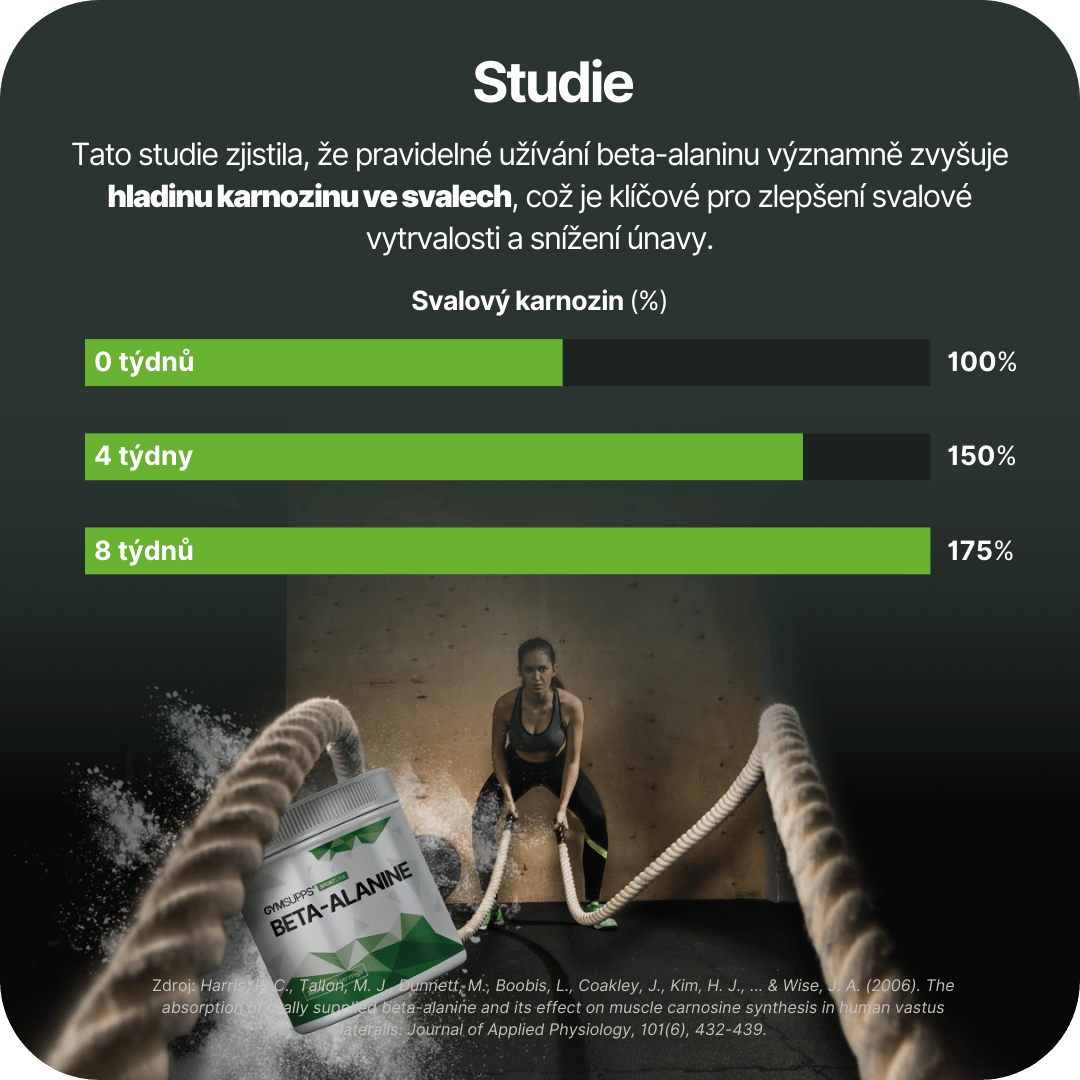
One of the promising effects of beta-alanine is the ability to increase the amount of work done in a single workout. Researchers have studied its effect during four and 10 weeks of supplementation and cycling.
At the end of the week, muscle carosine levels were significantly elevated, resulting in a noticeable 13 percent increase in work done in the cycling test. The next six weeks added another 20 percent increase in carosine levels, which was followed by a 6.2 percent increase in work done over the pre-supplementation value.
These results clearly show the effect of beta-alanine supplementation, which, although it did not increase maximal strength, produced a 20 percent increase in the total amount of work in strength training in the trained athletes.
.png)
These data suggest that beta-alanine supplementation is able to improve performance in multiple sets of high-intensity short exercises, in single sets of high-intensity exercises, and in single sets when fatigue is already present.
Creatine: the super twin of beta-alanine
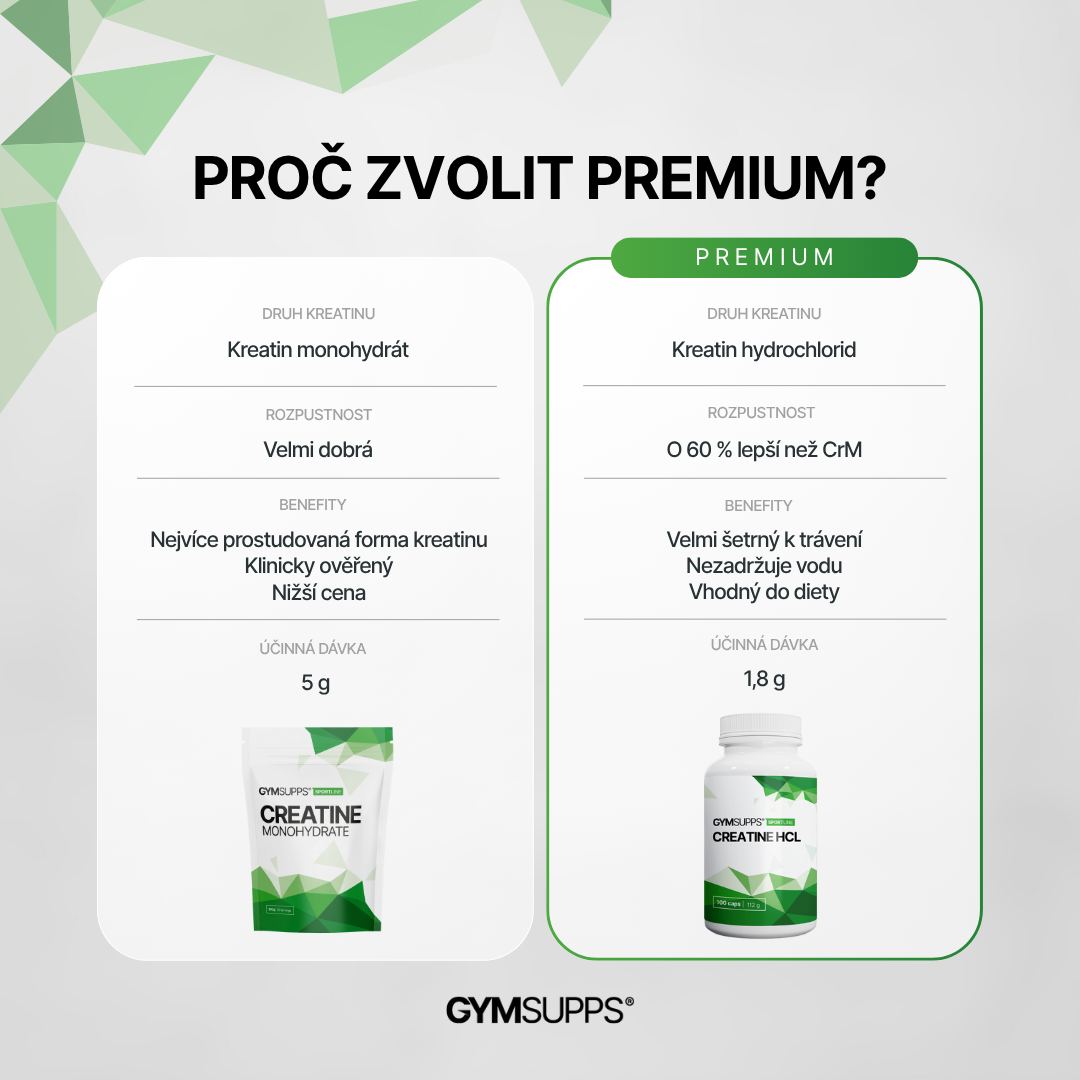
Creatine is all you need. Research shows that 3-5 grams is a sufficient amount. Some scientists recommend smaller doses due to the amount of creatine in the diet, but no one has yet determined the exact dose.
Anything more will not bring additional gains. In fact, any excess dose of creatine will be excreted in the urine. No one likes flushing money down the toilet, so a smaller dose is the way to go.

The best response to creatine supplementation is for those of us who have the lowest starting supply of it. When creatine was tested on vegetarians, they made huge strength gains because they were deficient in creatine in their diet due to the absence of red meat.
The normal intake of creatine from the diet is 1-2 grams per day. Vegetarians have less of it, of course. Simply put, individuals with the lowest starting levels of intracellular creatine would be expected to have the highest initial absorption rates.
Creatine increases muscle hypertrophy
Short-term creatine intake has already been shown to increase the amount of lean muscle mass in trained athletes. In addition, creatine also has many positive health properties. It is also recognized as a supplement that helps patients with neurodegenerative disorders and disorders that accompany muscle wasting.
So how exactly does creatine increase muscle hypertrophy? At first, we thought that the increase in muscle mass after short-term use of creatine was due to water retention (creatine makes you hold a small amount of water), but later and longer studies have shown that there is indeed an increase in muscle volume.
Studies prove that creatine does much more than just increase work capacity. Now you're probably wondering if you should take creatine or beta-alanine. The answer is: YOU NEED BOTH!
Combination of creatine and beta-alanine
Creatine and beta-alanine seem to have a synergistic effect when taken together. For example, one study reported that compared to a placebo group, the group taking creatine and beta-alanine had a threefold increase in strength and more lean mass after 10 weeks of weight training.
Interestingly, the creatine-only group was also tested and showed the same changes in strength but no changes in body composition. The result was described as the cause of the increase in mass and subsequent greater changes in strength was a noticeable increase in training volume (repetitions of 9 sets of 9 load 9 number of training units) in the creatine and beta-alanine group.
A follow-up study revealed that the group of men supplementing with a combination of creatine and beta-alanine gained more lean mass and lost more fat than the creatine-only group. It should be noted that this study was conducted on college American football players, i.e. no untrained athletes.

And the last study examined the aerobic benefits of beta-alanine alone, versus combining it with creatine. Fifty-five subjects participated, and it was shown that anyone who supplemented with a combination of creatine and beta-alanine improved in five of eight athletic parameters measured.
To summarize, the combination of creatine and beta-alanine is the only clinically studied combination that improves endurance, increases strength, increases training volume, and decreases recovery time. So if you want to increase the intensity of your workouts with "metabolic training," you should arm yourself with the right supplements: beta-alanine and creatine.
Recommended
GymSupps Creatine Monohydrate

Creatine Monohydrate 500g 1+1
GymSupps Beta Alanine
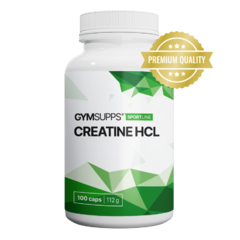
GymSupps Creatine HCL
Sources:
1. Wolfe BL, LeMura LM, Cole PJ. Quantitative analysis of single- vs. multiple-set programs in resistance training. J Strength Cond Res, 2004Feb;18(1):35-47 Review.
2.Derave W, Ozdemir MS, Harris R, Pottier A, Reyngoudt H, Koppo K, Wise JA, Achten E. (August 9 2007). "Beta-alanine supplementation augments muscle carnosine content and attenuates fatigue during repeated isokinetic contraction bouts in trained sprinters" J Appl Physiol, 103:1736.
3.Hill CA, Harris RC, Kim HJ, Harris BD, Sale C, Boobis LH, Kim CK, Wise JA. (2007). "Influence of beta-alanine supplementation on skeletal muscle carnosine concentrations and high intensity cycling capacity" Amino Acids, 32(2): 225-33.
4. Penafiel R, Ruzafa C, Monserrat F, Cremades A. Gender-related differences in carnosine, anserine and lysine content of murine skeletal muscle.Amino Acids, 2004;26(1):53-58.
5. Hoffman J, Ratamess N, Kang J, Mangine G, Faigenbaum A, Stout J. Effect of creative and beta-alanine supplementation on performance and endocrine responses in strength/power athletes.Int J Sports Nutr Exerc Metab, 2006;16(4):430-446.
6. Takarada Y, Sato Y, Ishii N. Effects of resistance exercise combined with vascular occlusion on muscle function in athletes.Eur J Appl Physiol 2002;86:308-14.
7. Takarada Y, Takazawa H, Sato Y, Takebayashi S, Tanaka Y, Ishii N. Effects of resistance exercise combined with moderate vascular occlusion on muscle function in humans.J Appl Physiol 2000;88:2097-106.
8. Takarada Y, Tsuruta T, Ishii N. Cooperative effects of exercise and occlusive stimuli on muscular function in low-intensity resistance exercise with moderate vascular occlusion.Jpn J Physiol 2004;54:585-92.
9. Burd NA, West DW, Staples AW, Atherton PJ, Baker JM, Moore DR, et al. Lowload high volume resistance exercise stimulates muscle protein synthesis more than high-load low volume resistance exercise in young men.PLoS One. 2010;5:e12033.
10. Fry CS, Glynn EL, Drummond MJ, Timmerman KL, Fujita S, Abe T, et al. Blood flow restriction exercise stimulates mTORC1 signaling and muscle protein synthesis in older men.J Appl Physiol 2010;108:1199-209.
11. Fujita S, Abe T, Drummond MJ, Cadenas JG, Dreyer HC, Sato Y, et al. Blood flow restriction during low-intensity resistance exercise increases S6K1 phosphorylation and muscle protein synthesis.J Appl Physiol 2007;103:903-10.
12. Goto K, Ishii N, Kizuka T, Takamatsu K. The impact of metabolic stress on hormonal responses and muscular adaptations.Med Sci Sports Exerc 2005;37:955-63.
13.Tonini J, Michallet AS, Flore P, Nespoulet H, Pepin JL, Wuyam B, Levy P, Tamisier R. Effect of chronic intermittent hypoxia on exercise adaptations in healthy subjects. Respir Physiol Neurobiol. 2011 Sep 16.
14. Peñafiel R, Ruzafa C, Monserrat F, Cremades A. Gender-related differences in carnosine, anserine and lysine content of murine skeletal muscle.Amino Acids. 2004 Feb;26(1):53-8.
15. Hoffman, J., et al. (2008). Beta-alanine and the hormonal response to exercise. Int J Sports Med.In press.
16. Zoeller RF, Stout JR, O'Kroy JA, Torok DJ, Mielke M: Effects of 28 days of beta-alanine and creatine monohydrate supplementation on aerobic power, ventilatory and lactate thresholds, and time to exhaustion.Amino acids 2007, 33(3):505-510.
18. Zoeller RF, Stout JR, O'Kroy JA, Torok DJ, Mielke M: Effects of 28 days of beta-alanine and creatine monohydrate supplementation on aerobic power, ventilatory and lactate thresholds, and time to exhaustion.Amino acids 2007, 33(3):505-510.
19. Hoffman J, Ratamess N, Kang J, Mangine G, Faigenbaum A, Stout J (2006) Effects of creatine and b-alanine supplementation on performance and endocrine responses in strength/power athletes. Int J Sport Nutr Exerc Metab 16:430-446
Author: Šárka Randáčková No posts have been made yet.








