





Are dairy products bad for us?
 Author:
 Today, let's discuss another "hot topic" of modern nutrition, which is milk and dairy products. One group of experts recommends the consumption of dairy as a staple food and essential for the health and strength of our bones. On the opposite pole is a group that strictly excludes dairy products from the concept of a healthy diet. Which approach is correct?
However, whether milk itself or products made from it are not always the same. We need to look at where they come from and, in particular, how they have been processed. Also, of course, the individual's digestive and health reactions must be taken into account, because lactose and the associated intake of dairy products is very subjective, as is the reaction to any food.
Is it "natural" to eat dairy products?
The most common and quite logical argument of those who oppose dairy products is that "it is unnatural for humans". Yes, man is indeed the only living creature that consumes milk as an adult, and certainly the only creature that consumes milk from another species.
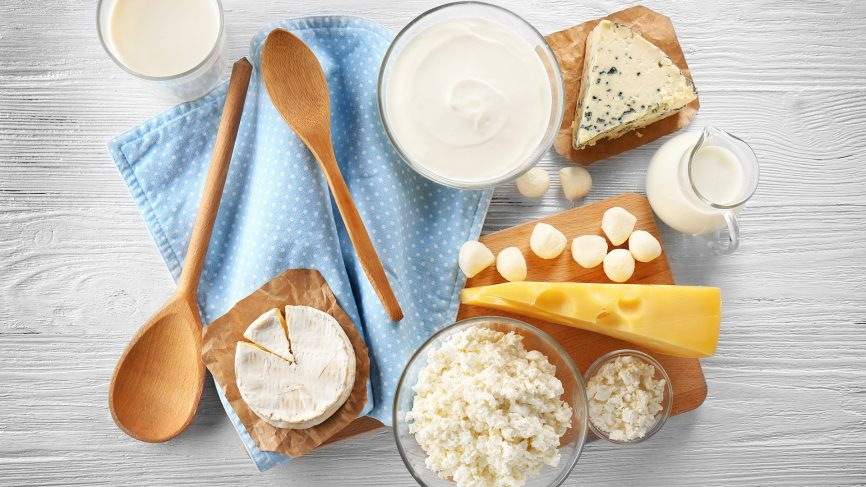
The biological purpose of cow's milk is undoubtedly to provide sufficient nutrition for the young to grow. But adults are no longer "babies" and do not need to grow, so why milk? Before the agricultural revolution, people really only drank milk as infants from their own mothers, because cow's milk was not yet processed for other purposes such as consumption. So from an evolutionary perspective, the argument that drinking milk is "necessary" for optimal health doesn't make much sense.
However, milk and dairy products have been consumed in some areas of the world for centuries, and there are studies showing thathuman genes are "adapted" to the ability to digest dairy products. So what we actually have here is the fact that SOME of us are genetically adapted to consume dairy, and therefore for this group, consuming dairy is "natural".
However, the percentage of people who are lactose intolerant is alarming.
We said above that there is a group of people who are genetically adapted to consume milk, but about ¾ of the world's people are actually lactose intolerant! This number is surprisingly high, isn't it? The main carbohydrate in milk is lactose, or milk sugar, which is made up of two simple sugars - glucose and galactose.
The human species in infancy produces an enzyme called lactase, which breaks down lactose from breast milk, and thanks to this enzyme we are able to digest lactose. However, many of us lose this ability (or this enzyme) in adulthood. And this is the alarming number - up to 75% of the population, in short, has lost the lactase enzyme and is unable to digest milk and some of its products.
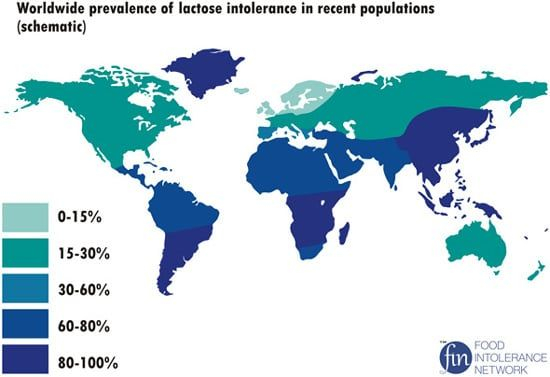
Here we have to illustrate where the world stands in terms of lactose tolerance. We can see that in America, Europe and Australia lactose tolerance is quite high - logically, these are developed countries where all the processes are faster than in more backward parts such as Africa, South America and some parts of Asia where, as we can see in the graph, lactose intolerance is quite common. In Asia and some parts of Africa, this phenomenon is probably also due to the fact that the cow is a sacred animal for Hinduism, which is a traditional and common religion in these countries.
People who are lactose intolerant usually experience digestive problems such asnausea, diarrhoea, vomiting and other symptoms resembling intestinal flu after consuming dairy products. Nevertheless, people suffering from lactose digestion problems can consume dairy products, specifically fermented ones. What are fermented dairy products? For example, kefir, buttermilk, acidophilus milks and other fermented products such as some fresh cheeses, yogurt and cottage cheese. These products are much more digestible, contain additional micronutrients (such as vitamin B12) and probiotics. It is also interesting to note that some cheeses, such as mozzarella, are naturally lactose-free. Such products are then an excellent source of amino acids.
Let's look at milk itself from a nutritional point of view
Yes, dairy products can even be beneficial. Milk contains proteins, fatty acids and other micronutrients that are essential for growth, which is why all young animals consume it. Milk and its products are indeed very nutritious and contain almost all the nutrients our body needs. Of course ... there are many different types of dairy products. Fatty dairy products, such as cheese and butter, have a nutrient composition that is quite different from milk and are not entirely suitable for a healthy diet.
One cup (250 ml) of milk contains approximately:
Calcium: 276 mg (28% of the RDA)
Vitamin D: 24% RDA
Riboflavin (B2): 26% RDA
Vitamin B12: 18% RDA
Potassium: 10% RDA
Phosphorus: 22% RDA
It also contains a good amount of A, vitamins B1 and B6, selenium, zinc and magnesium.
The nutrient content of each product (especially the composition of the fatty part) is also influenced byhow the cattle from whose milk the product comeswere treated and fed. The composition of milk fat is actually very complex, consisting of hundreds of different fatty acids. Many of the fatty acids are bioactive and can have substantial health effects,
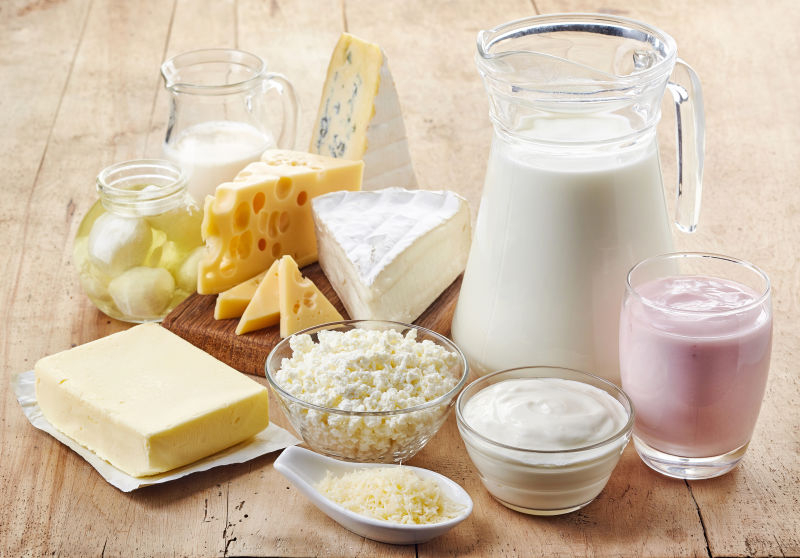
Grass-fed, pasture-raised cows have been shown in studies to have many times higher levels of omega-3 fatty acids and up to 500% more conjugated linoleic acid in their milk . The milk of grass-fed cattle also has a much higher concentration of fat-soluble vitamins, especially vitamin K2, a nutrient that is incredibly important for regulating calcium metabolism and has major benefits for both bone and heart health.
However, beware of low-fat products - they usually don't contain all these beneficial substances and tend to be full of sugars to "tune up" the dairy taste that disappears when the fat is removed.
So what benefits can dairy consumption offer us?
Nutrition for the bones - as you know, calcium is the main mineral in bones, and milk is the best source of calcium in the diet. A large body of evidence shows that dairy products improve bone density, reduce the risk of osteoporosis and reduce the risk of fractures in older people. We must not lose sight of the fact that dairy products contain more than just calcium. It also offers many other nutrients that are very beneficial for bone health, including protein, phosphorus and the aforementioned vitamin K2. It may seem strange, but studies suggest that consuming FULL-fat products is associated with a lower risk of obesity and developing diabetes 2. Type.
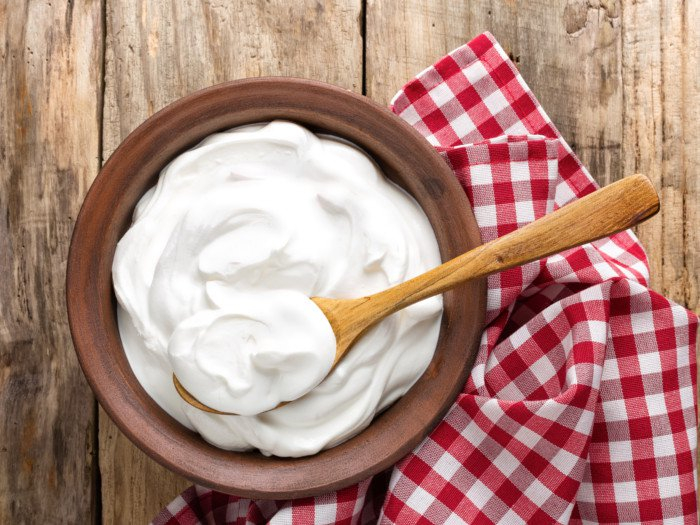
Some dairy products are even beneficial for our hearts. For a long time, consuming milk and milk fat was considered inappropriate because of its saturated fat content, which is harmful to heart health. However, recent studies are moving away from this view and it appears that for most people there is no link between milk consumption and heart disease. In countries where cows are predominantly grass-fed, dairy products are even associated with a significant reduction in the risk of heart disease and stroke. For example, a study in Australia (where cows are mostly grass-fed) showed that those who consumed dairy products had up to a 69% lower risk of heart disease.
Another great benefit of dairy products is that they are very useful in weight loss diets. This is because dairy contains casein, which, in addition to its positive effects on muscle recovery, actually has the ability to promote fat burning. Casein is a slowly digested protein, so it is satiating for a longer period of time. That's why foods like cottage cheese, cheese, and yogurt are recommended in diets. What is certainly still worth mentioning is the positive effect of casein on the psyche.
Milk, IGF-1, acne and prostate cancer?
Milk is known to stimulate the release of insulin and IGF-1 (insulin-like growth factor 1). This may be why dairy consumption is associated with increased acne formation. In this context, it has also been suggested that milk causes several types of cancer. However, based on the results of studies, no significant link has been shown between the consumption of dairy products and the development of cancer cells in the body. On the contrary - an increase in the production of insulin and IGF-1 can have a positive effect on muscle growth.
What types of dairy products are the best?
Fresh products from free-ranging cattle are best . Such products have a much better nutritional profile, including a higher content of beneficial fatty acids and more fat-soluble vitamins, especially vitamin K2.

Fermented dairy products such as yogurt and kefir may be even more beneficial. They contain probiotic bacteria that can have many health benefits, as we mentioned above. People also consume fresh milk directly that has not been pasteurized. Those who have trouble digesting cow's milk protein (especially casein) can try goat's or sheep's milk products. Modern times also offer most of these popular products in their lactose-free version.
What to take away from this?
The fear of consuming lactose ranks along with gluten and carbohydrates at the top of the scarecrows of a healthy lifestyle. As is the case with gluten and carbohydrates, for the most part unnecessarily so. When it comes to the "appropriateness" of including dairy products in a healthy diet, then as with most nutrients, you won't get a definitive answer, because even when it comes to dairy, there is no universally valid statement. Some people like dairy, it makes up a large part of their diet and they are perfectly fine to digest it. On the other hand, there are people who have major digestive problems with exactly the same products and find them unsuitable.
In spite of this - if you don't have problems digesting milk protein and you like dairy products, then there is no reason to give up eating them. Just choose quality products with the appropriate ingredients that don't contain too many added additives, ethers, or sugar. Greek white yoghurt, kefir or buttermilk are even very good choices for improving digestion, biome and overall health.
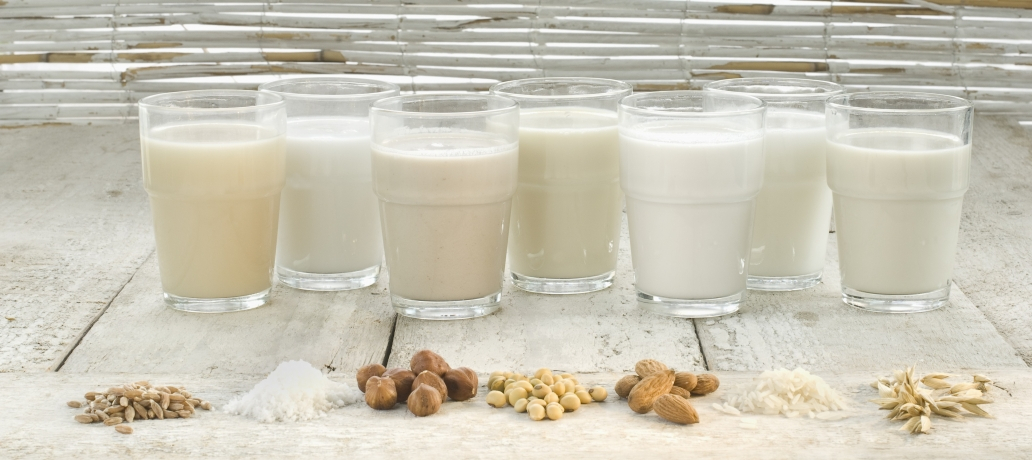
Beware of sweetened low-fat alternatives. However, even here there are products that are more beneficial in their low-fat versions than full-fat ones. An example of this would be cottage cheese or mozzarella, where you take in the same or more protein and significantly less fat when eating the low-fat version.
As for drinking the milk itself, the decision is entirely up to you and your subjective feelings after consuming it. If you like milk and it doesn't give you any problems, then you don't need to worry about the notion that drinking milk as an adult is 'not natural'. If milk doesn't suit you, try a plant-based alternative, of which there are many available on the market - rice, oat, almond, coconut and other milks.
No posts have been made yet.








