




Why Do We Need to Push Ourselves Beyond Our Limits? Prof. Patočka Reveals the Deeper Meaning of Sports
 Author:
You've been playing sports for almost your entire life. You’ve been through hundreds of training sessions, dozens of races, victories, and defeats. You’ve learned to overcome pain, fatigue, and your own doubts. You know what discipline, sacrifice, and hard work mean. But one day, a question pops into your head—one that no coach ever prepared you for.
Who am I, really, if I stop playing sports?
You might discover that a large part of your identity is based precisely on what you can do—on your performances, your results, the recognition of others, or the idea of what kind of person you’re supposed to be. And perhaps for the first time, you’ll admit to yourself that even though you’ve been pushing your limits your whole life, you’ve never really stopped to think about why you’re doing all of this. It is precisely at such a moment that something far more important than another athletic achievement can begin.
This question brings us to the ideas of one of the most significant Czech philosophers of the 20th century, Prof. Jan Patočka (1907–1977), who, among other things, led Charter 77.
Article contents:
- Jan Patočka: Why Is It Not Enough Just to Live, Work, and Win?
- First Movement: Anchoring—It All Begins with Belonging Somewhere
- Second Movement: Self-Affirmation—When Life Itself Becomes a Performance
- Third Movement: Breakthrough—The Courage to Be Truthful and Authentic
- The Path of the Peaceful Warrior: When Victory Ceases to Be the Most Important Thing
- So what can Patočka teach us about sports?
Jan Patočka: Why Is It Not Enough Just to Live, Work, and Win?
One of Patočka’s most interesting ideas is the concept of the three movements of human life. In it, Patočka distinguishes three fundamental ways in which a person lives in the world, relates to others, and understands their own existence. He calls the first movement the movement of grounding or acceptance. The second is the movement of defense or self-affirmation. The third is the movement of truth or breakthrough.
These are not simply three distinct stages of life that a person goes through sequentially. These movements intertwine in our lives and represent various possibilities for human existence. Although Patočka did not develop his concept as a theory of athletic performance, we can use it to discover interesting connections between sports, our identity, and the search for the true meaning of life.
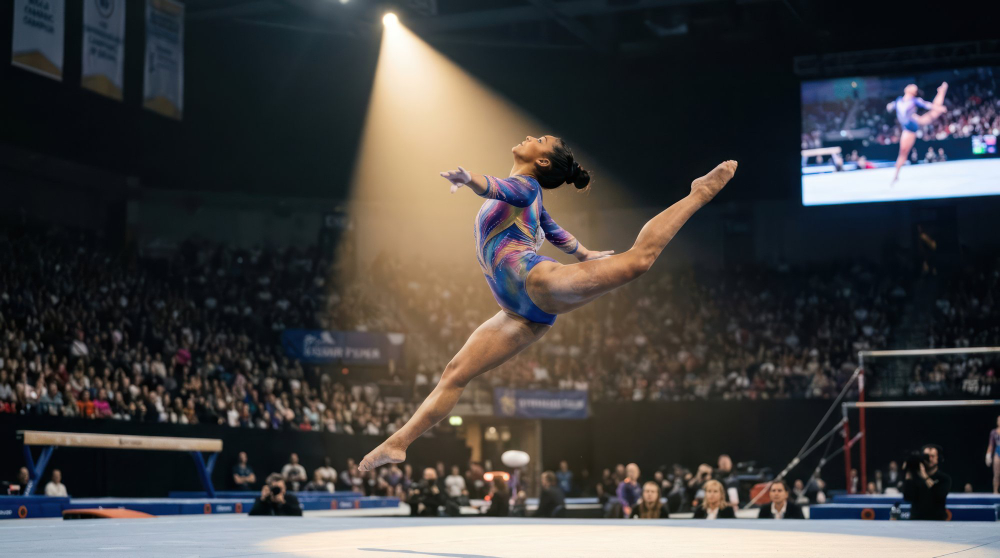
The First Movement: Anchoring—It All Begins with Belonging Somewhere
Patočka refers to the first movement as the movement of anchoring. After all, a person does not come into the world self-sufficient, because they cannot provide for themselves entirely on their own. From the very beginning, they are dependent on other people, on their acceptance and care, and on the environment in which they gradually find their place. It is precisely through these relationships that they gain a sense of security, belonging, and basic trust in the world.
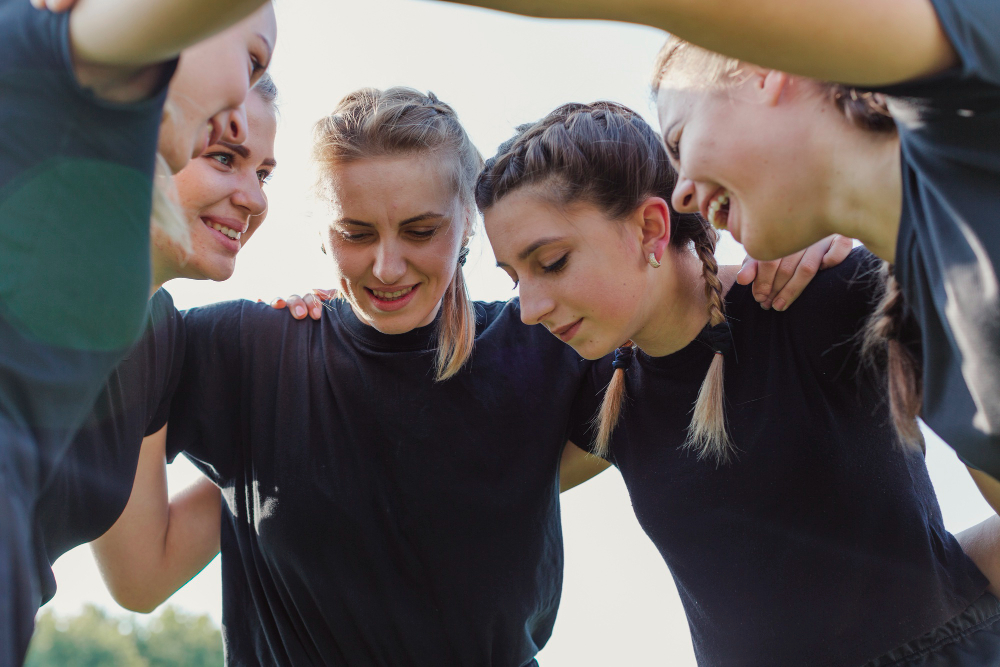
And we can find a similar experience in sports as well. Let’s recall the moment when we first stepped into a gym, an athletic stadium, or a fitness center. Perhaps our parents, friends, or a coach brought us there. At first, what mattered most wasn’t how many kilograms we could lift, how fast we could run, or how many matches we could win. What was more important was that we became part of something bigger. We had our team, our coach, our friends, and a place we returned to regularly.
Sports could have become an environment for us where we gained our first experiences with trust, cooperation, and mutual acceptance. This is precisely how we can illustrate Patočka’s “first movement” through the lens of a sports experience. First, we need to find our place in the world. Only then can we begin to develop our own abilities and potential.
First, we need to belong somewhere. Only then can we begin to ask ourselves who we want to become.
Second Movement: Self-Affirmation—When Life Itself Becomes a Performance
Patočka associates the second movement with work, provision, the defense of life, and ensuring its continuation. A person no longer merely accepts the world into which they were born. They begin to act actively within it, to work, to adapt to conditions, and to secure their own existence. It is precisely here that we can draw an interesting parallel with sports. We train to become stronger. We stick to a regimen to achieve better results. We learn discipline, overcome obstacles, and sometimes devote a large part of our lives to a single goal. Of course, there is nothing wrong with that.
Athletic performance requires determination, hard work, and the ability not to give up at the first sign of failure. For many people, these very qualities become an important part of their personality. But what happens when performance gradually becomes the sole measure of our self-worth? We lift 100 kilograms, but we’re already thinking about 110. We run a marathon, but instead of rejoicing in finishing the race, we’re wondering why we weren’t a few minutes faster.
We achieve our dream physique, but immediately discover another flaw that we need to fix. Every goal achieved becomes merely the beginning of the next endeavor. And a person who originally played sports because physical activity fulfilled them may gradually realize that they are no longer training out of joy, but out of fear that they will cease to be good enough.
Of course, Patočka’s “second movement” cannot be equated solely with athletic competition. In his philosophy, it is primarily a way of being in which a person focuses on providing for themselves and functioning in the world. Yet it is precisely this way of life that also carries certain dangers. We can become so preoccupied with what we must do, acquire, or achieve that we gradually lose the ability to reflect on our own lives as a whole. We are constantly doing something, but we stop asking why.
And perhaps this is precisely where one of the greatest paradoxes of modern sports lies. We are constantly learning to surpass ourselves, but we rarely pause to understand whom we are actually surpassing.

The Third Movement: Breakthrough—The Courage to Be True and Authentic
The third movement, which Patočka refers to as the movement of truth or breakthrough, represents a fundamental transformation of human existence. In it, a person begins to transcend the taken-for-granted aspects of everyday life. They stop focusing solely on their own security, success, and the recognition of others, and turn their attention to deeper questions. Who am I, really? Am I living according to what I truly believe is right? Or am I merely fulfilling the expectations of society, my family, my friends, and the people whose approval I need?
This is where we arrive at authenticity, truth, and the courage to live one’s own life in a truly genuine way.
While in the second phase a person strives to hold their own in the world, secure their place, and prove themselves, in the third phase they begin to question the very way they live their life. And that can require extraordinary courage. After all, it’s much easier to continue living by the rules we already know than to admit that perhaps we aren’t living the way we truly want to.
Let’s try to imagine, for example, a thirty-year-old athlete.
All his life, he has competed, trained, and strived for results. Those around him know him as someone who never gives up. It is precisely on this image that he has gradually built his own identity. But what happens when, one day, he admits to himself that he no longer wants to continue? That perhaps what keeps him going—even more than the sport itself—is the image others have of him?
And that his true values, desires, and ideas about the meaning of life may lie somewhere else entirely? Such a realization can be much more challenging than another grueling training session or an important competition. It means risking the loss of his current identity, the recognition of those around him, and the certainties upon which he has built his life for many years.
Very few dare to make such a breakthrough. Not because a person is incapable of asking questions about the truth, but because accepting the answers may require changing everything they have been accustomed to until now.

It is precisely here that the athletic experience can become a metaphor for a deeper existential transformation. In Patočka’s philosophy, however, the third movement does not merely mean discovering one’s true self and revealing it to the world.
It goes even further.
A person begins to understand that his life is not confined solely to his own needs, achievements, and interests. He opens himself to a truth that transcends his personal benefit and accepts responsibility for other people as well. Authenticity, in this sense, is not merely an expression of individuality. It is not a decision to do everything one’s own way without regard for others. It is a willingness to stop obscuring the truth about one’s own existence and to act in accordance with this understanding—even if it costs us comfort, social recognition, or the certainties we have known so far. Patočka’s three movements, however, are not a ladder that we climb once and for all to reach the highest rung. Grounding, work, and responsibility remain part of our lives. The third movement, however, opens up the possibility of going beyond merely securing one’s own existence and beginning to ask about its true meaning.
Perhaps, then, the greatest courage does not lie in facing an opponent, breaking a personal record, or winning in front of thousands of spectators. Perhaps it lies in something much more difficult: daring to live truthfully, even if it means losing everything we have built so far.
.jpg)
The Way of the Peaceful Warrior: When Victory Ceases to Be the Most Important Thing
We can find a similar question in the bestselling book *The Way of the Peaceful Warrior* by American author and former world champion gymnast Dan Millman. The story, in which the author weaves together autobiographical experiences, follows a talented athlete who, at first glance, has everything he could possibly want: athletic talent, ambition, discipline, and the potential to achieve extraordinary results.
Yet something is missing.
Although he is able to outperform others, he gradually realizes that understanding his own life is far more difficult. An encounter with a mysterious teacher leads him to questions that go beyond athletic performance itself. Why do we cling so much to future successes? Why do we expect that the next victory will finally bring us satisfaction? And can we appreciate our own lives even when we fail to achieve our dream goal?
We can view Millman’s story as a literary parallel to some of the questions raised in Patočka’s third movement. While the protagonist is initially focused primarily on results and recognition, he gradually discovers the value of self-knowledge, the present moment, and inner transformation. This is not a direct continuation of Patočka’s philosophy. However, both approaches raise an interesting question.
What if the true meaning of sport lies not only in victory, but also in the transformation of the person striving for it?
So what can Patočka teach us about sports?
Sports teach us discipline, perseverance, and the ability to overcome difficult situations. They teach us to accept defeat, to cooperate with others, and to explore the limits of our own capabilities. These are all experiences that can be of extraordinary value.
Patočka’s ideas, however, remind us that simply overcoming obstacles does not necessarily lead to a deeper understanding of our own lives. We can be physically strong and yet still be afraid to admit our own insecurity. We may achieve extraordinary results, yet at the same time lose the joy of an activity that once fulfilled us.
And we may spend our entire lives striving for yet another victory without ever asking ourselves whether we are truly competing for ourselves or merely for the recognition of others. It is precisely the ability to ask such questions that can give sports a new dimension. This doesn’t mean giving up our ambitions, stopping training, or rejecting the desire for success. It simply means understanding that athletic performance doesn’t have to be the ultimate measure of our own worth. Perhaps it’s not just about how many kilograms we can lift, how fast we can run a race, or how many opponents we can defeat.
Perhaps, in the end, what matters most is the kind of people we become along the way.
Recommended

New 100% Whey Protein 800g 1+1

XGen 90cps + Omega 3 90cps
No posts have been made yet.