





Is multivitamin supplementation necessary for us and our health?
 Author: Šárka Randáčková
 Although multivitamins do address certain nutritional deficiencies, they do not seem to prolong life for most people. However, they may help certain at-risk groups of people!
Technically, a multivitamin is a supplement that contains more than one vitamin. However, in common understanding, we would expect it to contain a number of vitamins and minerals, thus serving as insurance against any deficiencies in the diet.
Often other ingredients are also added, in doses so low that there is no chance of any effect. More than a third of the sporting population takes a multivitamin. But is it necessary?
Who needs a multivitamin?
Maybe even you, if three requirements are met:
- You are at risk for a major nutrient deficiency and you cannot change your diet.
- A multivitamin contains sufficient doses to prevent this deficiency.
- Buying a multivitamin is a better choice than buying individual nutrients.
A multivitamin will generally be good for those people who cannot consume a varied diet - often for financial reasons. At the same time, however, people with low incomes are the least likely to spend money on a multivitamin.
Further, these are two typical groups that tend to be nutrient deficient. Both are listed below.
Pregnant women
Current evidence suggests that in developed countries, taking a multivitamin helps fetal development and prevents fetal deformities. However, the quality of the evidence is not high. Moreover, because of the unclear composition of the different multivitamins, it is not clear to which ingredients these effects can be attributed.
We do know that folic acid has an effect on fetal development. Pregnant women could therefore benefit from it. But it can also be bought on its own. Moreover, it is added to many foods in the USA.
Older people
These are more likely to be deficient in nutrients, especially calcium and vitamin B12 and vitamin D. However, current evidence shows that for people over 65, as a whole, multivitamins do not lead to general physical health goals such as lowering blood pressure, nor do they prevent mental decline.
People on a diet
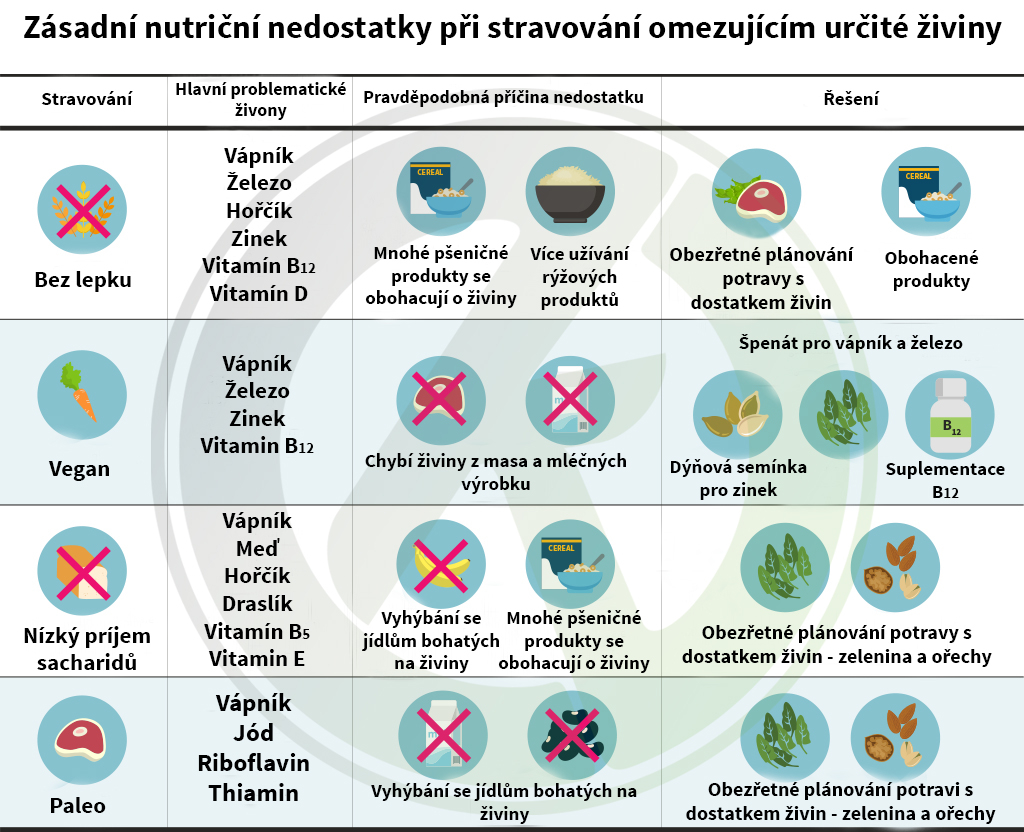
Diets restricting certain nutrients - such as vegan diets, gluten-free diets, and some diets - make optimal nutrient intake a difficult task. However, such diets do not necessarily require a multivitamin. Holes can be patched by choosing good foods and less restrictive forms of eating.
People after bariatric surgery
A reduction in stomach size, and thus nutrient absorption, can bring about significant nutritional deficiencies.
A multivitamin in such people will have less effect as the ability to absorb nutrients will be limited, but it can help with achieving nutritional balance.
People suffering from certain diseases
Coeliac disease Crohn's disease brings the risk of nutrient deficiencies. Nutrients are less easily absorbed in these diseases, which will result in the multivitamin not being as effective as, for example, in eating disorders where digestion functions relatively normally.
Type 2 diabetes is often associated with magnesium deficiency and other deficiencies. In addition, many diabetics take metformin, a drug that can cause vitamin B12 deficiency.
Other medications that can cause nutrient problems are (among others) the antibiotic gentamicin, various diuretics, and drugs that prevent acid formation in the stomach.
Can a multivitamin be beneficial to the general public?
We already understand that a certain at-risk sample of people may benefit from multivitamins; but can they somehow benefit everyone? Does it prevent some health problems? Won't you end up living a little better and a little longer with them?
Longevity
Many people hope that a multivitamin will make them live longer. However, the evidence is lacking. Multivitamins may reduce the risk of cancer in people with poor diets, but the same cannot be said for multivitamins in general,as it is for cardiovascular disease, and other life-threatening diseases.
Studies examining antioxidants, the most popular component of multivitamins, have come to the same conclusion,although one showed a reduction in prostate cancer risk in (1) men who smoke and supplement with vitamin E and (2) men with low beta-carotene intake who supplement with beta-carotene.
The same analysis concluded that the multivitamin did not prolong or shorten life.
However, these studies do not speak to high doses.
High doses of various antioxidants may increase the risk of death with various causes. It is not entirely clear which combinations and what doses they are, but if you take antioxidants, you'd better not exceed the recommended daily doses.
High doses of B vitamins may also affect life expectancy. One study showed that high doses of vitamin B3 may reduce the incidence of skin cancer, while other studies have shown that high doses of vitamins B6 and B12 increase the risk of lung cancer in men who smoke (but not in nonsmoking men and women).
Mood
So a multivitamin probably won't prolong your life. But can it improve your quality of life? Add energy? Will it make you happier?
Your brain needs nutrients, just like all your other organs. Lack of it causes fatigue and mood problems, also symptoms of depression. To really see this, a severe deficiency is needed. But can even a small deficiency affect your mood?
A 2013 meta-analysis of clinical trials found that, adults without clinical disorders experienced modest improvements in feelings of anxiety, anger, stress, fatigue, and clarity of thought. Unfortunately, improvements in depression symptoms did not reach statistical significance.
Sounds good, but it has three problems:
- Many of the studies were not focused on multivitamins. They often used high doses of B vitamins and a few minerals, which generally led to better results.
- Many of the studies were sponsored by manufacturers and there were not enough critical ones to compare them.
- Blinded studies with multivitamins can be quite difficult (multivitamins usually stain urine) and the placebo effect can be powerful when it comes to mood.
Since the time of this meta-analysis, many studies have addressed the issue of multivitamins and mood. The results have been varied and mostly suggest that supplementation with certain nutrients may benefit mental health.
Eye health
A meta-analysis of clinical trials found a slight reduction in the risk of progression of macular degeneration in people who took a multivitamin, that is, compared to placebo.
- For people with a low likelihood of disease progression, this means a reduction of about 4(1-6) cases over 6 years for every 1,000 people taking the multivitamin.
- For people with a high likelihood of disease progression, this means a reduction of about 8(3-13) cases over 6 years for every 1,000 people who take the multivitamin.
Most of the good evidence comes from a large, high-quality study - the Age-Related Eye Disease Study (AREDS). The other included studies were small and of low importance.
AREDS followed patients for about 6.3 years after completion, and only 2.4% of the 3,640 participants dropped out of the study early. It used a combination of vitamin C (500 mg), vitamin E (400 IU), beta carotene (15 mg), zinc(80 mg oxide), and copper (2 mg). These ingredients are in most multivitamins, but in smaller doses, or AREDS may not fully depict actual multivitamin use. On the other hand, high doses of antioxidants may not be without risk.More studies with high doses are needed.
It is similar with cataracts. There is some evidence that multivitamins might help, but more high-quality clinical trials are needed to confirm this.
Are there any clear disadvantages to taking a multivitamin?
Yes, at least two.
- First, it makes people think they don't need a balanced diet. Although science is advancing, note that we may not know all the essential nutrients yet.
However, there are substances in the diet such as fiber, nitrates, and others that are not completely essential but are beneficial to health. And although multivitamins are trying, all the substances found in a balanced diet are not yet in them. - Second, taking a multivitamin every day can be quite expensive. If you eat a balanced diet, which you should, it could be that a multivitamin will only have one function anymore. It will make your urine an expensive commodity.
What to look for in a multivitamin?
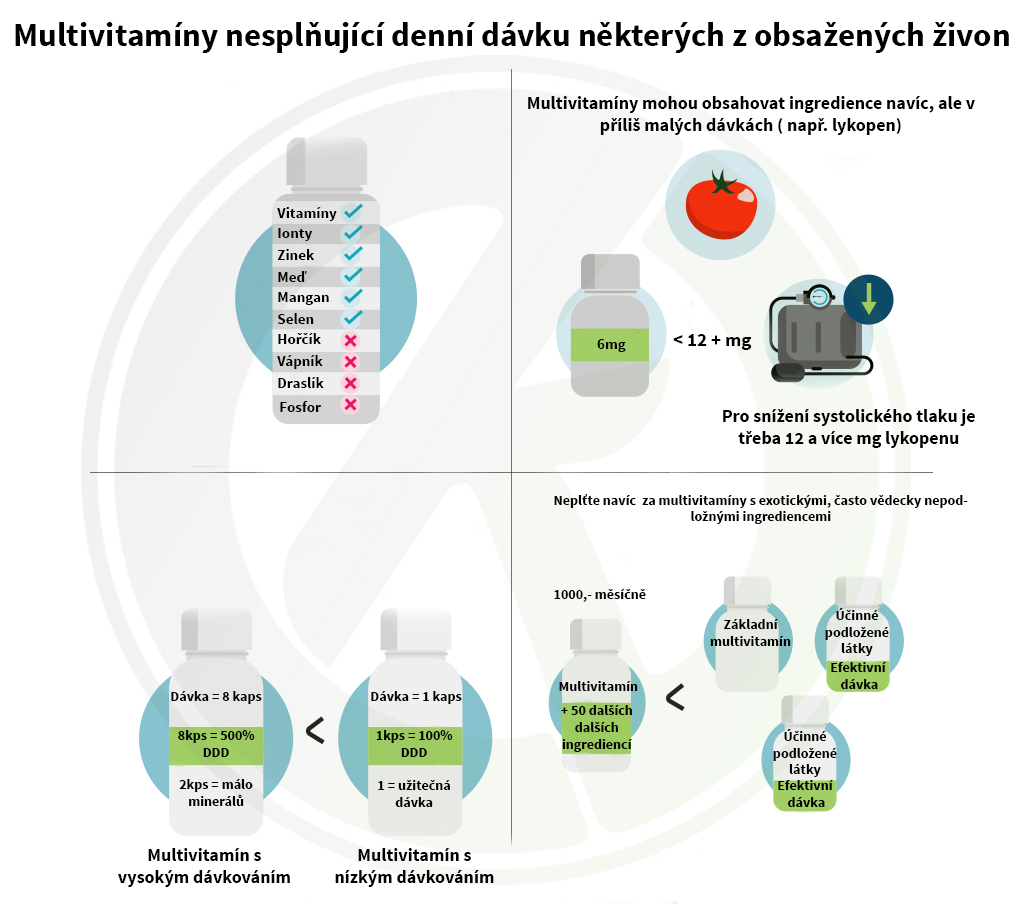
If you've decided to choose a multivitamin, the picking is simple:
Choose one that will have close to the DDD of vitamins and minerals
Remember that extreme exceeding the DDD can have drastic consequences. You'll find that no multivitamin sold in the U.S. contains the full DDD of these six minerals: calcium, chloride, magnesium, phosphorus, potassium, and sodium. One reason is that filling the DDD would require many tablets; but there are more. Too much potassium on an empty stomach, for example, could lead to hyperkalemia and dangerous changes in heart rhythm; therefore, the limit for supplementation is only 99 mg. For magnesium, it's350 mg; higher doses can cause diarrhea and indigestion. Calcium supplementation may increase the risk of kidney stones and hypercalcaemia. Chloride and phosphorus are usually in excess in people's diets. And as many as 90% of Americans consume too much sodium.
Choose products with only essential nutrients (vitamins and minerals)
Productswith extra ingredients. Take note that most bonus ingredients are in such low doses that there is no chance they will have any benefit. For example, >12 mg of lycopene per day may lower systolic blood pressure, but some multivitamins contain only 0.6 mg in the daily dose.
Do not mistake a capsule or tablet for a dose
A multivitamin may boast 300 mg of vitamin C in a single dose, but that may mean 8 tablets. You may be taking more than one dose a day. Then you'll find that those 240 tablets will actually only last you a month. You can take less, of course, but the question is whether you will be mentally reconciled to the fact that your nutritional goals are elsewhere.
Try to find a balance between effectiveness and cost
You'll probably be eating and buying multivitamins for quite a while - you don't want to waste money on something that's not worth it.
Consider the reputation of the company that makes the product
If your multivitamin doesn't contain what it says on the label, you'll probably never find out. The only way to minimize this risk is to buy from a reputable company with a track record.
Source: www.examine.com -Should you take a multivitamin?
Author: Wyatt Brown
Sources:
^ Kantor ED, et al. Trends in Dietary Supplement Use Among US Adults From 1999-2012 . JAMA. (2016)
^ Radimer K, et al. Dietary supplement use by US adults: data from the National Health and Nutrition Examination Survey, 1999-2000 . Am J Epidemiol. (2004)
^ Shelton RC, et al. Multivitamin use among multi-ethnic, low-income adults . Cancer Causes Control. (2009)
^ Wolf HT, et al. Multivitamin use and adverse birth outcomes in high-income countries: a systematic review and meta-analysis. Am J Obstet Gynecol. (2017)
^ Viswanathan M, et al. Folic Acid Supplementation for the Prevention of Neural Tube Defects: An Updated Evidence Report and Systematic Review for the US Preventive Services Task Force . JAMA. (2017)
^ Zhang Q, et al. Effect of folic acid supplementation on preterm delivery and small for gestational age births: A systematic review and meta-analysis . Reprod Toxicol. (2017)
^ Castaño E, et al. Folate and Pregnancy, current concepts: Is folic acid supplementation required? . Rev Chil Pediatr. (2017)
^ Crider KS, Bailey LB, Berry RJ. Folic acid food fortification-its history, effect, concerns, and future directions . Nutrients. (2011)
^ Yeung LF, et al. Contributions of enriched cereal-grain products, ready-to-eat cereals, and supplements to folate and vitamin B-12 usual intake and folate and vitamin B-12 status in US children: the National Health and Nutrition Examination Survey (NHANES), 2003-2006 . Am J Clin Nutr. (2011)
^ Park S, Johnson M, Fischer JG. Vitamin and mineral supplements: barriers and challenges for older adults . J Nutr Elder. (2008)
^ Ward E. Addressing nutritional gaps with multivitamin and mineral supplements . Nutr J. (2014)
^ Harris E, et al. No effect of multivitamin supplementation on central blood pressure in healthy older people: A randomized controlled trial . Atherosclerosis. (2016)
^ Grodstein F, et al. Long-term multivitamin supplementation and cognitive function in men: a randomized trial . Ann Intern Med. (2013)
^. Screening for Cognitive Impairment in Older Adults: An Evidence Update for the U.S. Preventive Services Task Force Internet . . ()
^ Macpherson H, et al. Memory improvements in elderly women following 16 weeks treatment with a combined multivitamin, mineral and herbal supplement: A randomized controlled trial . Psychopharmacology (Berl). (2012)
^ McNeill G, et al. Effect of multivitamin and multimineral supplementation on cognitive function in men and women aged 65 years and over: a randomised controlled trial . Nutr J. (2007)
^ Wolters M, et al. Cognitive performance in relation to vitamin status in healthy elderly German women-the effect of 6-month multivitamin supplementation . Prev Med. (2005)
^ Craig WJ. Health effects of vegan diets . Am J Clin Nutr. (2009)
^ Vici G, et al. Gluten free diets and nutrient deficiencies: A review . Clin Nutr. (2016)
^ Calton JB. Prevalence of micronutrient deficiency in popular diet plans . J Int Soc Sports Nutr. (2010)
^ Sawaya RA, et al. Vitamin, mineral, and drug absorption following bariatric surgery . Curr Drug Metab. (2012)
^ Guan B, et al. Nutritional Deficiencies in Chinese Patients Undergoing Gastric Bypass and Sleeve Gastrectomy: Prevalence and Predictors . Obes Surg. (2018)
^ Caron M, et al. Long-term nutritional impact of sleeve gastrectomy . Surg Obes Relat Dis. (2017)
^ Wierdsma NJ, et al. Vitamin and mineral deficiencies are highly prevalent in newly diagnosed celiac disease patients . Nutrients. (2013)
^ Filippi J, et al. Nutritional deficiencies in patients with Crohn's disease in remission . Inflamm Bowel Dis. (2006)
^ Marzola E, et al. Nutritional rehabilitation in anorexia nervosa: review of the literature and implications for treatment . BMC Psychiatry. (2013)
^ Chaudhary DP, Sharma R, Bansal DD. Implications of magnesium deficiency in type 2 diabetes: a review . Biol Trace Elem Res. (2010)
^ de Lordes Lima M, et al. The effect of magnesium supplementation in increasing doses on the control of type 2 diabetes . Diabetes Care. (1998)
^ Walker AF. Potential micronutrient deficiency lacks recognition in diabetes . Br J Gen Pract. (2007)
Author: Šárka Randáčková No posts have been made yet.








