





Tom Platz's Squat Secrets: How to get legendary thighs while protecting your knees
 Author:
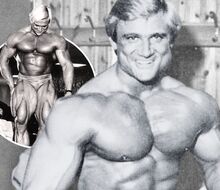
 The name Tom Platz is synonymous in the bodybuilding world with the most extreme thigh development the world has ever seen. His legs were so massive, defined and sculpted that even decades after his competitive career they remain the absolute benchmark. Many people, however, are intimidated by the sight of his training methods. Squats with the knees far ahead of the toes, extreme depth and insane rep counts all seem like a recipe for ruined knees.
But the opposite is true. Tom Platz, who is approaching 70, still squats with respectable weights and his knees are healthy. How is that possible? Because his philosophy shatters established myths and offers a fascinating insight into how a properly executed squat can be the key not only to massive muscles, but also to long-term joint health. Let's take a look at the secrets of his technique.
The myth "Knees must not go over the toes"
The basic rule we hear from coaches around the world is:
"When squatting, the knees must never get above toe level."
Tom Platz literally didn't give a damn about this rule. Instead, his technique was based on actively pushing the knees forward, well past the toes.
Why was he doing this? The goal was not just to shock. Platz understood that this movement maximally activates a muscle known as the vastus medialis (VMO), a drop-shaped muscle on the inside of the thigh, right at the knee. It is this muscle that is responsible for stabilizing the kneecap and the entire knee joint. By purposefully strengthening it, he was building a natural protective shell around his knees.
Anatomy of the Platz Squat
His technique was specific and different from the powerlifting squat. Let's break it down step by step:
- Stance and Axis: Platz used a relatively narrow stance, roughly shoulder width. He placed his axis high on his traps (called a high-bar squat). This allowed him to keep his torso as upright as possible throughout the movement.
- He often propped his heels up with a small board or used weightlifting shoes with a raised heel. This helped him achieve extreme depth while keeping his torso upright and pushing his knees forward.
- Downward movement: the key was to start the movement by bending the knees, not by moving the hips back. Platz used to say:
"Imagine your nose going straight down to the ground, not forward." This minimized the forward bend and focused all the tension on the quadriceps.
- Extreme Depth (Ass-to-Grass): His squats were uncompromisingly deep. He believed that only a full range of motion could fully stimulate the muscle fibers while "lubricating" the joint. He argued that half reps were more dangerous for the joints because they loaded them at the same angle all the time.
- Utilizing the stretch reflex: He did not pause in the bottom position. The movement was fluid, quick down and explosive up. This utilized the natural stretch reflex of the muscles, which allowed him to handle a tremendous amount of work.
Why is it healthy for the knees?
According to Platz and some modern biomechanical studies, this technique is good for the knees for several reasons:
- Nourishment of the joint: The full range of motion and high number of repetitions pump a tremendous amount of blood, oxygen and nutrients to the knee joint and surrounding tissues. This promotes regeneration and keeps cartilage and ligaments healthy and hydrated.
- Strengthening the stabilizers: as mentioned, a strong VMO muscle is absolutely crucial to knee health. The Platz technique builds it like no other.
- Force distribution: While the upright torso and forward movement of the knees increases the pressure on the knees, it also greatly reduces the load on the lower back and hips, which are often overloaded during a poorly executed squat.
How to apply this in practice?
You don't have to load up 200 kg and do 50 reps right away. But you can learn valuable lessons from Platz's philosophy:
- Focus on technique: perfect your form before you start adding weight. Try squats with your own weight or a light barbell, and focus on an upright torso and full depth.
- Incorporate weightlifting shoes: investing in a pair of shoes with a raised heel can dramatically improve your technique and allow you to perform a healthier squat.
- Listen to your body: Platz trained like a madman, but also paid tremendous attention to recovery and stretching. If you feel sharp pain, something is wrong.
- Don't be afraid of depth: work on your mobility to get as deep as possible. The deep squat is a natural and beneficial movement for healthy knees.
Tom Platz is living proof that an intelligent and thoughtful approach to training can lead to incredible results without compromising your health. His legacy is thus not just about monstrous thighs, but also about the courage to challenge established dogmas and find your own functional path.
Recommended

Czech Virus Sleep Ritual
GymSupps BCAA 4:1:1 Instant

Nexgen 60 kapslí 2+1
Nebbia Fitness overal 5” HAMMIES 603
No posts have been made yet.








