





What is glucosamine sulfate and how will it help our joints?
 Author:
 When you say "glucosamine" most of you probably think of a product advertisement full of retirees with arthritis. It's true that glucosamine may have a great reputation for treating and preventing arthritis, osteoarthritis and other joint diseases, but there's so much more to the substance! Glucosamine is one of the most studied substances ever, and because of this, glucosamine can be considered one of the safest supplements, even when used for long periods of time. You will come across it in every pharmacy and nutritional supplement shop. Let's introduce this important and very beneficial substance a little more.
Theoretical window - what is glucosamine?
Glucosamine is a compound that is naturally found in the cartilage of our joints and in the bone marrow. In nature, it can be found, for example, in animal bones, shellfish shells and some mushrooms - and it is from these natural sources that supplemental forms of glucosamine are often made. Glucosamine is made up of chains of sugars and proteins linked together and is therefore sometimes referred to as an amino sugar. The human body can produce glucosamine by itself using chondrocytes. The body needs glucosamine to synthesize certain proteins and fats that make up important tissues. It is clear from this that glucosamine plays a vital role, for example, in the construction of joints, tendons and ligaments. In addition, it helps to form the synovial fluid that surrounds the joints, ensuring their proper mobility and acting as a "shock absorber" for shocks and jolts, allowing pain-free movement.

Glucosamine has strong anti-inflammatory effects and is also valued for its antiaging properties. Often used in the treatment of age-related bone and joint pain, it is considered one of the best natural remedies in the treatment of arthritis, osteoporosis and as part of the prevention of these diseases. However, healthy people can also benefit from its use, as glucosamine can promote overall joint health and vitality. Because of its ability to strengthen bones and joints, glucosamine is also used as part of the treatment of fractures or injuries. It is also speculated that glucosamine may have a positive effect on the digestive system and may be beneficial in the treatment of leaky gut syndrome. We will discuss its benefits in more detail below.
Supports joint health
One of the main, and most well-known, roles of glucosamine is the aforementioned promotion of healthy tissue development between joints. Articular cartilage is a type of smooth white tissue that covers the ends of bones where they meet to form joints. This type of tissue - along with the aforementioned synovial fluid - allows bones to move freely, minimizing friction and allowing pain-free movement. Glucosamine helps make several chemical compounds involved in the formation of articular cartilage and synovial fluid.
Some studies suggest that glucosamine may inhibit cartilage breakdown and even promote cartilage formation, helping to keep joints in great shape for a long time. In fact, cartilage degradation or wear and tear is one of the most common triggers of osteoarthritis, so it makes perfect sense what role glucosamine plays in preventing the development of this disease and how crucial it is for joint health. In fact, glucosamine is most often studied precisely for its potential in treating the symptoms and progression of diseases associated with osteoarthritis, rheumatoid arthritis and osteoporosis. Glucosamine has long been ranked at the forefront of efficacy in the treatment of complications associated with joint disease and osteoporosis.
Glucosamine, when taken long term, slows down joint degradation and wear and tear and also offers other benefits that prescription painkillers cannot (e.g. reducing chronic inflammation and improving digestive health). The resulting effects can vary from person to person, however, but the vast majority of long-term glucosamine users describe pain relief that allows them to avoid surgery and reduce or eliminate their use of medications altogether.
Helps relieve bone pain
Bone pain, reduced bone density, osteoporosis, susceptibility to fractures. These problems mainly affect women later in life, when the bones are naturally demineralised, and in these cases glucosamine can be a very useful strategy. Glucosamine promotes bone strength and helps bone healing. It is also beneficial in alleviating arthritis, as we have already seen. It also helps to relieve stiffness and pain in all joints, i.e., knee problems, finger problems, elbow problems, etc. It can also be useful for problems in the cervical, thoracic and lumbar spine areas. It is also used as a supportive treatment for sprains and other joint injuries.

Supports the health of the cardiovascular system
To make the benefits not enough, we cannot fail to mention the positive effect on the cardiovascular system. Glucosamine has relatively strong anti-inflammatory properties and its regular use is associated with lower levels of C-reactive protein in the blood, which is one of the most common markers of inflammation. Again, studies in animal subjects show its positive effect on cardiovascular health. Then, studies conducted with human subjects come to a similar conclusion, saying that regular use of glucosamine can help reduce the risk of developing heart disease and death as a result. It should be added, however, that taking glucosamine is not a panacea, and other principles of a healthy lifestyle must of course be followed.
Glucosamine vs. Chondroitin
Chondroitin and glucosamine are often used together because they have virtually the same effects and combining them can enhance the positive effects. They both help to reduce inflammation, promote joint health, prevent cartilage breakdown and promote cartilage formation, and have the ability to help reduce bone and joint pain - plus they are both considered very safe and there is very little risk of side effects associated with their use. Like glucosamine, chondroitin is a natural anti-inflammatory compound found in human cartilage and connective tissue. Chondroitin should also be taken on a long-term and regular basis.
Recommended
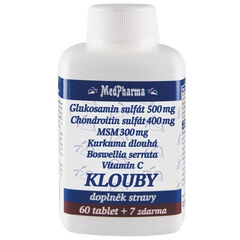
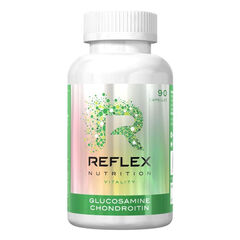
How to take glucosamine and what form to choose?
Glucosamine is found very little in food sources - in fact, not at all, so it needs to be supplemented in the form of a supplement, which can be found in several forms. The most well-known are glucosamine sulphate, glucosamine hydrochloride or acetylglucosamine. Glucosamine sulphate is the most researched form and is therefore logically considered the best form, as it is very well absorbed. It also contains sulphate, which is essential for cartilage formation and its overall health. The other two forms of glucosamine are not as well studied and lack the sulphate component that is so important for cartilage health.
The dosage of glucosamine will, as with most other supplements, be very individual. It is important to note that the positive effects of glucosamine take time to become apparent with long-term, regular use - it is reported that the effects will be apparent after two to four months of use. The specific recommendation for the optimal dose is then in the range of 1 500 - 2 000 mg per day. Glucosamine should be taken with food and in more sensitive individuals it is better to split the dose twice to avoid bloating and indigestion, which are among the very rare side effects associated with glucosamine supplementation.
As mentioned in the introduction, glucosamine is a completely safe supplement and can be taken long-term - in fact, it is highly desirable. Only people who suffer from high cholesterol, insulin resistance or diabetes should beware, as there is speculation that glucosamine supplements in high doses can potentially cause problems for people in these categories. Therefore, be careful if you fall into these categories and consult a doctor first when supplementing. Glucosamine is usually found in joint supplements, where there are other functional substances such as chondroitin, MSM, hyaluronic acid and others. Glucosamine alone should be combined with omega-3 fatty acids, for example.
What to take away from the article?
Glucosamine is very important for joint health, but in addition it also supports the digestive system and heart health, for example. Glucosamine is one of the most researched supplements ever, so it can safely be described as one of the safest substances, even when used for a long time. It is the long-term use that brings the best results. Glucosamine sulphate is said to be the best form, as it has the best absorption. Glucosamine can most often be found in combination with other functional substances such as MSM, chondroitin or hyaluronic acid. Glucosamine alone should be combined with omega-3 fatty acids, for example. Although the optimal dose of glucosamine will vary from person to person, a dose of between 1,500 and 2,000 mg is generally recommended.
Sources:
Reginster, J. Y., Deroisy, R., Rovati, L. C., Lee, R. L., Lejeune, E., Bruyere, O., Giacovelli, G., Henrotin, Y., Dacre, J. E., & Gossett, C. (2001). Long-term effects of glucosamine sulfate on osteoarthritis progression: a randomized, placebo-controlled clinical trial. Lancet (London, England), 357(9252), 251-256. https://doi.org/10.1016/S0140-6736(00)03610-2
Goldstein M. R. (2001). Glucosamine sulphate and osteoarthritis. Lancet (London, England), 357(9268), 1617-1618. https://doi.org/10.1016/S0140-6736(00)04753-X
Jerosch J. (2011). Effects of Glucosamine and Chondroitin Sulfate on Cartilage Metabolism in OA: Perspective on Other Nutrient Partners Especially Omega-3 Fatty Acids. International journal of rheumatology, 2011, 969012. https://doi.org/10.1155/2011/969012
Meulyzer, M., Vachon, P., Beaudry, F., Vinardell, T., Richard, H., Beauchamp, G., & Laverty, S. (2008). Comparison of pharmacokinetics of glucosamine and synovial fluid levels following administration of glucosamine sulphate or glucosamine hydrochloride. Osteoarthritis and cartilage, 16(9), 973-979. https://doi.org/10.1016/j.joca.2008.01.006
Kantor, E. D., Lampe, J. W., Vaughan, T. L., Peters, U., Rehm, C. D., & White, E. (2012). Association between use of specialty dietary supplements and C-reactive protein concentrations. American journal of epidemiology, 176(11), 1002-1013. https://doi.org/10.1093/aje/kws186
Yomogida, S., Kojima, Y., Tsutsumi-Ishii, Y., Hua, J., Sakamoto, K., & Nagaoka, I. (2008). Glucosamine, a naturally occurring amino monosaccharide, suppresses dextran sulfate sodium-induced colitis in rats. International journal of molecular medicine, 22(3), 317-323.
Fox, B. A., & Stephens, M. M. (2007). Glucosamine hydrochloride for the treatment of osteoarthritis symptoms. Clinical Interventions in Aging, 2(4), 599-604. https://doi.org/10.2147/cia.s1632
No posts have been made yet.








