




The Truth About Omega-3 and Aging—Can Regular Capsules Really Slow Down Our Biological Clock?
 Author:
Two people may have the same age listed on their ID cards, but their bodies may not age at the same rate. Scientists are now able to track certain signs of biological aging using specific markers in DNA. And it is precisely in this area that a study published in the prestigious journal *Nature Aging* has yielded interesting results. It showed that regular intake of omega-3 fatty acids can influence certain indicators of biological age. Does this mean we may have been underestimating one of the most well-known dietary supplements all along?
Our date of birth is one of the few things in our lives that we can never change. Every year, another number is added. Whether we’re thirty, fifty, or seventy, time passes the same for everyone. But inside our bodies, a completely different story may be unfolding. Some people are able to exercise regularly, travel, and handle their daily responsibilities without major problems even in old age. Others may experience fatigue, a loss of vitality, or a gradual decline in physical abilities much earlier.
Of course, there isn’t a single cause behind this. Genetics, exercise, sleep, nutrition, and the environment in which we live all play a significant role. In recent years, however, scientists have begun to ask a much more interesting question.
What if we could influence not only how we feel as we age, but also some of the biological processes associated with aging?
This is where omega-3 fatty acids come into play. These are substances that most people know primarily in connection with fish oil, heart health, or brain function. But research published in February 2025 in the journal *Nature Aging* suggested that their significance may be even broader.

Article Contents:
- Chronological vs. Biological Age: Why Don’t We All Age at the Same Rate?
- Scientists tracked 777 older adults for three years. The results were surprising!
- Did omega-3s really slow aging by three months?
- Omega-3s, Vitamin D, and Strength Training: Is the Combination More Effective?
- Why might omega-3s be linked to aging at all?
- What do we know for sure about omega-3s? The Heart, Blood Vessels, and Metabolism
Chronological vs. biological age: Why don’t we all age at the same rate?
When people hear the word “age,” most imagine the number of years since birth. Scientists, however, distinguish between two different concepts. The first is chronological age, which simply expresses how many years we’ve been alive.
The second concept is biological age, which attempts to describe the state of various biological systems in our body. And it is precisely between these two values that differences may exist. A 60-year-old may not have the same metabolic, physiological, or cellular characteristics as another 60-year-old.
In recent years, the so-called epigenetic clocks have garnered significant attention.
What are epigenetic clocks?
Our DNA contains genetic information whose basic structure remains relatively stable in most cells throughout our lives. However, certain chemical marks that influence how cells use this information can change. One of these processes is DNA methylation. Scientists have found that certain methylation patterns are associated with age, health status, and certain risks linked to aging.
Based on these findings, algorithms known as epigenetic clocks have been developed. Some estimate biological age, while others attempt to capture the rate of biological changes.
However, these are not actual clocks that can accurately predict how long we will live.
And that is precisely what is important when interpreting the new research on omega-3.
Researchers followed 777 older adults for three years. The results were surprising!
In February 2025, an international team of scientists led by Professor Heike Bischoff-Ferrari published the results of an analysis of the DO-HEALTH study. The original project included more than 2,100 European seniors. To analyze biological aging, the researchers used samples from 777 participants in Switzerland aged 70 and older.
The researchers examined three different ways to influence selected indicators of aging:
- Regular intake of omega-3 fatty acids.
- Vitamin D supplementation.
- Simple at-home strength training.
For omega-3, they used a daily dose containing 330 mg of EPA and 660 mg of DHA derived from marine algae. Vitamin D was administered at a dose of 2,000 IU per day, and the exercise intervention consisted of approximately 30 minutes of home-based strength training three times a week. Participants were divided into groups with different combinations of these interventions.
After three years, the researchers compared changes in four epigenetic markers of biological aging. And this is where the most interesting finding emerged.
Participants taking omega-3 showed more favorable changes in three of the four epigenetic clocks monitored.
For some markers, the observed difference corresponded to approximately 2.9 to 3.8 months of biological age over the course of three years. At first glance, this may not seem like a dramatic figure. However, the fact that researchers were able to observe changes in certain molecular markers of aging in a randomized study provides an interesting basis for further research.
.jpg)
Did omega-3s really slow aging by three months?
Here, it’s important to make a crucial distinction. You may have come across headlines claiming that omega-3s can extend life or rejuvenate the body by several months. However, the study did not reach such a definitive conclusion.
In fact, the researchers did not measure actual life extension.
Instead, they monitored changes in epigenetic markers associated with biological aging. This is a crucial difference. If a specific biological marker changes in a person, it does not automatically mean that they will live longer, avoid disease, or maintain better physical condition.
Furthermore, this was an analysis of a subset of participants from the original study, not a separate long-term study of lifespan. The results therefore represent an interesting scientific finding, but not yet definitive proof that omega-3 supplementation slows the overall aging of the human body.
Omega-3, Vitamin D, and Strength Training: Is the Combination More Effective?
The DO-HEALTH study yielded another remarkable finding. The researchers did not merely monitor the effects of individual interventions. They were also interested in whether their effects could be combined. It turned out that the combination of omega-3, vitamin D, and home strength training yielded a more favorable result for one of the epigenetic markers studied—specifically, PhenoAge—than the individual interventions did on their own.
This suggests a possible additive effect.
However, this does not mean that the combination automatically produced the best results across all monitored parameters. Nor can it be concluded that everyone needs to take omega-3 and high doses of vitamin D simultaneously to slow down aging.
Nevertheless, the results highlight one important point.
Perhaps the most important thing is not to search for a single miracle substance, but to understand how the various components of a healthy lifestyle complement one another.
What does the DO-HEALTH study really tell us about healthy aging?
The results of the DO-HEALTH study showed that when examining biological aging, it is worth paying attention not only to omega-3 fatty acids but also to vitamin D and regular physical activity. Researchers observed beneficial changes in certain epigenetic markers, which raises further questions about how long-term nutrition may be linked to the aging process.
If you don’t regularly eat fatty fish, you can supplement your EPA and DHA intake with GymSupps Omega 3. In the study, researchers used omega-3 derived from marine algae. Arctic Blue® Vegan Omega-3 Algae is another plant-based alternative, containing 250 mg of DHA per capsule. Unlike the combination studied, however, this product does not contain the same amount of EPA.
Another substance studied was vitamin D, which can be supplemented—for example, with GymSupps Vitamin D3—if intake is insufficient. However, it is important not to view these products as a proven way to slow aging or as an exact substitute for the interventions used in the study.
Recommended

GymSupps Omega 3

XGen 90cps + Omega 3 90cps


Why might omega-3s be related to aging at all?
Omega-3 fatty acids are a type of polyunsaturated fat and perform a number of important biological functions in the human body. We most commonly encounter three types.
- ALA – alpha-linolenic acid. It is found primarily in plant-based foods, such as flaxseeds, chia seeds, and walnuts.
- EPA – eicosapentaenoic acid. It is found primarily in marine sources and plays a role in the production of various biologically active substances.
- DHA – docosahexaenoic acid. It is an important component of cell membranes, including those in nervous tissue and the retina.
Scientists are also studying omega-3s in relation to inflammatory processes, cellular signaling, and membrane function.
It is precisely these areas that may play a role in certain mechanisms of biological aging.
Chronic Inflammation and Aging
As we age, changes in the regulation of the immune system may occur. One frequently discussed phenomenon is “inflammaging,” a low-grade chronic inflammatory state associated with aging. Omega-3 fatty acids are involved in biochemical processes that influence the initiation and resolution of inflammatory responses.
Scientists are therefore investigating whether an adequate intake of omega-3s may also be important in the context of healthy aging. However, it is important to note that the biological potential for such effects does not, in and of itself, prove that they prolong life.
What do we know with greater certainty about omega-3s? The Heart, Blood Vessels, and Metabolism
Omega-3s have been the subject of research for many years, primarily in relation to cardiovascular health. It is in this area that we have significantly more scientific data than we do regarding biological aging. For example, a comprehensive 2020 Cochrane review included 86 randomized trials with more than 160,000 participants.
The results showed that higher intake of EPA and DHA likely has little or no effect on overall mortality. Small beneficial effects were observed for some coronary outcomes. The effect of omega-3s on blood triglyceride levels is also relatively well documented, especially at higher doses.
However, the results vary depending on dosage, product composition, and the participants’ health status. It is therefore incorrect to claim that standard fish oil capsules automatically protect everyone from heart attacks or prolong life.
From a European perspective, it is also important to note that EPA and DHA, when consumed at a daily intake of at least 250 mg, contribute to normal heart function.
This is an established and approved health claim. Research on biological aging, however, represents a different and, so far, much less explored area.

What about muscles and the brain? Can omega-3s help even in old age?
In discussions about healthy aging, we often focus on the heart and metabolism. But as we age, the functions of our muscles and nervous system also change. These areas are particularly important for maintaining an active lifestyle. Omega-3s have therefore also become the subject of research in relation to muscle protein synthesis, muscle function, and brain function. Some smaller studies suggest potential benefits, while others do not confirm significant improvements in muscle strength or physical performance.
The situation is similarly complex when it comes to the brain. DHA is an important component of nerve cells, but its biological role does not automatically imply that supplementation will improve memory or prevent dementia.
Omega-3s therefore have important functions in the body, but not all of their potential health benefits are equally well-documented.
How can you tell if an omega-3 supplement is high-quality? It’s not just about the amount of fish oil
If you decide to supplement with omega-3s using capsules, there’s one crucial thing to know.
The amount of fish oil is not the same as the amount of EPA and DHA.
For example, the label on some supplements may list 1,000 mg of fish oil. However, this does not automatically mean that they contain 1,000 mg of EPA and DHA. Fish oil is a mixture of various fatty acids, and their specific proportions can vary significantly between products.
Let’s look at a simple example.
| EXAMPLE | EPA | DHA | EPA + DHA TOTAL |
|---|---|---|---|
| 1 GymSupps Omega-3 capsule | 180 mg | 120 mg | 300 mg |
| 3 GymSupps Omega 3 capsules | 540 mg | 360 mg | 900 mg |
| Daily dose in the DO-HEALTH study | 330 mg | 660 mg | 990 mg |
Note: In the DO-HEALTH study, omega-3s were derived from marine algae, and the EPA-to-DHA ratio differed from that of the GymSupps Omega 3 product. Therefore, a similar total amount of EPA and DHA does not automatically imply the same biological effects.
Note: In the DO-HEALTH study, omega-3s were derived from marine algae, and the EPA-to-DHA ratio differed from that of the GymSupps Omega 3 product. A similar total amount therefore does not automatically imply the same biological effects.
It is precisely these differences in dosage and composition that may be one of the reasons why the results of individual studies differ.
When Does Omega-3 Supplementation Really Make Sense?
The most important step isn’t necessarily buying another dietary supplement. We should start by taking a look at our own diet. How often do you eat fatty fish? Do salmon, mackerel, sardines, or herring appear on your plate? These foods are among the most significant sources of EPA and DHA. If you consume them regularly, additional supplementation may not always be necessary.
However, for people who rarely eat fish, a dietary supplement can be a convenient way to ensure they get enough. Products containing EPA and DHA derived from marine algae can also be an alternative. At the same time, it’s important to note that a higher dose does not automatically mean greater benefits.
For example, some large clinical studies have reported an increased risk of atrial fibrillation with long-term use of high doses of omega-3, particularly in people with an elevated cardiovascular risk. If you are taking medications that affect blood clotting, have a heart arrhythmia, or have other serious medical conditions, it is advisable to consult your doctor regarding your individual dosage.
Omega-3 and Longevity: Why Does the Actual EPA and DHA Content Matter?
The DO-HEALTH study highlighted that when assessing the effects of omega-3, it is not only important whether we take a supplement, but also its specific composition. The researchers used a daily dose of 330 mg of EPA and 660 mg of DHA. Therefore, when choosing an omega-3 supplement, it’s worth paying attention to the amounts of individual fatty acids, not just the total fish oil content.
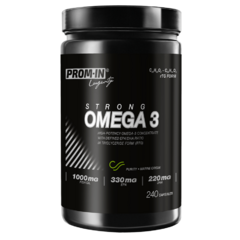
For example, GymSupps Omega 3 contains 180 mg of EPA and 120 mg of DHA per capsule. Prom-in Native Omega-3 also offers the same amounts of these fatty acids. If you’re looking for a more concentrated option, Prom-in Strong Omega-3 provides 330 mg of EPA and 220 mg of DHA per capsule.
However, a higher concentration does not automatically mean a more significant effect on biological aging. Although EPA and DHA contribute to normal heart function when consumed in sufficient daily amounts, their ability to prolong life has not yet been proven. Therefore, a varied diet, regular exercise, and a sustainable lifestyle remain the foundation.
Recommended

Perhaps we’ve underestimated omega-3s. But the most important questions remain unanswered
When we think about aging today, we’re usually interested in just one thing: How long can we stay healthy, active, and independent? After all, it’s not just about the number of years we spend on this earth. Quality of life is also important. The ability to exercise regularly, travel, spend time with loved ones, and manage daily activities without significant limitations. That’s precisely why scientists are studying in ever greater detail how nutrition, exercise, and other lifestyle factors can influence the processes associated with aging.
The DO-HEALTH study yielded interesting results. It showed that regular intake of omega-3s can positively influence certain epigenetic markers of biological age.
This is an important finding.
At the same time, however, it does not mean that we have found a way to stop time. We still do not know whether the observed changes will translate into a longer life or a lower risk of disease. One thing, however, is clear.
Omega-3s are much more than just ordinary fish oil in a capsule.
Their biological significance is well known, and current research suggests that they may also be linked to processes that, until recently, we were unable to monitor in such detail. Perhaps one day we’ll learn that their role in healthy aging is more significant than we currently assume. We may also discover that changes in the epigenetic clock have only limited significance for actual lifespan.
In either case, however, this research moves us one step further.
Because the true goal of healthy aging isn’t to stop the calendar. It’s to maintain, for as long as possible, a body that allows us to live life to the fullest.

No posts have been made yet.