




The Truth About Creatine and Aging—Why Have We Been Underestimating the Most Popular Fitness Supplement All Along?
 Author:
Imagine two people in their sixties. Both weigh about the same, both try to eat healthily, and neither aspires to have the physique of a professional bodybuilder. Yet there may be a fundamental difference between them. One can easily run up the stairs, carry heavy groceries, and enjoy an active life. The other gradually realizes that activities he used to handle effortlessly now require more and more effort.
What determines how our bodies will function in ten or twenty years? Genetics certainly play a role, but how much muscle strength we’re able to maintain is also crucial.
And this is where a substance comes into play that most of the fitness world has known about for decades—creatine.
Maybe you have it at home in the form of a white powder; maybe you used it once to build muscle. But while athletes see it as an aid for intense performance, scientists are beginning to ask a much broader question: Can creatine help maintain muscle strength even at an age when we naturally lose it?
The answer is more interesting than it might seem at first glance.
Article Contents
- Creatine Isn’t Just a Powder in a Shaker: What It Actually Does in the Body
- The Invisible Enemy of Aging: When Muscles Lose Their Strength
- Science Has Spoken: What New Studies on Creatine Have Revealed
- Creatine and the Brain: Is a Whole New Chapter Beginning?
- Common Myths About Creatine: Kidneys, Water, and Unnecessary Concerns
- How to Get the Most Out of Creatine Even as You Age
Creatine Isn’t Just a Powder in a Shaker: What It Actually Does in the Body
When people hear the word “creatine,” most imagine a muscular athlete preparing for another grueling set of squats. But creatine isn’t some artificially created fitness fad. It’s a substance that our bodies produce naturally and that we also get from foods like meat and fish. Most of the body’s creatine stores are found in the muscles, with smaller amounts also present in other tissues, including the brain.
Its main role is to help manage energy. Imagine your muscle cells as tiny engines. To function, they need energy in the form of ATP molecules. During intense exercise, this energy is quickly depleted, and the body must constantly replenish it.
This is where creatine—or rather, phosphocreatine—comes into play. It acts as a readily available energy reserve that helps rapidly replenish ATP during short-term, intense muscle work. That’s why creatine is one of the most thoroughly researched sports supplements. Its benefits for performance during repeated short, intense activities are well documented.
Interestingly, however, energy metabolism isn’t just important for someone who wants to lift a heavier weight. We also need energy when getting up from a chair, walking up stairs, or carrying groceries. And the ability to manage such activities can determine our independence as we age.
The Invisible Enemy of Aging: When Muscles Lose Their Strength
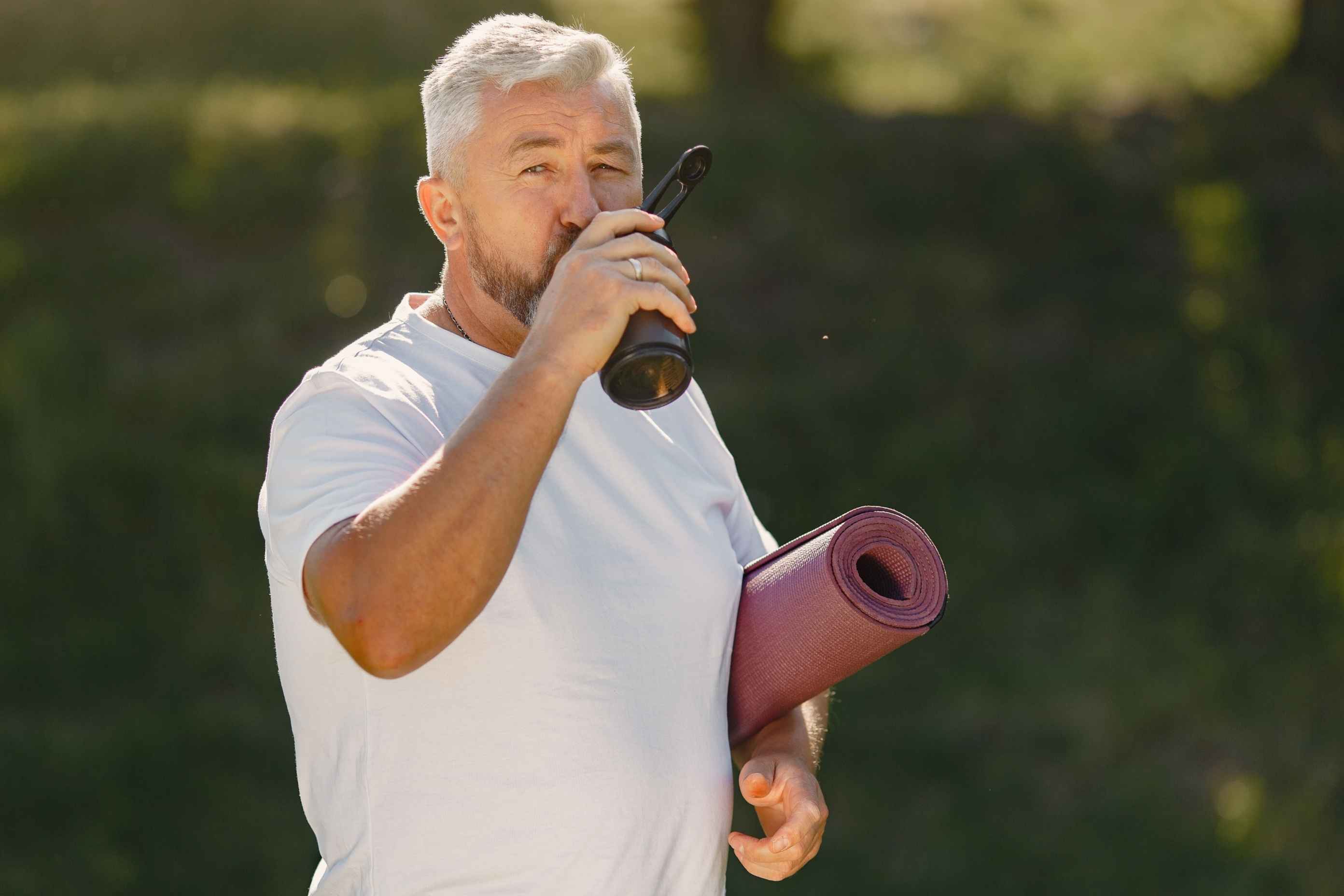
We usually associate aging with wrinkles, gray hair, or slower recovery. But one of the most important changes takes place deep beneath the surface. Gradually, we can lose both muscle mass and strength.
This process is linked to a number of factors, ranging from hormonal changes to reduced physical activity to changes in the neuromuscular system. In older age, it can lead to sarcopenia—a condition characterized by a loss of muscle strength and mass.
And it’s not just about aesthetics. Muscle strength significantly affects how easily we move, maintain our balance, and manage daily activities. It is precisely this gradual loss that ranks among the key factors that can limit independence in old age.
You might be thinking that this doesn’t apply to you yet. You work out regularly, have plenty of energy, and retirement is still a long way off. But long-term muscle care doesn’t start at sixty. It starts much earlier. Strength training can help preserve muscle strength throughout the different stages of life. And in certain situations, creatine can further enhance its effects. This is a fundamental difference from the notion that all you need to do is buy a supplement and wait for your body to start regenerating on its own.
Creatine is no substitute for exercise. Its most compelling benefits for aging muscles become apparent precisely when combined with regular strength training.
Science Has Spoken: What New Studies on Creatine Have Revealed
Just a few years ago, most people would have associated creatine supplementation primarily with younger athletes. Today, however, researchers focused on healthy aging are also studying its use. And the results are worth noting. In 2026, a systematic review with a meta-analysis was published in the journal *Frontiers in Nutrition*, evaluating 11 randomized clinical trials involving people aged 60 and older. The researchers compared a combination of creatine and strength training with strength training alone.
What did they find?
Participants taking creatine achieved, on average, slightly better results in muscle strength. The additional benefit was statistically significant, although the effect size remained rather small. The results regarding muscle mass and overall motor function were not as clear-cut. This means that creatine cannot be considered a universal remedy for muscle loss. However, it can be a useful supplement to strength training, especially when the goal is to increase muscle strength.
It is also interesting to note that the European Union has previously approved a specific health claim regarding creatine and strength training in adults over 55 years of age. According to the terms of this claim, a daily intake of 3 grams of creatine can enhance the effect of regular resistance training on muscle strength in this age group. This requires appropriate training at least three times a week for several weeks. So this is not just a marketing theory. We have scientific evidence that creatine can contribute to better strength training results even in later life. However, we have no evidence that taking it on its own prolongs life.
Creatine doesn’t have to be complicated. The right foundation is key
When people start looking into supplementation, they easily get the impression that they need the latest formula, a special blend, or the most expensive product possible. With creatine, however, the situation is much simpler. Most scientific studies focus on classic creatine monohydrate, which is also one of the most affordable forms of this supplement.
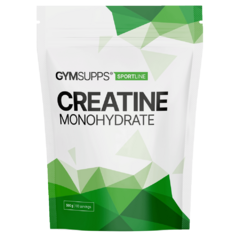
If you’re looking for a simple option without unnecessary additives, try GymSupps Creatine Monohydrate. It contains 100% creatine monohydrate, and one scoop equals 5 grams. Thanks to its unflavored form, you can easily mix it with water or add it to your favorite drink.
For most healthy adults who decide to take creatine, a daily dose of approximately 3–5 grams is commonly used in sports nutrition. However, the supplement alone cannot replace a healthy diet, adequate protein intake, or regular exercise. It is the combination of these factors that forms the foundation for long-term muscle strength maintenance.
Recommended
GymSupps Creatine Monohydrate
Creatine Monohydrate 500g 1+1
Creatine and the Brain: Is a Whole New Chapter Beginning?
And now we come to a part that may surprise even experienced gym-goers. Creatine isn’t just important for muscles. The brain also needs a lot of energy. It constantly processes information, transmits nerve signals, and performs functions we don’t even think about during the day. And because creatine plays a role in cellular energy metabolism, researchers have begun to investigate whether supplementing with it might also have an effect on cognitive functions.
For example, memory, attention, or the speed of information processing. In 2025, a systematic review focusing specifically on creatine and cognitive function in older adults was published in the journal *Nutrition Reviews *. The authors included six studies with a total of 1,542 participants. Five of the six studies reported a positive association between creatine and certain cognitive measures, particularly memory and attention.
This sounds very promising. However, there is one important detail. Four of the studies were observational only, and most of the included studies had methodological limitations. Therefore, a positive association does not necessarily mean that taking creatine alone can improve memory.
Furthermore, other scientific reviews point out that the results of experimental studies are inconsistent. Certain benefits may be observed, for example, in people under increased stress, but the effect has not yet been sufficiently confirmed for the general healthy population.
Therefore, we cannot yet classify creatine as a supplement that protects against dementia or slows brain aging.
However, we can say that this is an interesting area of research that deserves further high-quality clinical studies. And this is precisely where the difference between scientific potential and conclusive evidence becomes strikingly clear.
Common Myths About Creatine: Kidneys, Water, and Unfounded Concerns
For many years, several concerns have been associated with creatine. Some stem from a misunderstanding of its effects, while others arise from the notion that anything that enhances athletic performance must somehow be harmful to the body. One of the most common concerns involves the kidneys. Creatine is gradually converted in the body into creatinine, a substance that doctors routinely monitor when testing kidney function. And this is precisely where some of the misunderstanding arises.
Creatine supplementation can raise blood creatinine levels in some people, but this does not automatically indicate kidney damage.
A systematic review and meta-analysis published in 2025 in the journal BMC Nephrology found that creatine supplementation was associated with a slight increase in creatinine, but without a statistically significant deterioration in estimated glomerular filtration rate. This is consistent with broader findings regarding the safety of standard doses of creatine in healthy adults.
Nevertheless, it is important to distinguish between a healthy person and someone who already has kidney disease. In such cases, a doctor should evaluate whether supplementation is appropriate.
What about the common claim that creatine causes weight gain? Yes, body weight may increase when taking creatine. However, part of this increase is related to a higher amount of water stored in muscle tissue. This is not the same as gaining body fat. That is precisely why it is not a good idea to evaluate the effects of creatine based solely on the number on the scale. It is much more important to monitor long-term training performance, strength, and overall body composition.
Furthermore, creatine is neither a steroid nor a hormonal supplement. It is a naturally occurring substance whose effects on intense muscle work have been repeatedly studied.

Creatine and Aging: How to Give Your Muscles What They Really Need?
You might be thinking, “So all I have to do is start taking creatine, and my muscles will age more slowly?” Unfortunately, it’s not that simple. Creatine alone won’t stop aging, but when combined with regular strength training, it can help improve muscle strength. And maintaining that strength is one of the key prerequisites for an active life, even in old age.
The good news is that you don’t need to look for any miracle formulas. The most well-researched form is classic creatine monohydrate. A practical choice is GymSupps Creatine Monohydrate, which contains pure creatine monohydrate with no additional additives. The typical daily dose for healthy adults is around 3–5 grams.
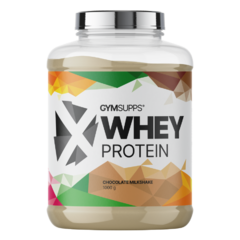
And since strength alone isn’t everything, we shouldn’t forget about adequate protein intake either. If you aren’t getting enough protein from your diet, GymSupps XWhey Protein—which combines whey concentrate, isolate, and hydrolysate—can be a useful supplement. Creatine, sufficient protein, and high-quality training can thus form a simple foundation for long-term muscle care. However, dietary supplements are no substitute for a varied diet or regular exercise.
Recommended
GymSupps XWhey Protein
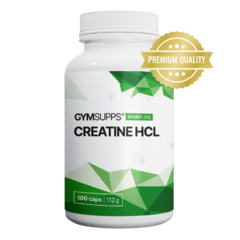
GymSupps Creatine HCL
6. How to Get the Most Out of Creatine Even as You Get Older
If, after reading this, you’ve concluded that creatine might be right for you, there’s no need to overcomplicate things. The basics are surprisingly simple. Most practical protocols are based on daily intake of creatine monohydrate. For healthy adults, a dose of 3–5 grams per day is commonly used.
Sometimes a so-called loading phase is recommended, during which higher doses are taken for several days. However, this isn’t necessary. With regular use of a smaller daily dose, muscle creatine stores will also gradually increase, just more slowly. Likewise, there is no need to be overly concerned about the exact timing of supplementation.
Long-term consistency is much more important.
And if the goal is to support muscle strength in older age, a properly tailored strength training program will still play a decisive role.
How much creatine do you actually need to get the most out of its effects? The good news is that, unlike complex supplementation strategies, taking creatine is not rocket science. Whether you want to improve your performance at the gym or maintain muscle strength as you age, just follow a few simple rules:
| YOUR GOAL OR SITUATION | DAILY INTAKE | WHAT YOU NEED TO KNOW |
|---|---|---|
| Building Strength and Muscle (Regular strength training) |
3–5 g per day | Creatine monohydrate may support performance during short, intense activities. Regular use and high-quality training are key. |
| Maintaining Muscle Strength After Age 55 (Active Aging) |
3 g per day | When combined with regular strength training, creatine can enhance its effect on muscle strength. The conditions for the approved claim include training at least 3 times a week for several weeks. |
| Starting supplementation (No loading phase) |
3–5 g per day | A loading phase is not necessary. With regular use, muscle creatine stores gradually increase over approximately 3–4 weeks. |
| Non-training days (Recovery and rest) |
Same daily dose | Creatine is commonly taken even on days off. Long-term consistency is more important than the exact time of intake. |
* The doses listed are guidelines for healthy adults. The approved claim for people over 55 applies to progressive strength training at least 3 times a week for several weeks at an intensity of at least 65–75% of one-rep maximum. If you have kidney disease or other health conditions, consult a doctor before taking supplements. Creatine is not a substitute for a balanced diet or regular exercise.
Warning: The dosage provided is a general guideline for healthy adults and is not an individual medical recommendation. If you have kidney disease, are taking medications that affect kidney function, or have an unclear health condition, it is advisable to consult a doctor. Also follow the instructions for the specific product.
A Real Investment in the Future? A Body That Will Obey You
Perhaps the most interesting aspect of the whole story of creatine is the shift in perspective. For many years, we viewed it primarily as a supplement for those who want to lift heavier weights, build bigger muscles, and improve their athletic performance. Today, however, we’re beginning to better understand that muscle strength matters far beyond the gym.
It’s about the ability to remain active, independent, and physically fit even in later stages of life. Creatine alone cannot guarantee this process. We have no evidence that it halts biological aging, extends lifespan, or acts as a universal protector of the brain. However, we do have fairly strong evidence of its effects on high-intensity athletic performance, and a growing body of knowledge suggesting that it may also slightly enhance the results of strength training in older adults.
And that’s no small thing.
So perhaps we haven’t underestimated creatine because we were unaware of its effects. Perhaps we’ve simply spent too long thinking about how much we can lift today, rather than considering what we’ll be capable of doing twenty years from now.
Recommended
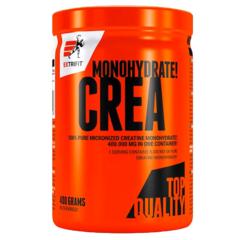
Extrifit Crea Monohydrate
Prom-in Creatine HPLC
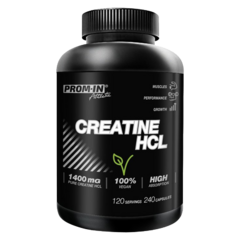
Prom-in Creatine HCL
References:
- Yao et al. (2026): Effects of resistance training combined with creatine supplementation on muscle strength, physical function, and muscle mass in older adults
- Creatine and Cognition in Aging (2025): A Systematic Review of Evidence in Older Adults
- Creatine supplementation research fails to support the theoretical basis for an effect on cognition (2024)
- Effect of creatine supplementation on kidney function (2025)
- NIH: Dietary Supplements for Exercise and Athletic Performance
No posts have been made yet.