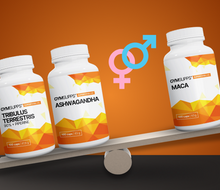
Maca for women: the key to hormonal balance, fertility and PMS relief
 Author:
 In recent years, the Peruvian maca plant(Lepidium meyenii), cultivated for centuries in the harsh conditions of the Andes, has earned its status as a modern superfood. Its nutrient-rich root is traditionally used to increase energy, vitality and fertility. Today, it is primarily discussed in relation to women's health - from regulating the menstrual cycle to promoting fertility to managing the challenging symptoms of menopause.
But these are not just unfounded promises. More and more scientific studies are exploring the plant's true potential. So what does the science say? Could Maca really be the key to a woman's hormonal health? That's why, in this article, we'll dive into PubMed's database of scientific publications and look at the evidence behind these claims.
Article Content:
- Hormonal balance and relief during menopause
- Fertility support: from tradition to scientific evidence
- Potential in relieving PMS
Hormonal balance and menopausal relief
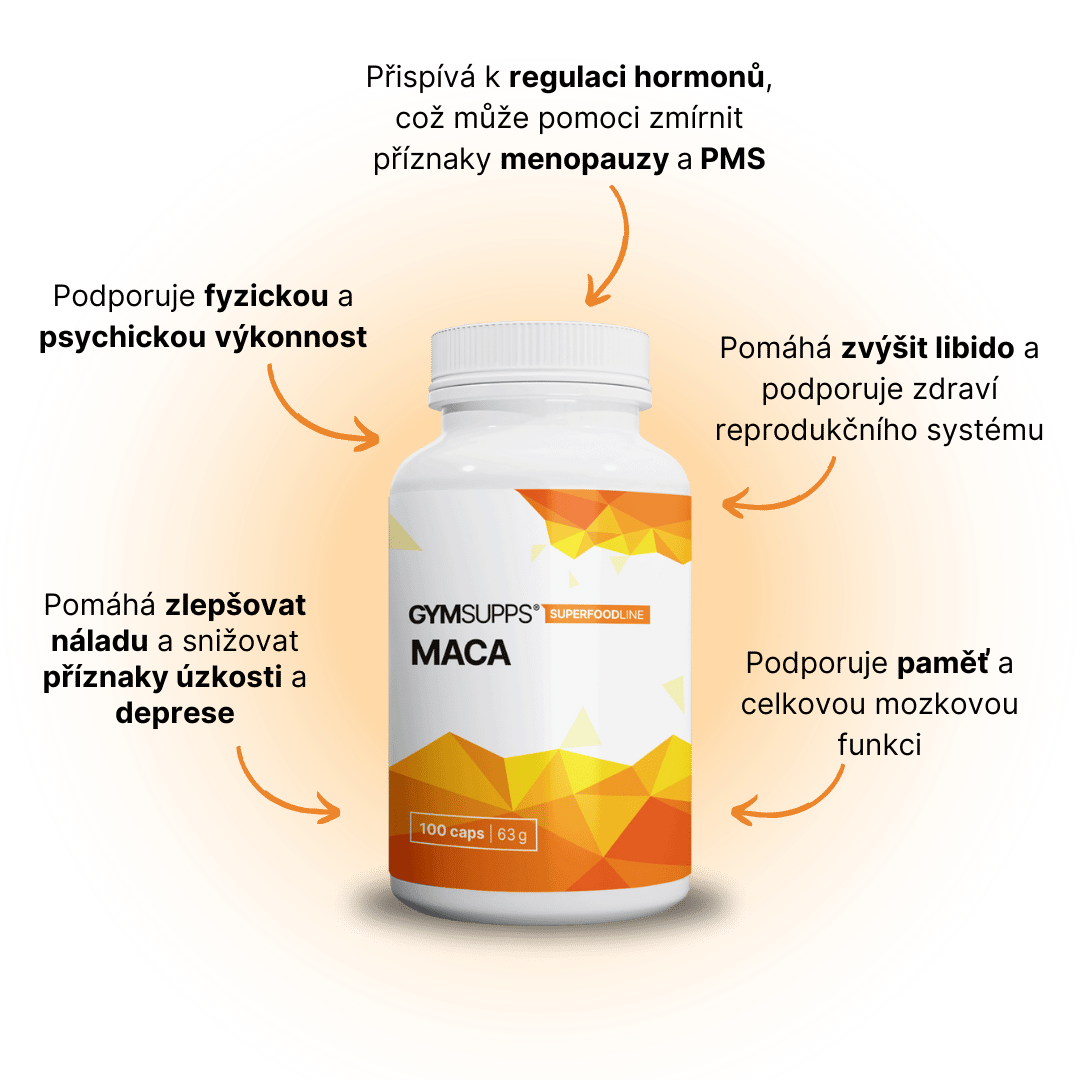
One of the most researched areas of action of maca is its effect on menopausal women. This life stage is often accompanied by unpleasant psychological and physical symptoms such as hot flashes, night sweats, anxiety, depression and decreased libido. Many women seek natural alternatives to hormone replacement therapy. And this is where Maca shows its great potential.
A double-blind, placebo-controlled study published in the journal Menopause¹ provided crucial insight. Fourteen postmenopausal women took 3.5 grams of Maca daily for six weeks, followed by a placebo for six weeks. The results were remarkable. There was a significant reduction in scores of psychological symptoms, especially anxiety and depression, while taking Maca. The women also reported significant improvement in sexual dysfunction.
The most interesting finding, however, was that these positive changes occurred without any effect on hormone levels such as estradiol or follicle-stimulating hormone (FSH). This suggests that Maca does not act as a phytoestrogen (plant estrogen), but rather as an adaptogen. It helps the body cope better with stress (in this case, hormonal fluctuations) and supports the body's own endocrine system in finding balance.
This view is supported by a 2011 systematic review of several studies² which concluded that the available evidence, although limited, points to the beneficial effects of Maca in the treatment of menopausal symptoms. The authors stress the need for further, larger studies, but the results to date are more than promising.
.png)
Fertility support: from tradition to scientific evidence
The traditional use of Maca as a means of increasing fertility in humans and livestock has been known in the Andes for centuries. Modern science is trying to verify these claims and understand the mechanisms behind them.
A 2018 review article published in the Journal of Ethnopharmacology ³ takes a close look at the question of whether the "hype" surrounding the impact of Maca on reproductive health is justified. The authors analyze historical and current studies and conclude that Maca has real potential to affect reproductive function in both sexes.
Although much of the research has been conducted in animal models, the results are inspiring. For example, an earlier study on mice showed that females given Maca had statistically significantly larger litters than the control group. In the context of women's health, it is thought that Maca's adaptogenic properties, which help regulate the hypothalamus-pituitary-ovarian hormonal axis, may contribute to more regular ovulation and better overall reproductive health.
It is important to emphasize that Maca does not contain plant hormones that could disrupt the natural cycle. Instead, it provides the body with nutritional support and bioactive substances (such as macamides and macaenes) that help optimize the function of its own endocrine system. This can help to create more favourable conditions for conception.


Potential in alleviating PMS
Premenstrual syndrome (PMS) afflicts countless women and its symptoms - from irritability, anxiety and mood swings to bloating and fatigue - are closely linked to cyclical hormonal changes. Although clinical trials looking directly at the effect of Maca on PMS are still rare, we can make an educated guess at its potential based on the available data.
Again, the findings from the study focusing on menopause are key here ¹. If Maca can significantly reduce anxiety and depression in postmenopausal women, it is highly likely that it may have similar neuroregulatory effects on the psychological symptoms of PMS. Its ability to support hormonal balance and stress adaptation may help alleviate the very fluctuations that are responsible for pre-menstrual discomfort.
By supporting overall vitality and energy levels, Maca can also combat the fatigue that is a common accompaniment of PMS. It is therefore a holistic action that does not target one symptom, but the overall balance of the body.
.png)
Conclusion.
The scientific evidence, although still evolving, strongly suggests that the traditional use of Maca to support women's health has a real basis.
- For menopausal women, Maca represents a promising natural alternative for relieving psychological symptoms such as anxiety and depression, and for improving sex life.
- For women trying to conceive, Maca offers nutritional support and adaptogenic mechanisms that can help optimize hormonal balance and reproductive health.
- For women suffering from PMS, Maca can offer relief from unpleasant mental and physical symptoms thanks to its effects on mood and hormonal regulation.
Maca is not a miracle cure, but rather an intelligent ally. Instead of supplying the body with foreign hormones, it supports the body's own ability to find and maintain balance. If you're looking for a natural path to better hormonal health, Maca, backed by centuries of tradition and modern science, definitely deserves your attention.
Recommended
Sources:
- ¹ Brooks, N. A., Wilcox, G., Walker, K. Z., Ashton, J. F., Cox, M. B., & Stojanovska, L. (2008). Beneficial effects of Lepidium meyenii (Maca) on psychological symptoms and measures of sexual dysfunction in postmenopausal women are not related to estrogen or androgen content. Menopause, 15(6), 1157-1162.
- ² Lee, M. S., Shin, B. C., Yang, E. J., Lim, H. J., & Ernst, E. (2011). Maca (Lepidium meyenii) for treatment of menopausal symptoms: A systematic review. Maturitas, 70(3), 227-233.
- ³ Beharry, S., & Heinrich, M. (2018). Is the hype around the reproductive health claims of maca (Lepidium meyenii Walp.) justified?. Journal of ethnopharmacology, 211, 126-170.
No posts have been made yet.