





Fertility, vitality and more: Maca & Science
 Author:
 Deep in the harsh conditions of the central Andes of Peru, on the Bombón Plateau, a plant known as maca (scientifically Lepidium meyenii) has been cultivated and exploited for centuries. This remarkable herb has a rich history of traditional use that goes deep into the past of local communities. In recent years, modern science has begun to look intensively at its potential, seeking to understand its composition and to verify traditional claims through systematic research. Ethnobiology and ethnopharmacology, disciplines that investigate the relationship between human societies and plants and their medicinal properties, provide valuable insights into this fascinating plant from the Peruvian highlands.
Article content:
- Origin and characteristics of the plant
- From traditional use to experimental verification
- Clinical studies
- Maca as a potential adaptogen and nutraceutical
- Impact of processing and identification of active ingredients
Původ a charakteristika rostliny
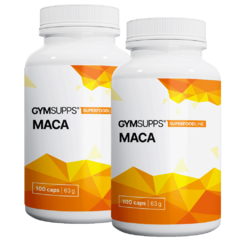
<h2"> <p>Maca is a plant that has shown remarkable adaptability to the harsh climatic and soil conditions of the high altitude environment of the Andes where it is grown. It belongs to the Brassicaceae family, which also includes more common plants such as oilseed rape, mustard, turnips, cabbage, garden cress and brook cress. Its appearance is characteristic: the aboveground part is small and flat, which is probably the result of an adaptation process that helps the plant to withstand the strong high mountain winds. The underground part is the hypocotyl-root axis, a thickened organ that serves as a nutrient reservoir and represents the most commonly used part of the plant.</p> <p style="text-align:center;"><a href="https://www.kulturistika.com/sportovni-vyziva/vitaminy-a-zdravi/gymsupps-maca" target="_blank"><img alt="gymsupps maca" src="/file/870383da5743b642285c7656f1f116c6/9319473/maca cz (1).png" style="width: 80%; height: 80%;" /></a></p> <h2><a id="From-traditional-use-to-experimental-verification" name="From-traditional-use-to-experimental-verification">From traditional use to experimental verification</a></h2> <p>The traditional use of maca in Andean cultures encompasses a wide range of applications, from nutrition to medicinal purposes. Experimental scientific evidence, obtained under laboratory conditions and in animal models, has begun to confirm many of these traditional findings. Studies have shown that maca possesses nutritional properties, acts as an energizer, and is known for its fertility enhancing abilities. In addition, experiments have shown that maca can have a positive effect on sexual dysfunction, osteoporosis, benign prostatic hyperplasia, memory and learning, and provide skin protection from ultraviolet radiation. These pre-clinical findings provide a scientific basis for exploring the potential therapeutic use of maca in humans.</p> <h2><a id="Clinical-studies" name="Clinical-studies">Clinical studies</a></h2> <p>While experimental studies provide valuable initial evidence and elucidate potential mechanisms of action, clinical studies are necessary to confirm efficacy in humans. The review evaluating maca includes the results of such studies, and these have demonstrated the efficacy of maca in several key areas.</p> <p>Clinical trials have confirmed the positive effect of <strong><a href="/en/sports-nutrition/vitamins-and-health/greens-superfoods/maca" target="_blank" title="maca">maca</a></strong> on sexual dysfunction. In addition, clinical studies have shown the potential of maca in improving male fertility, specifically in increasing sperm count and motility. In one of these studies, which evaluated sperm parameters in nine men before and after maca administration (N=9), significant changes were observed in several important parameters. Mean ejaculate volume increased from 2.23 ± 0.28 mL to 2.91 ± 0.28 mL (P < 0.05). Total sperm count in the ejaculate showed a significant increase from 140.95 ± 31.05 x 10^6/mL to 259.29 ± 68.17 x 10^6/mL (P < 0.05).</p> <p>Similarly, motile sperm count increased significantly from 87.72 ± 19.87 x 10^6/mL to 183.16 ± 47.84 x 10^6/mL (P < 0.05). There was also a significant improvement in the percentage of motile sperm of class a + b (from 62.11 ± 3.64% to 71.02 ± 2.86%, P < 0.05). In contrast, no significant changes were observed in this study in ejaculate pH, number of sperm per unit volume (10^6/mL), sperm morphology, or percentage of sperm with the highest velocity of movement (class a). These specific clinical findings from one of the studies cited in the review provide important, albeit preliminary, quantitative evidence for the effect of Maca on male fertility parameters.</p> </h2">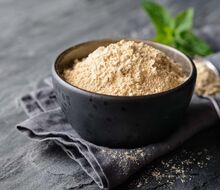
Maca as a potential adaptogen and nutraceutical
Based on the totality of experimental and clinical evidence, maca is a plant with great potential to act as an adaptogen. Adaptogens are substances that help the body adapt to stress and maintain homeostasis, the overall balance. Maca also seems to hold promise as a nutraceutical in the prevention of several diseases. Nutraceuticals are foods or their components that provide health benefits beyond basic nutrition, including the prevention and treatment of disease. This categorisation of maca as a potential adaptogen and nutraceutical underlines its broad-spectrum action and suggests that its benefits may go beyond narrowly defined indications.
Impact of processing and identification of active ingredients
The chemical composition of maca is complex and includes a number of bioactive compounds. An interesting finding is that processing of the plant, such as cooking, appears to increase the availability of some active metabolites. Higher temperature can affect the availability of various secondary metabolites in the plant, sometimes leading to an increase, sometimes to a decrease. In the case of maca, one of the important constituents is glucosinolates, the content and availability of which can be affected by processing. This finding is relevant for understanding how traditional methods of preparing maca may affect its final effects.

Conclusion
Experimental evidence suggests a wide range of potential benefits, from improved energy status and fertility to skin protection and effects on memory and learning. Clinical studies, although limited in number and often focused on specific areas such as sexual dysfunction and male fertility parameters, provide promising results and support some of the traditional claims.
Maca is rightly considered a plant with great potential as an adaptogen and nutraceutical in the prevention of several diseases. Its unique chemical composition, also influenced by its processing method, and its proven effects in experimental and clinical studies suggest that maca could play a role in promoting health and preventing a number of diseases. However, further, more extensive and rigorous scientific research is needed to fully elucidate mechanisms of action, optimal dosage, long-term safety and confirm efficacy in a wider range of indications.
Recommended
Source:
- 1) Ethnobiology and Ethnopharmacology of Lepidium meyenii (Maca), a Plant from the Peruvian Highlands - PubMed Central - National Institutes of Health (NIH)
No posts have been made yet.








