GymSupps Creatine HCL - The new king among creatines?
 Author:
 Today, we're going to dive into the world of one of the most talked about supplements of recent years - creatine. But we're not just talking about the classic creatine monohydrate. We'll focus on its newer, and for many more mysterious, cousin: creatine hydrochloride , specifically GymSupps Creatine HCL. Why are so many people talking about it? And is it really better than the proven monohydrate? Let's take a closer look at it.
Article content:
- What is Creatine and why do athletes love it?
- Creatine HCL: What's behind this strange name?
- What's the secret behind it?
- GymSupps Creatine HCL vs. monohydrate: a key battle in the supplement market
- GymSupps Creatin HCL dosage
- Who is GymSupps Creatin HCL suitable for?
What is creatine and why do athletes love it?
Before we dive into HCL, let's quickly review the basics. Creatine is a naturally occurring substance found in our muscles. It plays a key role in energy production, specifically in the recycling of ATP (adenosine triphosphate), which is a sort of "currency" of energy for our cells. When you exercise, your muscles use up ATP. Creatine helps them replenish their ATP stores quickly, which means you can perform better, lift heavier weights, do more reps, and train more intensely overall. This makes creatine one of the best researched and most effective supplements for increasing strength, power and muscle mass growth.
Creatine HCL: What's behind this strange name?
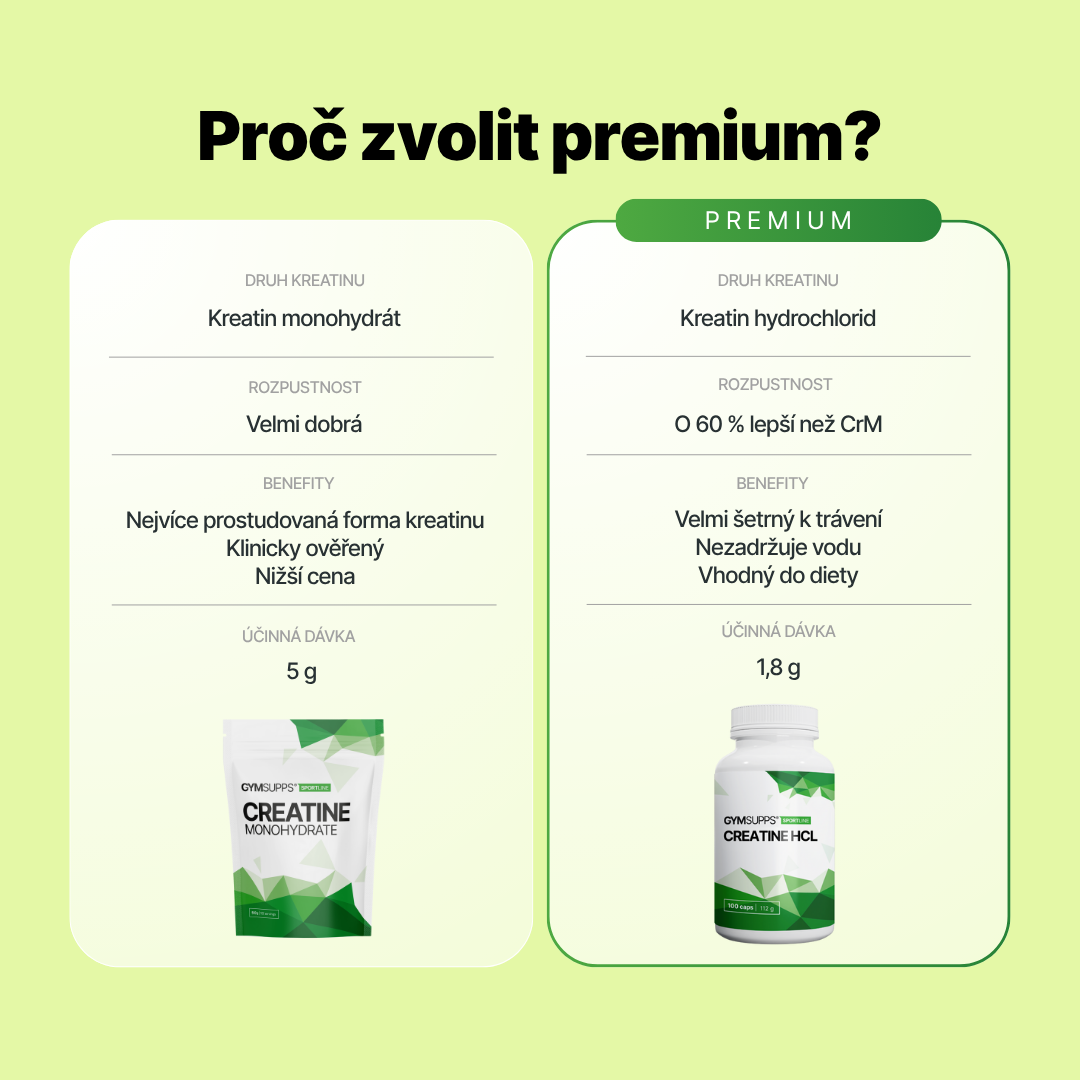
Creatine HCL is basically a creatine molecule combined with hydrochloric acid (hydrochloride). Why is this combination so interesting? The key is solubility. The manufacturers and proponents of creatine HCL claim that it is this binding that greatly increases the solubility of creatine in water, and thus its absorption and bioavailability in the body.
Imagine it like this: When you drink creatine, it must first dissolve in your stomach juices in order to be absorbed into your bloodstream and then into your muscles. The better it dissolves, the more efficiently your body will use it. The theory behind creatine HCL is that due to its better solubility, you need much smaller doses to achieve the same, or even better, results than with traditional creatine monohydrate.
The benefits attributed to it
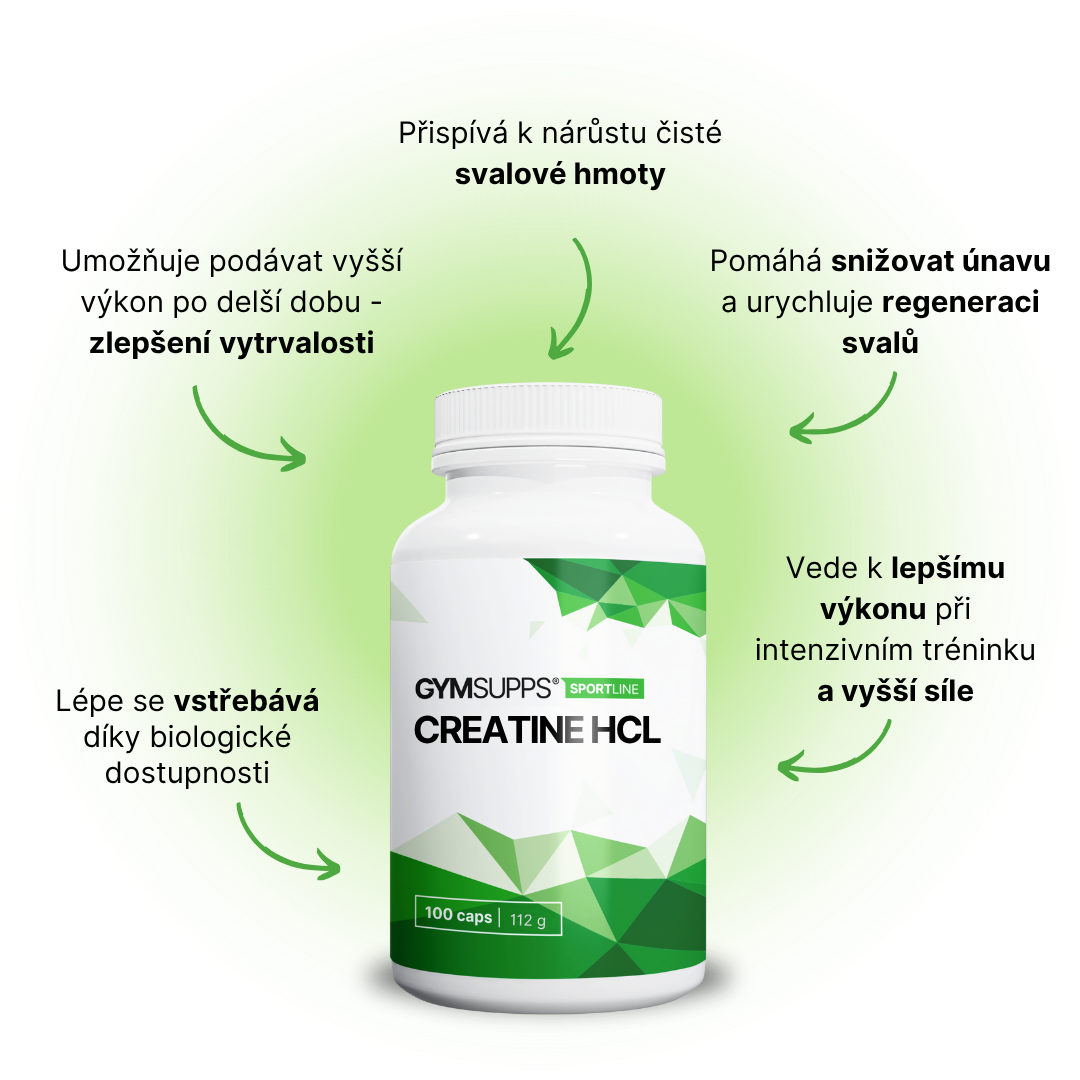
Proponents of creatine HCL often highlight several key benefits:
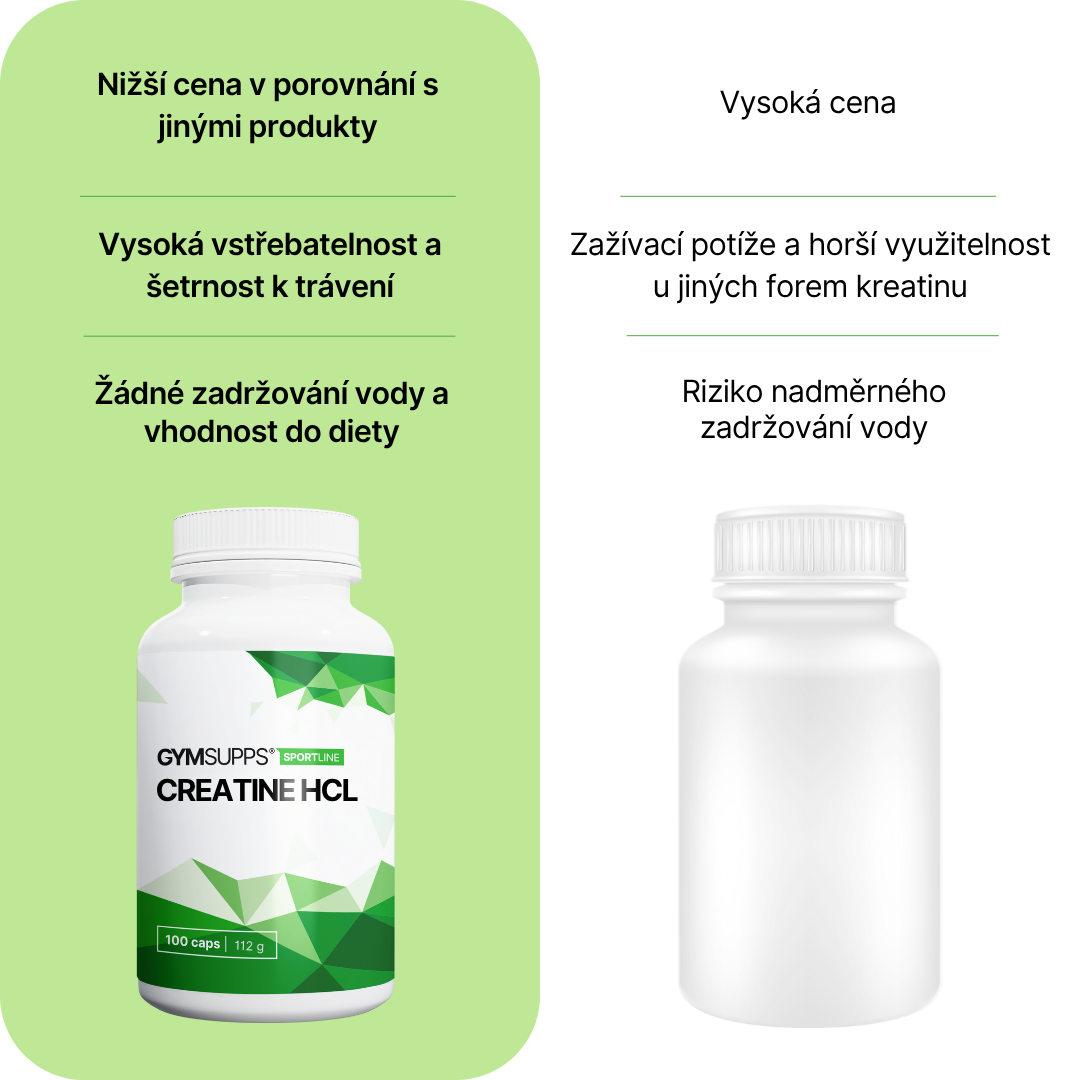
- Smaller doses: due to its supposedly better absorption, much smaller doses of creatine HCL should be sufficient to achieve the desired effect. This means that one pack will last longer.
- No bloating and indigestion: One of the most common side effects some people experience with creatine monohydrate is water retention and associated bloating or stomach upset. It is believed that due to the improved solubility of creatine HCL and smaller doses, these problems should be eliminated or greatly reduced. This is a big advantage for those who want to avoid feeling "bloated".
- No need for a "Saturation Phase": with creatine monohydrate, a saturation phase is often recommended, where you take higher doses for a few days to quickly replenish the creatine stores in your muscles. With creatine HCL, this phase is usually not recommended, which simplifies the use.
- Greater potency: some users report experiencing stronger and faster effects with creatine HCL, although the scientific evidence is still limited in this regard.
GymSupps Creatine HCL vs. monohydrate: a key battle in the supplement market
Now we're getting to the heart of the matter: Is creatine HCL really better than classic creatine monohydrate? This is a question that plagues many athletes and supplement lovers. Here it is necessary to be objective. Creatine monohydrate is one of the most researched and effective supplements ever. Hundreds of studies have confirmed its safety and effectiveness. Most of the evidence supporting creatine HCL comes more from anecdotal experience and theoretical assumptions about its solubility.
.png)
Recommended
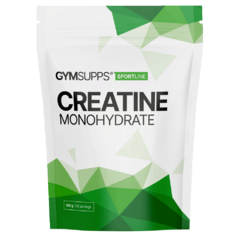
GymSupps Creatine Monohydrate

Creatine Monohydrate 500g 1+1
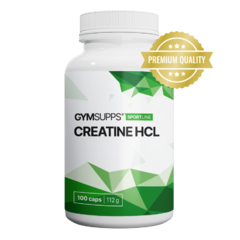
GymSupps Creatine HCL
However, some more recent studies are beginning to address this comparison. One study that compared the impact of creatine hydrochloride and monohydrate supplementation on anabolic/catabolic hormones, strength, and body composition in athletes sought to explore which form of creatine might have a greater impact.1 Other research has focused on whether creatine hydrochloride might be an alternative molecule to creatine monohydrate for weight-restricted athletes.2 Interestingly, physiological pharmacokinetic simulations and modeling showed that supplementation with creatine hydrochloride (Cr-HCL) resulted in significant increases in blood and tissue creatine levels compared to creatine monohydrate (CrM).3 This suggests that although creatine monohydrate is a proven classic, creatine HCL could offer some advantages in absorption.
Dosage of GymSupps Creatine HCL
If you decide to try GymSupps Creatin HCL, it is important to follow the recommended dosage. Due to its supposedly higher solubility and absorbability, doses are much lower than monohydrate. GymSupps Creatine HCL is recommended at a dose of 900 mg to 1.8 grams per day (1-2 tbl.), divided into one or two doses. It is usually taken before and/or after a workout, but some people take it in the morning as well.
For whom is GymSupps Creatine HCL suitable?
GymSupps Creatine HCL may be an interesting choice for several groups of people:
- Individuals who experience indigestion or bloating with creatine monohydrate: if you've tried monohydrate and didn't feel comfortable with it, HCL could be the solution.
- Athletes who want to minimize water retention: for example, those who are preparing for competition and need to maintain a low weight or defined look.
- People looking for a more convenient dosage: Smaller doses and the absence of a saturation phase may be attractive.
- Those who want to try the "new": If you are open to trying new forms of supplements and want to see if HCL will give you better results.
.png)
Conclusion: is GymSupps Creatine HCL worth a try?
Creatine HCL is an interesting and promising supplement that seeks to improve on the properties of the already effective creatine. Its main trump cards lie in its supposedly better solubility and absorption, which could lead to smaller doses and fewer side effects such as bloating. While creatine monohydrate is still the gold standard with a huge body of scientific evidence, newer research suggests that creatine HCL has its merits and perhaps even benefits, especially for those who struggle with monohydrate.
If you're an athlete looking for a way to maximize your performance while wanting to try a new form of creatine, or if you've had trouble with classic monohydrate in the past, creatine HCL from GymSupps could be a great option. Remember, however, that the key to success is always a combination of proper nutrition, hard training, and adequate rest. Supplements are just the icing on the cake!
We hope this article has helped you better understand creatine HCL. If you have any questions or experiences with this supplement, feel free to share in the comments below!
Recommended
Source:
- 1) "Supplementing With Which Form of Creatine (Hydrochloride or Monohydrate) Alongside Resistance Training Can Have More Impacts on Anabolic/Catabolic Hormones, Strength and Body Composition?".
- 2) "Can Creatine Hydrochloride be an Alternative Molecule to Creatine Monohydrate for Athletes with Weight Gain Restrictions?"
- 3) "Physiological pharmacokinetic simulations and modeling showed a significant increase in blood and tissue creatine levels following creatine hydrochloride (Cr-HCl) supplementation compared to CrM." This text was found in the context of search results for "Supplementing With Which Form of Creatine (Hydrochloride or Monohydrate) Alongside Resistance Training Can Have More Impacts on Anabolic/Catabolic Hormones, Strength and Body Composition?"
No posts have been made yet.