5 Scientifically Proven Benefits of Creatine for Athletes
 Author:
 Creatine is one of the most studied and used dietary supplements among athletes and fitness enthusiasts. Its effects are backed by many scientific studies and prove that regular creatine supplementation can have a number of positive effects that promote athletic performance, muscle growth and recovery. In the following article, we'll look at the five main benefits of creatine, including increased muscle strength and power, muscle mass gains, improved anaerobic capacity, accelerated recovery, and potential neuroprotective effects with subsequent improvements in cognitive function.
Article Content:
- Increase in muscle strength and performance
- Increase in muscle mass
- Improved anaerobic capacity
- Acceleration of recovery
- Potential neuroprotective effects and improved cognitive function
Increase in muscle strength and performance
One of the most proven benefits of creatine is its ability to increase muscle strength and overall performance during intense exercise. Creatine works by increasing phosphocreatine stores in the muscles, allowing for faster regeneration of ATP - the main source of energy for muscle contraction. As a result, athletes can perform more repetitions and lift heavier weights during strength training. Numerous studies have shown that creatine supplementation leads to significant increases in strength and performance in athletes engaged in short-term, intense activities.1 This benefit is especially appreciated in bodybuilders, strength athletes, and track and field athletes.

Increased muscle mass
In addition to increasing strength and performance, creatine also contributes to increased muscle mass. Increased phosphocreatine stores in the muscles not only allow for more intense training, but also cause water retention within the muscle cells. This cellular hydration creates an environment favorable for muscle protein synthesis and subsequent muscle mass growth. Studies have repeatedly confirmed that athletes taking creatine during a training cycle achieve greater muscle mass gains than control groups.2 The increase in muscle mass is then key to improving overall body appearance and increasing metabolic activity.
Improving anaerobic capacity
Creatine significantly improves anaerobic capacity, which is the ability of muscles to work at high intensity without sufficient oxygen supply. During short-term, intense performances such as sprinting or repetitive strength training, phosphocreatine is an essential source of rapidly available energy. Creatine supplementation allows for faster ATP recovery, leading to an increase in overall anaerobic performance. This allows athletes to perform more power repetitions and improve their performance in activities where speed and power are key.3 This ability is important for sports that require short-term, high-intensity activity.

Acceleration of regeneration
Recovery after intense training is essential for achieving lasting results and preventing injury. Creatine not only promotes ATP production during exercise, but it can also help speed up the recovery process. Creatine supplementation reduces levels of inflammatory markers and promotes muscle fiber recovery. Research shows that athletes who take creatine have lower levels of muscle damage and faster recovery after strenuous workouts.4 This allows for more frequent workouts and better long-term athletic performance.
Potential neuroprotective effects and improved cognitive function
In addition to its direct effects on muscles, creatine has interesting effects on the brain. Research suggests that creatine may exert neuroprotective effects and contribute to improved cognitive function. In fact, creatine is also a key source of energy for brain cells, and creatine supplementation can improve their function, especially during physical and mental exhaustion. Studies have shown that creatine supplementation can improve memory, concentration, and overall mental performance, which is especially important during demanding cognitive tasks or times of sleep deprivation.5 This benefit may be beneficial not only for athletes, but also for students and professionals looking to improve their mental performance.
Why and when to take creatine?
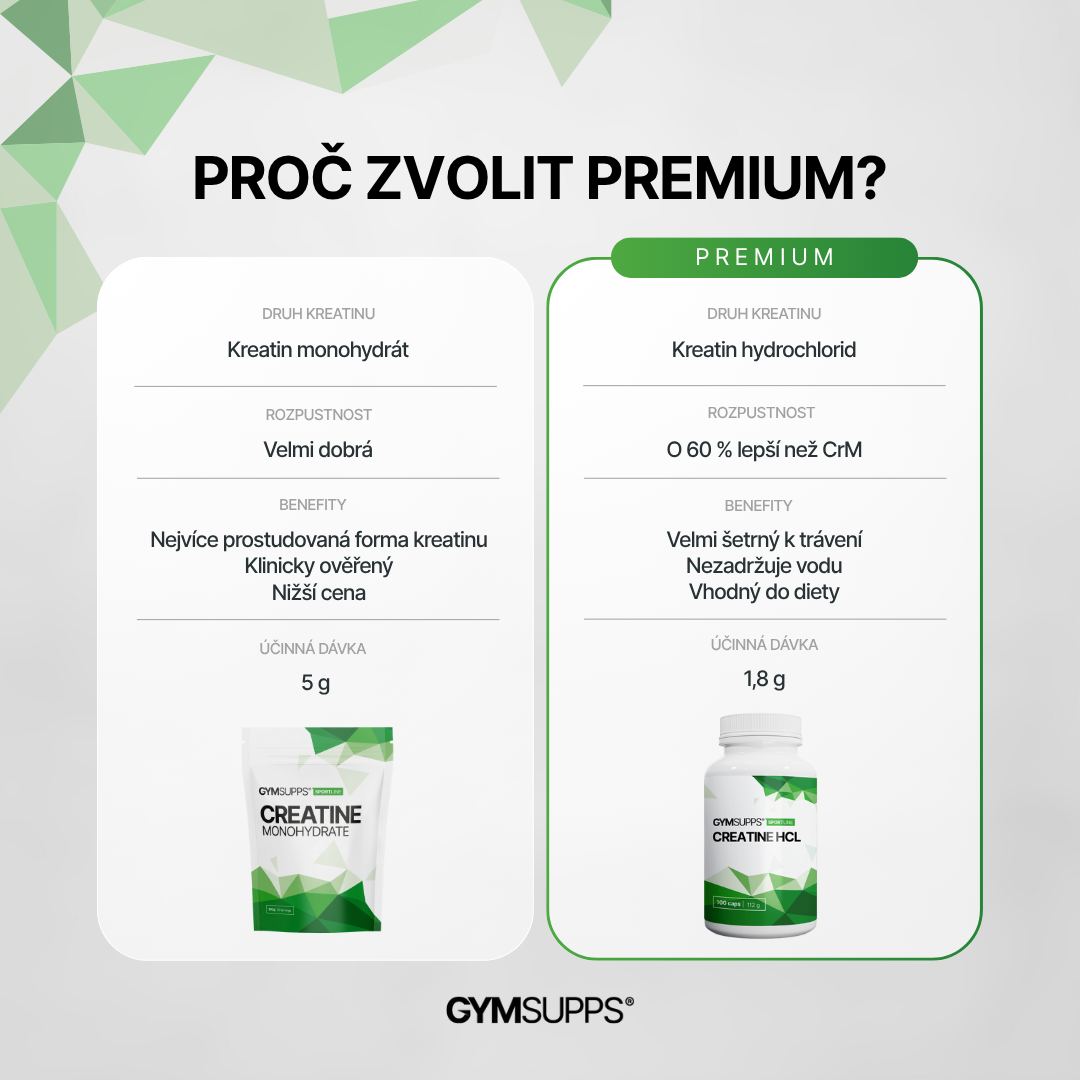
Creatine is most effective when taken regularly, preferably in a cycle form where it is supplemented daily. The best time to take it is after training when muscles are most sensitive to nutrient supply, but it can also be taken before training to increase energy availability during exercise. The recommended daily dose is usually around 3-5 grams per day, with some cycles including a loading phase with higher dosing (20 grams per day divided into smaller portions for 5-7 days) followed by a maintenance phase.1,2 Regular creatine supplementation promotes long-term muscle mass gain, improved performance and faster recovery.
Practical tips for effective creatine use
- Timing. The loading phase may be suitable for beginners or those who want to achieve a rapid increase in phosphocreatine.
- Supplementing with carbohydrates.
- Consistency.
- Hydration.
- Combination with other supplements: creatine can be safely combined with other supplements such as BCAAs or protein, which can support overall muscle recovery and growth.
Conclusion
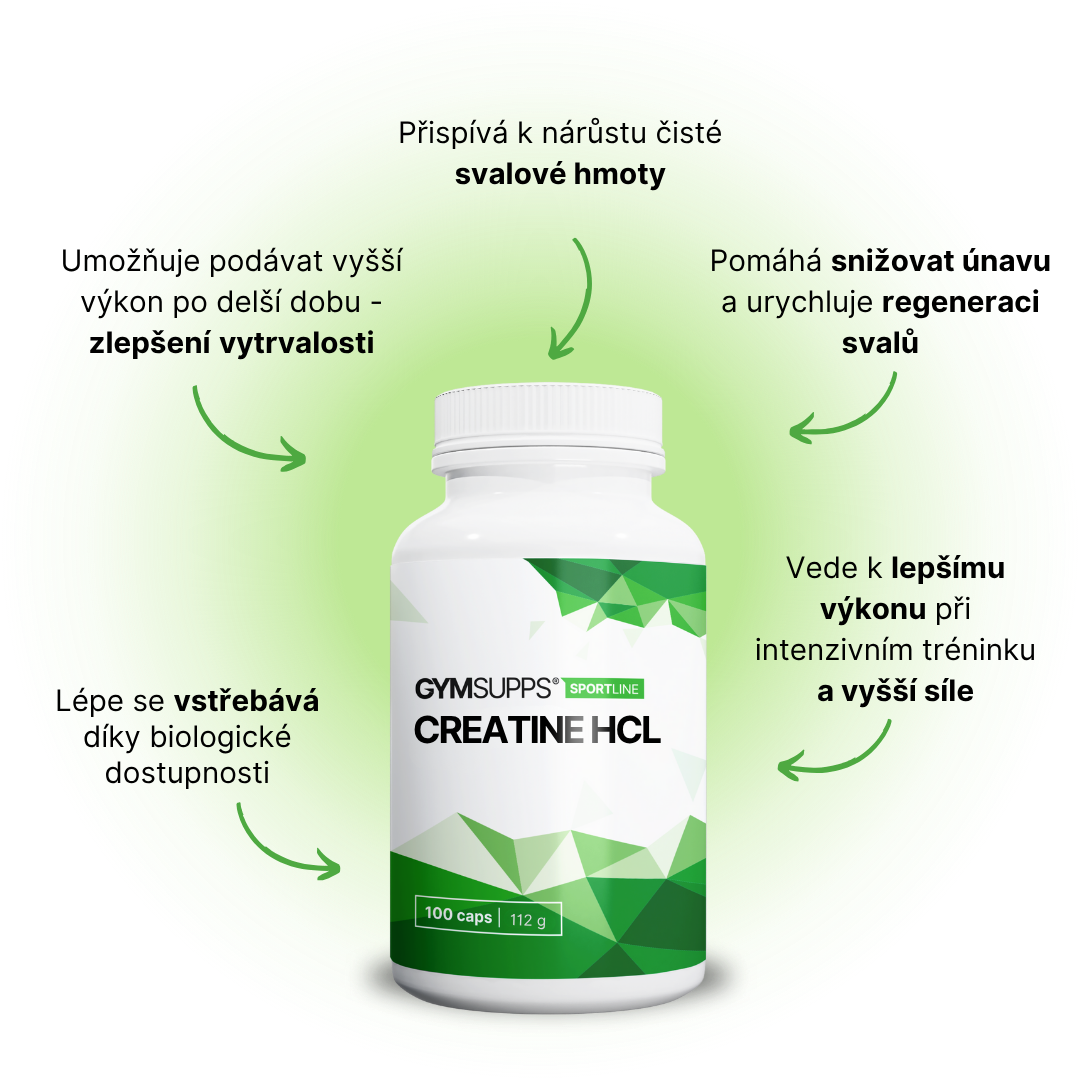
Creatine is one of the most effective supplements that can help athletes increase muscle strength, promote muscle growth, improve anaerobic capacity, speed recovery, and even support cognitive function. Scientific studies repeatedly confirm that regular creatine supplementation leads to significant improvements in these areas. For athletes who want to achieve maximum performance and effective recovery, creatine is an essential supplement that should be part of the daily diet.
The use of creatine is most effective when proper dosing strategies, such as loading and maintenance phases, are followed and when supplementation is combined with a balanced diet and adequate hydration. Creatine not only enhances performance during training, but also promotes muscle fiber regeneration, allowing for more frequent and intense training units. In addition, the potential neuroprotective effects and improvement in cognitive function represent an additional benefit that will be appreciated not only by athletes, but also by anyone who wants to increase their mental alertness and efficiency.
Ultimately, creatine is a key supplement for anyone involved in sport, and its scientifically proven benefits should be harnessed for maximum athletic performance and overall vitality.
Recommended
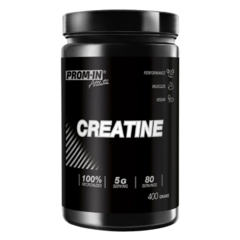
Prom-in Creatine HPLC
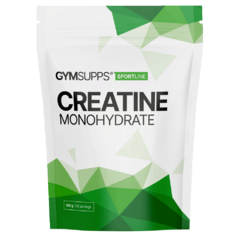
GymSupps Creatine Monohydrate

Creatine Monohydrate 500g 1+1
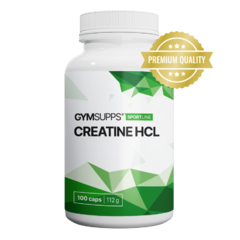
GymSupps Creatine HCL
Links to studies
- 1) Ivy, J.L., et al. (2002). Nutrient timing: the means to improved exercise performance, recovery, and training adaptation. Journal of Sports Sciences.
- 2) Kreider, R.B., et al. (2017). International Society of Sports Nutrition position stand: safety and efficacy of creatine supplementation in exercise, sport, and medicine. Journal of the International Society of Sports Nutrition.
- 3) Rawson, E.S. & Volek, J.S. (2003). Effects of creatine supplementation and resistance training on muscle strength and weightlifting performance. Journal of Strength and Conditioning Research.
- 4) Branch, J.D. (2003). Effect of creatine supplementation on body composition and performance: a meta-analysis. International Journal of Sport Nutrition and Exercise Metabolism.
- 5) Avgerinos, K.I., et al. (2018). Effects of creatine supplementation on cognitive function of healthy individuals: A systematic review of randomized controlled trials. Experimental Gerontology.
No posts have been made yet.