





Growth hormone: facts and fiction
 Author:
 The issues surrounding hGH (human growth hormone) have become a hot topic for the media. Baseball player Mark McGwire admitted to using both anabolic steroids and hGH throughout his career, including his record-breaking 1998 season. The British Anti-Doping Committee banned rugby player Terry Newton for two years for testing positive for hGH.
Shortly after Britain announced the first proven case of hGH abuse in professional sport, Major League Baseball (MLB - the US National Baseball League) issued the following statement:
"We are taking immediate steps toward testing for hGH. We need to act aggressively on this matter."
Clearly, MLB has been eagerly awaiting credible testing for hGH so that it can finally begin to cleanse the tarnished pride of America's national sport that has been trampled by so many doping scandals.
Who can forget when pitcher Jason Grimsey was caught taking delivery of hGH in 2006? Or Andy Pettite admitting to using hGH.
Or the biggest ball lightning. Jose Canseco avoided rumors of hGH just long enough to perform a colossal turnaround and begin singing odes to the drug in his confession book, Juiced, thereby tagging even his teammates Rafael Palmeiro, Jason Giambi, Iván Rodríguez and Juan González.
With this media whirlwind, it's no wonder Senator George Mitchell, after his 21-month investigation into anabolics and human growth hormone use in MLB, labeled hGH a new "prominent drug."
The lingering question for baseball players and athletes in general is clear. Does hGH even deserve such a designation?
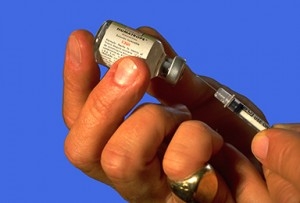
What is human growth hormone
Before we look at its potential for sports, let's review what the growth hormone even is.
Human growth hormone is produced in the brain, specifically by the pituitary gland. When it is released, it stimulates the liver, which produces insulin-like growth factor 1 (IGF-1). This hormone then causes the growth and repair of bones and body tissues, including muscles, skin, organs, and so on.
The natural production of hGH is controlled by the neurohormone somatocrinin, growth hormone-releasing peptides, and somatostatin, and is normally limited to pulses throughout the day. Usually there are about twenty bursts, the largest of which comes shortly after falling asleep.
HGH is most essential for the growth of children, and its levels rise sharply during puberty, peak around the age of twenty, and slowly decline in adulthood. However, a healthy pituitary gland never completely stops producing hGH.
HGH therapy: a brief history
The history of hGH therapy is quite similar to an excerpt from Mary Shelley's Frankenstein. Growth hormone was produced in the 1950s to combat childhood stunting. The first samples were taken from the pituitary glands of the dead (cadavers). This form of growth hormone was called cadaver-GH.
Unfortunately, in 1985, patients from the 1960s were diagnosed with Creutzfeldt-Jakob disease (CJD). CJD is a fatal, degenerative brain disease. Patients experience rapid degeneration of brain function that results in dementia, paralysis, speech impairment, incontinence, blindness, coma and eventually death.
When it was discovered that everyone suffering from this disease had experienced growth hormone therapy from dead bodies in the past, it was quickly abandoned.
In 1981, the American company Genentech used recombinant human growth hormone for the first time. In 1985, cadaveric growth hormone was replaced by biosynthetic growth hormone.
Since then, growth hormone therapy has spread to adults who suffer from hGH deficiency. And this expansion has given rise to an endless money factory called hGH.
Beyond stunting: hGH deficiency and rejuvenation
With a safe alternative to hGH came moves toward its use beyond the treatment of stunting.
In adults, hGH deficiency can be caused by disease, tumor, radiation, or trauma damaging vital areas of the pituitary gland. This can lead to such major health complications as weight gain, cardiovascular problems, cholesterol abnormalities, fatigue, decreased immunity, arthritis, insulin resistance, diabetes, hair loss, sarcopenia (muscle loss), and osteoporosis. Not surprisingly, hGH therapy has helped these patients significantly.
(By the way, the baseball player Segui had a legitimate prescription for hGH, due to his deficiency. This diagnosis raised a wave of criticism because it was not clear to the authorities how a professional athlete of normal height and weight could suffer from a growth hormone deficiency.)
In the last decade, a growing number of physicians have begun to legally prescribe hGH to treat the most common problem in all of medicine: aging.
As already mentioned, the internal secretion of growth hormone gradually declines with age. Stopping this decline has many benefits. More energy, better sexual performance, less fat, more muscle, thicker skin, better sleep, stronger bones, improved cognitive abilities, and extended life span. These are just some of the benefits that are sold to aging men.
Unfortunately for the retired: if an ad says hGH is the source of endless youth, it's lying. Experts and scientists agree that a drop in hGH levels does not cause aging, and maintaining youthful levels of it will not make you the next Dick Clark. Even if your hGH levels remain at the level of a twenty-five-year-old, you will still experience the joys associated with aging, albeit in a somewhat limited way.
Unfortunately, the price won't be limited. Prescription doses of hGH range from $500 to $1,000 per month. Not surprisingly, there are thousands of clinics and doctors specializing in "anti-aging" or "regeneration."
An article in the Journal of the American Medical Association estimates that $1.5 to $2 billion worth of hGH is sold annually, and up to 30% of that amount is used in America to fight aging and improve athletic performance.
Back to the locker room
What most attracts athletes to hGH, (besides the fact that until recently it could not be reliably tested for) is the improvement in recovery from injury. HGH improves collagen synthesis, which is essential for strengthening cartilage, bone, tendons and ligaments.
The combination of hGH with anabolic steroids multiplies its regenerative effects. Jason Grimsley reportedly combined hGH with Deca-Durabolin to recover from ligament surgery and was back on the field in just nine months. Which was half the estimated time.
Dr. Hector Lopez runs a progressive clinic in New Jersey. He specializes in sports, consults for many professional athletes, and is not at all surprised when they look to the combination of hGH and anabolic steroids as a way to extend their active careers.
"My radar is always focused on the endocrine and metabolic status of my patients that could potentially limit their recovery," Lopez says. "Obviously, the axis between hGH and somatomedins is critical to improving recovery from the daily microtraumas that tissues are exposed to."
But these are professionals making seven-figure sums for giving their best. Surely this hasn't reached the amateurs?
Not exactly.
Coach Christian Thibaudeau trains a large number of amateurs in a variety of sports. He's seen interest in hGH rise among amateurs as well, and he's not surprised that MLB is taking the growth hormone issue so seriously.
Thibaudeau says, "HGH was undetectable until recently, and thus became popular in tested sports. The fact that it helps with recovery makes it even more attractive."
However, he adds that this is partly an exaggeration. "HGH doesn't burn fat as well as a good fat burner and it doesn't build muscle as well as testosterone or insulin."
"Athletes aren't sure. They talk about it. Someone tells them they're taking it and they're thinking they should too. Athletes don't want to allow the competition to be favored."
"It's still a little bit twisted. Whether it can be detected or not, it shouldn't be used in baseball. It's still kind of a hunting season in bodybuilding," Thibaudeau said.
Bodybuilding is growing
"Jared" aspires to be a professional and has a nice string of wins among amateurs.
He started out as a powerlifter, but when fellow bodybuilders recognized his Herculean physique and potential for bodybuilding, he decided to give it a shot.
Five years and several first place finishes later, Jared has a real shot at turning pro. It remains to be added that hGH has a significant part in his success.
Or does it?
" I enjoy hGH, but to be honest, I don't think it's that good on its own. At least not compared to insulin and high doses of testosterone," he says. " It seems that with hGH, the other drugs (medications, if you will) just work better."
Jared has been taking hGH for a year. He cycles frequency and doses according to goals and budget. "It's not cheap. I mean, the real thing. 500 to 1,000 bucks for a kit with 100 MJ (unit of measure) is common," he says. "I routinely take 12-15 MJ a few days a week in the off-season and 4-6 MJ a day before competition."
"I plant three weeks before competition because it can hold water. However, it's great in the diet. You lose weight and stay fuller," he adds.
Although the medically recommended dose of hGH is under 2 MJ per day, Jared insists his doses are far from excessive.
"I've heard of professionals taking 20 or more units a day. But not every day."
Christian Thibaudeau agrees. "From what I've heard, occasional higher doses might be better for anabolism, while long-term low doses for fat loss. So 15 MJ three times a week for muscle and 2-4 MJ a day for weight loss."
Thibaudeau says the anabolic effect of hGH is dependent on IGF-1 secretion, while fat burning is a result of hGH itself. However, IGF-1 secretion is tricky and pretty dose dependent.
"You need a hefty dose of hGH to secrete IGF-1 for an anabolic response," he says.
Dose cycling is better than daily high doses because it mitigates side effects, which are very real, according to Thibaudeau.
The dark side of hGH
At therapeutic doses, hGH side effects are relatively mild. These include bloating, carpal tunnel syndrome, gynecomastia, increased blood pressure, optic nerve swelling, and a decrease in thyroid hormone production.
Even long-term use of reasonable doses seems relatively safe. A two-year study, conducted on a large sample and published in the Journal of Clinical Endocrinology, found that patients had improved body composition, metabolic parameters, and overall quality of life after hGH treatment. The only unpleasant side effect was related to flatulence.
A 10-year study of hGH administration published in the Journal of Endocrinology and Metabolism was similarly glowing. The test subjects noticeably increased muscle tissue and decreased adipose tissue, decreased the predisposition to atherosclerosis, decreased carotid constriction, and improved psychological status. Although the study only tested 10 subjects, the results are still worth noting because these were relatively young people (mean age = 38).
But these were still low doses compared to bodybuilding. That's a major difference.
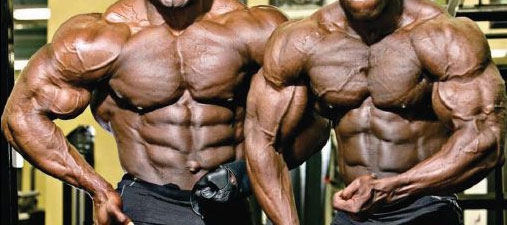
High levels of hGH can cause acromegaly, which is excessive growth of the head, legs and arms, in adults. The nose, jaw, forehead, fingers and toes will grow. The organs and digestive tract may also gain in size, resulting in the distended abdomen seen in bodybuilders.
Jared feels that his cycling has spared him these unpleasant side effects. Well, most of them.
"My hair is growing faster. My nails, too. I suffer a little from carpal tunnel syndrome. Nothing major," he says. "If you dose wisely, the side effects should be minimal."
Growth hormone and cancer
There are concerns that long-term use of hGH could increase the risk of cancer. IGF-1 promotes cell growth and prevents cells from dying. Which is exactly what cancer cells do. They grow uncontrollably and don't die.
Many studies have shown that women and high levels of hGH are more likely to develop breast cancer. In men, it's prostate cancer.
However, hGH advocates add that although there is an association between IGF-1 levels and certain cancers, association does not imply consequence. Moreover, according to recent research, hGH has a positive effect on the immune system, which (in theory) should in turn reduce cancer risk.
"There is limited, but interesting, data on hGH improving natural cell killing ability and immune surveillance of neoplastic cells," Lopez says. "This reduces the incidence of certain cancers."
Despite these findings, Lopez is not ready to dismiss the link between hGH and cancer altogether. Before he prescribes hGH therapy, he looks for it in his patients.
"I would think twice before prescribing hGH to someone with hormone-sensitive cancer," he says.
He definitely wants to study this area better.
To take or not to take hGH
Building muscle
It seems clear that for the average strength athlete, hGH is unnecessarily expensive, given its potential for muscle growth. At least if we're talking about American pharmaceutical sources. If it were to work, this drug needs to be combined with testosterone and/or insulin or drive the doses sky high. Again, if we're talking about American sources of hGH.
Also, it should be mentioned that the potential for muscle growth at high doses includes anything that is not fat or water. Specifically organs and viscera for example. Which I'm sure the average athlete doesn't appreciate much. This condition can be reversed nowadays, but bodybuilders should still consider these side effects.
Fat burning
The benefits of hGH for fat burning, especially in combination with testosterone, cannot be denied.
Even at moderate doses, noticeable loss of body fat and maintenance of lean muscle mass can be observed. When combined with fat burners and anabolics, noticeable results become dramatic.
Recovery
The potential of hGH for recovery appears to be second to none. Professional athletes some a few thousand dollars a month need not worry, and even athletes who take significantly less find it reasonable to use hGH as a means to extend their athletic career.
Bodybuilder Jared would also swear by the regenerative effects of hGH. "I tore my triceps quite a bit a while ago and was told my season was over for me. I recovered so quickly that I was back in the gym in a fortnight. My physio wanted to put me on a poster for the clinic."
"I couldn't tell him I was on hGH."
Safety
The safety of hGH seems acceptable. However, it bears repeating that long-term studies have been conducted at doses noticeably lower than what athletes consider effective. The evidence suggests that higher doses carry greater risk.
So is hGH safe for everyone?
Dr. Lopez puts it this way, "It's a matter of weighing the risk and potential benefit, taking into account personal and family history of the disease, taking into account the needs and goals that the individual has."
Performance
Aside from its effect on recovery and return to the field, hGH has very little effect on actual athletic performance. An athlete with normal growth hormone levels will benefit from it minimally.
Secretagogue: hGH recovery
Secretagogues (Secretagogues) are substances that induce secretion of other substances. There are several secretagogues of hGH that are being studied right now. And the restrictions that are gradually occurring are attracting the attention of physicians to these substances. One of the substances is sermorelin acetate, an artificial equivalent of growth hormone that forces the pituitary gland to produce more.
Many doctors prefer moderators that will improve their own hormone production to replacing them. And sermorelin looks very promising on paper. It has been around for years, looks safe, and unlike hGH therapy, carries no long-term risk to the pituitary gland and no risk of overdose.
There are drawbacks, of course. Sermorelin is expensive and the effective dose may be close to that which hGH would require. It also has an extremely short half-life, so its potential for increasing growth hormone levels is short-lived. These drawbacks have been enough to turn the attention of some physicians away from restoring growth hormone back to replacing it.
However, the development of a new, longer-acting factor to arrange for growth hormone production has increased interest in restoring this hormone. Will hGH therapies soon become a thing of the past? Time will tell.
Summary
At first glance, the benefits of human growth hormone appear too promising to be real. And if we don't count the magical healing abilities, this first glance is also correct
If we compare hGH's anabolic abilities with those of plain testosterone. At reasonable doses and without the involvement of other drugs, hGH does not hold up in both safety and price/performance ratio.
It doesn't hold up even when we look at cheaper Chinese versions like Jintropin and even cheaper (and often debatably high quality) generic versions. Many young or recreational athletes choose to emulate their role models and reach for hGH. Thibaudeau, however, will not be recommending hGH to his athletes for a long time.
"It's not a miracle drug," he says. "It's just a piece of the puzzle, just like steroids and insulin. It's even just a small piece of the puzzle."
"If a reliable test is developed, I'd be surprised if any professional baseball players even bother to take hGH anymore."
For bodybuilders on the cusp of entering the pros, like Jared, it's a different story. "I don't rank hGH ahead of insulin or testosterone," he says. "But it works. And basically everyone I'm up against will be taking it. It sounds weird, but in bodybuilding, you just have to keep up."
"Maybe even all those baseball players said they had to keep up with Jose Canseco."
By Bryan Krahn, translated by Jaromir Uhlir
No posts have been made yet.








