





Does CLA really have the promised fat-fighting effects?
 Author:
 Summer is coming and with it the frantic "chasing" of swimsuit form. You may have thought of using a fat burner and heard about CLA, the supplementation of which promises significant fat loss. Is CLA the miracle it's made out to be, or is it an unnecessary investment? While we don't promise you a definitive answer, we will offer you different perspectives on CLA.
CLA is the term used to name the various isomers of linoleic acid, collectively known as conjugated linoleic acid. It is a polyunsaturated acid and is classified as an omega-6 fatty acid. However, it is more likely to be classified as a beneficial ("good") fat. In natural foods and supplements, cis-9, trans-11 and trans-10, cis-12 isomers are most prevalent. Some studies confirm the positive effect of cis-9, trans-11 isomers of CLA on the growth of active body mass. In contrast, the trans-10, cis-12 isomer of CLA is reported to have a greater effect on the breakdown of fat stores (lipolytic effect) or protection against their formation.
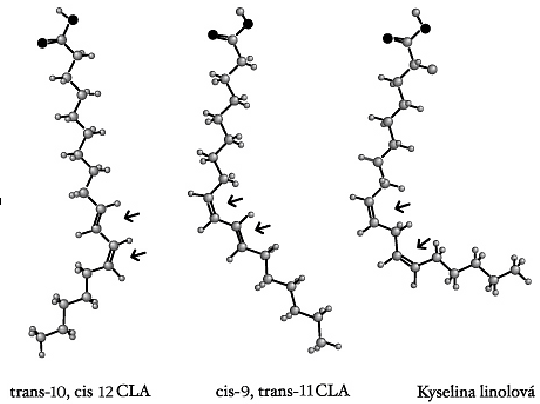
If we want to obtain this acid from food, it is found to a lesser extent in beef and dairy products. Other sources include linseed oil and lamb. Why do we list it in smaller amounts? The truth is that ensuring adequate dietary intake of CLA is quite a challenge. For what reason? Let's pour ourselves some clear wine. Due to improper animal feeding practices, where natural grass-fed diets are replaced by a variety of compound feeds, the CLA content of beef and milk (and the products made from it) is significantly reduced. Some sources indicate that this proportion can be reduced by more than 60%. On the other hand, grass-fed beef is the richest in CLA. It is for this reason that it is important to mention that even an increase in the consumption of dairy and beef products does not necessarily mean a higher intake of CLA. On the other hand, it is beef and dairy products that tend to be associated with higher concentrations of trans fatty acids. Technically, linoleic acid is also a trans fat, but it is nonetheless good for our bodies. However, it is better to reach for a supplement than to try to make up for its intake through diet.
What are its promised benefits for athletes?
Research suggests that CLA could be a great fat-burning aid, and beware, it could even increase lean muscle mass and speed up metabolism. So technically, it is indeed a trans fat, but CLA is naturally present in our food sources and is different from industrially produced trans fats, which are not really suitable for healthy diets. CLA helps reduce cravings for unhealthy foods and prevents the build-up of additional fat stores. You could say that CLA is basically a special type of fat that replaces the need for other "unhealthy" fats.
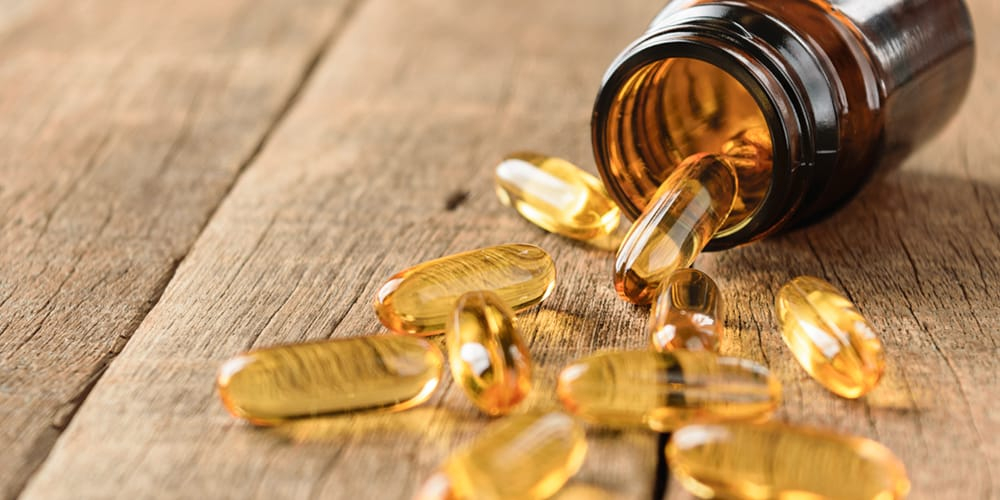
Thus, CLA is most often presented as a supplement that aids fat burning. But it has to be said that like all other supplements promising this effect, it does not work on its own, but to bring the desired fat burning effect, one needs to exercise and adapt the diet. Linoleic acid is involved in a number of important metabolic reactions in our body. Quite interesting is its role in fat flushing. Through an enzyme (called hormone-sensitive lipase), it promotes the flushing of fats (fatty acids) from fat cells while inhibiting lipoprotein lipase, which is responsible for fat storage. A very interesting studied effect appears to be the so-called nocturnal fat burning. By promoting the building of muscle mass without more fat, it increases basal metabolic rate and thus more energy expenditure even at rest.
Findings also suggest that CLA helps us retain the satiety effect for longer, so we don't consume unnecessary amounts of calories. In testing, it has been shown that CLA intake allows the body to burn much more energy, or allows for better use of fat as "fuel", thus reducing fat stores. It is important to note, however, that the effects of CLA can be seen more in the LONG TERM. It is therefore not a supplement that works in a short period of time, but for visible results, CLA needs to be taken for longer. Recommendations vary, but a horizon of 3 - 6 months is given.
Does CLA have any other possible benefits?
While animal studies demonstrate positive health effects quite clearly, no significant effect has been 100% proven in human subjects yet . What cannot be denied, however, is that CLA promotes good skin health and is often included in skin care products. Healthy fats also have an effect on overall health, regeneration and support immunity. Another benefit that CLA could offer is helping to lower cholesterol and triglycerides. It is also a good supplement for the overall treatment of obesity, atherosclerosis and fat metabolism disorders.
Recommended
HiTec CLA Xtreme 1400mg
Czech Virus CLA
In addition, it is also considered an antioxidant. There is also speculation over the effect of CLA on maintaining stable blood sugar levels. It is also reported that CLA could increase bone mineral density. On the other hand, CLA deficiency is manifested by hair loss and drying of the skin.
Research into the effects of CLA on the body, performance and health will continue and changes in individual functions and recommendations, or confirmation or refutation of expected effects, can be expected. Nevertheless, it is important to remember that CLA is a natural component of the diet, but due to industrial food processing, its content in the diet is decreasing. Positive health effects due to additional supplementation are likely to be substantially visible in people who do not have a balanced diet, do not consume meat or dairy products.
But beware, there is much speculation around the effects of CLA. It is a fact that although animal studies have come to clear and demonstrable conclusions, whether we are talking about the effect on burning, muscle building or health benefits, testing CLA on humans has produced much less effect. Part of this may be due to the fact that different mixtures of CLA isomers are used, resulting in lower utilization for fat burning of the most effective t-10 c-12 isomer. In addition, the experimental animals that showed these positive results were given an amount of CLA that depended on their body weight. However, this amount was up to 20 times higher than the doses given to humans.
Sources:
https://www.ncbi.nlm.nih.gov/pubmed/11110851
https://www.ncbi.nlm.nih.gov/pubmed/15159244
https://www.ncbi.nlm.nih.gov/pubmed/16531905
https://www.ncbi.nlm.nih.gov/pubmed/16924272
https://www.ncbi.nlm.nih.gov/pubmed/17031391
https://www.ncbi.nlm.nih.gov/pubmed/16864141
https://www.ncbi.nlm.nih.gov/pubmed/25987426
https://www.ncbi.nlm.nih.gov/pubmed/25434907
https://www.ncbi.nlm.nih.gov/pubmed/11412893
No posts have been made yet.








