





Clenbuterol and its benefits
 Author: Šárka Randáčková
 Builds muscle and burns fat at the same time
The article in no way encourages its readers to use anabolic steroids and other stimulant, illegal substances! However, we cannot avoid this topic either!
Clenbuterol is a popular drug used by bodybuilders and other athletes alike. It belongs to a category of compounds known as beta-agonists, which bind to beta adrenergic receptors stored in the cell membrane - they serve cell signaling, break down fat and activate growth in muscle cells.
These functions give clenbuterol its unique ability to burn fat and build muscle at the same time.
However, it also has its drawbacks. One of them is the rapid inhibition of its functioning inside the cell. Recent scientific evidence even presents that clenbuterol not only loses its anabolic potential quickly, but also can stimulate muscle atrophy when taken for too long, by increasing the content of myostatin, a molecule that is deleterious to muscles.
Myostatin is part of the transforming growth factor-beta (TGF-beta) super family of growth factors. Unfortunately, unlike other growth factors, it prevents hypertrophy and stimulates atrophy. However, there are supplements that block myostatin, which should help clenbuterol.
Such supplements should also reduce the amount of clenbuterol needed for muscle growth, which should also limit its degradation inside the cell, further improving its anabolic potential.
Reducing myostatin function enhances the anabolic effect of clenbuterol
This has been confirmed by one key piece of research. This study by Kim et al1 showed that clenbuterol, which has been shown to increase muscle size via mTOR signalling2, also works well with myostatin inhibitors. The researchers took normal mice and myostatin-deficient mice and gave them clenbuterol. After two weeks, the myostatin-blocking mice had better results. Their muscle mass increased by ~25 percent.
This result clearly says that blocking myostatin while giving clenbuterol improves results.
Clenbuterol increases levels of the muscle-damaging myostatin
Abo et al. took a previous study and examined whether the inhibitory effect of myostatin on clenbuterol is due to the administration of clenbuterol itself 3. In their study, they examined the level and activity of myostatin in mice administered clenbuterol continuously for 21 days.
Hypertrophy was induced between days 3 to 14, corresponding to increased levels of IGF1 growth factor. The study further showed increased myostatin activity. It showed that it was caused by clenbuterol use, with myostatin serving as a negative regulator during the later stages of use, while IGF1 worked as a positive regulator during the early stages of use.
Creatine and vitamin D reduce myostatin levels and help clenbuterol
Certain supplements have been shown to reduce myostatin levels. Their consumption should therefore reduce its effect on clenbuterol. Creatine is a compound that has proven effects on muscle and strength. It is a primary source of energy, regenerates muscle ATP, and also stimulates muscle growth. 4
A recent study by Saremi et al5 demonstrated that creatine consumption reduces myostatin levels in muscle cells, causing significant muscle growth. This study had two groups of men exercise with or without creatine for eight weeks.
Recommended
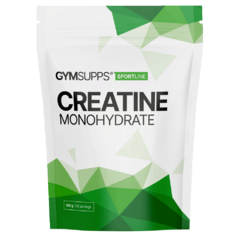
GymSupps Creatine Monohydrate
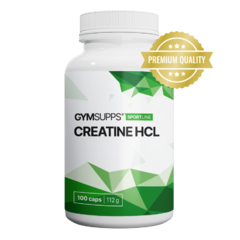
GymSupps Creatine HCL

Creatine Monohydrate 500g 1+1
Myostatin levels dropped in both groups, but the group taking creatine dropped significantly more. They also grew more muscle mass and increased strength more - clearly showing that creatine reduces myostatin levels, thereby increasing both strength and muscle mass.
Another potent myostatin inhibitor is vitamin D. As a recent study by Garcia et al.6 showed, vitamin D reduced the amount of myostatin in isolated muscle cells, making the muscles grow more. This study showed that vitamin D triggers a potent myostatin inhibitor known as follistatin, which increases the amount of muscle mass by blocking myostatin.7
This study proves that reducing myostatin levels and vitamin D activity greatly increases the size of muscle fibers.
Recommended

GymSupps Vitamin D3

Vitamin D3 100cps 1+1
Essential amino acids fuel muscle growth by reducing myostatin levels
Essential amino acids (EAAs) potentially activate mTOR-driven proteosynthesis, thereby increasing muscle volume.8,9
A recent study by Drummond et al10 showed that EAAs can also reduce genetic myostatin production in cells. EEAs reduce myostatin production by stimulating the production of a group of molecules known as micro-RNAs, which have the ability to reduce the efficiency of certain genes.
The unique finding of this study is that in human muscle, ingestion of 10g of EEA produced micro-RNA molecules that reduced myostatin production by about 50%. Although further research is needed to determine the exact role of micro-RNAs in myostatin regulation, this represents a completely new avenue for reducing its levels and improving muscle protein synthesis.
In conclusion then, although clenbuterol has exceptional abilities to stimulate fat loss and muscle gain at the same time, it also directly increases myostatin levels - which can lead to muscle loss. On the other hand, myostatin is so reactive that even a slight reduction in clenbuterol doses leads to its reduction to such a degree that clenbuterol continues to work.
However, the ability of clenbuterol to increase myostatin levels should be countered by taking the right supplements at the same time to ensure that clenbuterol does not limit itself through myostatin.
About the Author:
For most people, Michael Rudolph made his mark on the world of training as an athlete (he played American football in college), personal trainer, or scientist (He has a degree in training and a PhD in biochemistry and molecular biology). After receiving his PhD, Michael spent more than eight years researching the molecular biology of training at Columbia and Harvard Universities.
His research contributed substantially to the understanding of the important cellular energy sensor AMPK - resulting in many publications in renowned journals. Michael is currently a research scientist at the New York Structural Biology Center and is working on a Department of Defense project involving national security.
Sources:
1. Kim KH, Kim YS and Yang J. The muscle-hypertrophic effect of clenbuterol is additive to the hypertrophic effect of myostatin suppression. Muscle Nerve 2011;43(5): p. 700-7.
2. Carter WJ, et al. Effects of clenbuterol on skeletal muscle mass, body composition, and recovery from surgical stress in senescent rats. Metabolism 1991;40(8): p. 855-60.
3. Abo T, et al. IGF and myostatin pathways are respectively induced during the earlier and the later stages of skeletal muscle hypertrophy induced by clenbuterol, a beta(2)-adrenergic agonist. Cell Biochem Funct 2012;30(8): p. 671-6.
4. Willoughby DS and Rosene J. Effects of oral creatine and resistance training on myosin heavy chain expression. Med Sci Sports Exerc 2001;33(10): p. 1674-81.
5. Saremi A, et al. Effects of oral creatine and resistance training on serum myostatin and GASP-1. Mol Cell Endocrinol 2009;317(1-2): p. 25-30.
6. Garcia LA, et al. 1,25(OH)2vitamin D3 stimulates myogenic differentiation by inhibiting cell proliferation and modulating the expression of promyogenic growth factors and myostatin in C2C12 skeletal muscle cells. Endocrinology 2011;152(8): p. 2976-86.
7. Cash JN, et al. Structure of myostatin-follistatin-like 3: N-terminal domains of follistatin-type molecules exhibit alternate modes of binding. J Biol Chem 2012;287(2): p. 1043-53.
8. Fujita S, et al. Nutrient signaling in the regulation of human muscle protein synthesis. J Physiol 2007;582(Pt 2): p. 813-23.
9. Drummond MJ and Rasmussen BB. Leucine-enriched nutrients and the regulation of mammalian target of rapamycin signaling and human skeletal muscle protein synthesis. Curr Opin Clin Nutr Metab Care 2008;11(3): p. 222-6.
10. Drummond MJ, et al. Essential amino acids increase microRNA-499, -208b, and -23a and downregulate myostatin and myocyte enhancer factor 2C mRNA expression in human skeletal muscle. J Nutr 2009;139(12): p. 2279-84.
Author: Šárka Randáčková No posts have been made yet.








