




5 Psychological Lessons from the Navy SEALs: How to Push Beyond Your Limits?
 Author:
It’s six in the morning. It’s still dark outside, and the alarm clock has just woken me up. Last night, the decision was clear: I’d get up in the morning, go for a run, and finally start training regularly. But now everything’s different. My body would much rather stay in bed. My mind immediately comes up with several convincing arguments. It’s cold outside. Today is going to be a tough day. After all, skipping one workout doesn’t mean anything.
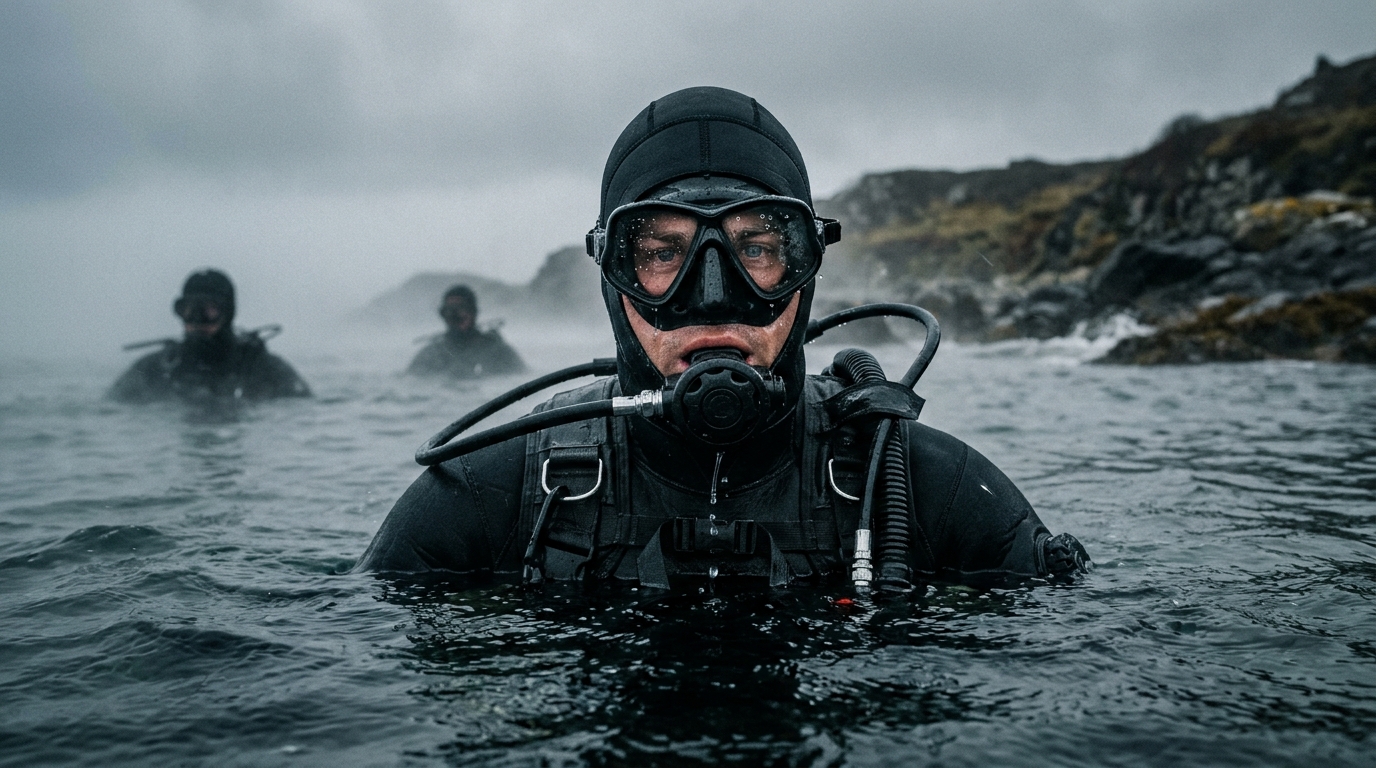
And it is precisely at this moment that something psychologically interesting takes place. You see, people don’t just have to battle physical exertion. Often, they also have to grapple with their own interpretation of the situation. A similar principle emerges during the grueling training of elite Navy SEAL units, where candidates face extraordinary physical and mental strain.
Of course, their training cannot simply be compared to regular athletic training. Nevertheless, it offers an interesting starting point for a question that concerns each and every one of us.
How can we tell when we’re truly limited by our capabilities, and when it’s primarily our own beliefs holding us back?
Article Contents:
- The Brain Doesn’t Always Lead Us to What We Want
- Discomfort doesn’t necessarily mean we’re doing something wrong
- Emotions aren’t facts. But they’re important information
- Don’t focus on the whole race. Focus on the next step
- Motivation comes and goes. Habits can stick
- True resilience isn’t the ability to endure everything
Our minds don’t always lead us to what we want
The human mind is not simple, and it does not automatically support all of our long-term goals. Its functioning is influenced by a whole range of mechanisms related to learning, emotions, motivation, anticipating consequences, and regulating behavior. And this is where an interesting contradiction arises. A person may consciously desire change, yet at the same time feel strong resistance to the steps necessary to achieve it.
An athlete wants to improve their fitness but doesn’t want to go through another grueling workout. A student wants to finish school but puts off work that requires concentration. Psychology explains this contradiction, among other things, through self-regulation and the choice between immediate and delayed rewards.
Short-term comfort can, in fact, be more appealing at a given moment than a long-term outcome. However, this does not mean that the brain is our enemy. Rather, it turns out that our immediate feelings may not always align with what we want to achieve in the long run.
Therefore, the first step toward change can be a simple realization: Just because I don’t feel like doing something right now doesn’t mean I don’t want to do it.

Discomfort doesn’t necessarily mean we’re doing something wrong
Anyone who has ever started exercising regularly knows that strange moment when their previous sense of comfort begins to fade. Muscles work, breathing quickens, and the effort gradually increases. However, we don’t have to experience this kind of discomfort only during exercise. It also arises during public speaking, a challenging conversation, or the decision to leave an environment we’ve grown accustomed to. Psychologically, how we interpret such a situation is crucial.
If we automatically view every unpleasant sensation as evidence of danger or our own inadequacy, we may start avoiding even situations that are important to us. Conversely, the ability to tolerate a reasonable amount of discomfort can help us achieve long-term goals. However, this does not mean we should ignore pain, exhaustion, or health risks.
In sports, it is essential to distinguish between expected exertion and warning signs of overexertion.
Mental resilience does not mean that a person stops being aware of their body. It also lies in the ability to correctly assess when to continue and when to rest.
Emotions aren’t facts. But they are important information
“I can’t do this.”
Almost every athlete has said this to themselves at some point. It might come before an important race, during a grueling training session, or when returning to competition after a long break. Interestingly, the mere feeling of inadequacy doesn’t necessarily reflect a person’s true capabilities. Psychology distinguishes between emotions, thoughts, and objective circumstances.
If we’re afraid of failure, it doesn’t automatically mean we’ll actually fail. If we doubt our abilities, it doesn’t necessarily mean we have none. Some cognitive-behavioral therapy techniques work specifically with this distinction.
People learn to recognize automatic thoughts and assess whether they correspond to the available evidence. For example, the thought “I’ll never be able to do this” can be replaced with a more accurate assessment:
“I haven’t succeeded yet, but I can figure out what I need to change.”
This isn’t mindless optimism. It’s the ability not to treat every personal fear as an indisputable truth. Emotions, however, are not useless. They can alert us to real problems, needs, and risks. What matters is whether we can correctly assess their significance.
Mental resilience also begins with proper recovery
You may have strong discipline, clearly defined goals, and the determination to push past your limits. But if you consistently neglect sleep, nutrition, and recovery, it will be harder for you to cope with demanding training and everyday stress. Mental resilience isn’t just about the ability to endure discomfort; it’s also about knowing how to give your body the conditions it needs to function properly.
Magnesium, for example, plays an important role here, as it contributes to the normal functioning of the nervous system, mental performance, and the reduction of fatigue and exhaustion. If you’re unable to get enough magnesium through your regular diet, you might want to consider GymSupps Magnesium Duo—malate + bisglycinate. This package combines two forms of magnesium for convenient supplementation throughout the day.
Of course, no supplement can replace discipline, quality sleep, or psychological stress management. However, it can help replenish an important nutrient as part of an overall balanced regimen.
Recommended



Don't focus on the entire race. Focus on the next step
A marathon runner stands at the starting line, knowing that more than 42 kilometers lie ahead. If he focused solely on the total distance at every moment, he might experience significant mental overload. That’s why it can be helpful to break down this challenging task into smaller, specific goals.
Don’t worry about the entire marathon—just the next kilometer. Don’t worry about all the remaining training sessions—just today’s workout. Don’t worry about the whole year—just what needs to be done today. A similar approach is also known in sports psychology, where process goals are used.
While an outcome goal might be “to win the race,” a process goal focuses on specific actions that the athlete can directly influence. For example, maintaining proper technique, controlling pace, or sticking to a prepared strategy. It is precisely this focus on the controllable aspects of performance that can help regulate attention and reduce overwhelm.
The same logic applies in everyday life. A person may not always have control over the final outcome. However, they can influence their next step. And sometimes, it is precisely this step that determines whether anything will begin to change at all.
| Psychological Principle | How It Manifests | How to Apply It in Practice |
|---|---|---|
| 1. Overcome Initial Resistance | You don’t feel like working out, even though you know why you want to exercise. | Start with a small step: Get your gear ready and focus on getting started, not on the entire workout. |
| 2. Embrace a reasonable amount of discomfort | A challenging workout or a new situation can cause uncertainty and stress. | Distinguish between effort and risk: Embrace a reasonable challenge, but don’t ignore pain or warning signs. |
| 3. Challenge negative thoughts | Before a race, you may feel like you’ll fail, even if you’re well-prepared. | Check the facts: Separate your own fears from the actual evidence of your abilities. |
| 4. Focus on the next step | A big goal overwhelms you, and you don’t know where to start. | Break it down: Instead of thinking about the whole marathon, focus on the next kilometer; instead of the whole year, focus on today’s workout. |
| 5. Build habits | Your initial enthusiasm fades, and regular training starts to feel harder. | Create a routine: Exercise at a set time and make it easier to repeat the desired behavior. |
* The principles outlined here represent practical insights from sports psychology inspired by the topic of rigorous training. They are not an official Navy SEAL methodology.
Motivation comes and goes. Habits can stick
The beginning is often the easiest part. New running shoes, a gym membership, or the decision to change your diet can spark intense enthusiasm. But after a few weeks, that initial motivation often fades. Training is no longer a novelty. Results don’t come as quickly as we expected, and daily responsibilities begin to take precedence.
This is where the importance of habits becomes clear. Psychological research suggests that repeating a certain behavior in a consistent context can gradually reinforce its automation. This way, a person doesn’t have to decide anew each time whether to perform a given activity.
A typical example might be working out at the same time every day or preparing your sports gear the night before. It’s important to note, however, that forming a habit isn’t a matter of a few days. The process can take weeks or even months, and its pace varies significantly between individuals and activities.
Discipline, therefore, does not necessarily mean constantly fighting against oneself. It can also involve creating an environment in which the desired behavior is easier to repeat. And that may actually be more effective in the long run than waiting for the moment when we have perfect motivation.
True resilience is not the ability to endure everything
Navy SEAL training presents an extreme environment in which physical and mental abilities are tested under exceptionally demanding conditions. For the average person, however, the goal is not to mimic such conditions. It is more interesting to understand the principle that can be applied to sports and everyday life.
You don’t have to automatically believe every doubt that pops into your head. You don’t have to give up on long-term goals just because you don’t feel motivated at a particular moment. And you don’t have to view every discomfort as proof that you’re heading in the wrong direction.
At the same time, however, they need to recognize their own limits, respect the need for recovery, and accept that sometimes the right decision is to rest.
So perhaps it’s not about learning to push past our limits at any cost. It’s about learning to distinguish between the limits that protect us and those we’ve created only in our own minds.
Recommended

New 100% Whey Protein 800g 1+1

XGen 90cps + Omega 3 90cps
No posts have been made yet.