




Why do we feel that a good workout has to hurt?
 Author:
Let’s imagine two athletes who have just finished a leg workout. The first can barely make it down the stairs, while the second leaves the gym feeling relatively refreshed. Which of them had the better workout? At first glance, many people would say the first one. After all, he gave it his all. But this is precisely where one of the most common misconceptions in fitness comes into play.
Pain and exhaustion are not the same thing as an effective workout.
At the gym, we’ve gotten used to equating the quality of a workout with how much energy it cost us. The more demanding the workout, the greater the sense of satisfaction. And if we don’t feel sore the next day, we sometimes even feel guilty that we didn’t work out hard enough.
But where does this way of thinking come from?
Article Contents:
- Why Does Our Brain Associate Suffering with Progress?
- Muscle soreness isn’t a reliable indicator of muscle growth
- Why don’t you have to finish every set with complete failure?
- Real progress may not be immediately visible
- The best workout isn’t the one that wrecks you
Why does our brain associate suffering with progress?
From a psychological perspective, it’s interesting that people often evaluate their own efforts based on how much discomfort they had to overcome. If an activity cost us a lot of energy, we tend to attribute greater value to it. In psychology, there’s a related concept known as “effort justification.”
It was originally described in the context of how people evaluate goals or groups for which they had to endure an unpleasant experience. In a fitness setting, this way of thinking can manifest quite simply. If a workout has left us extremely exhausted, we’re more likely to feel that it must have been exceptionally effective.
However, a subjective sense of difficulty does not necessarily indicate whether we have provided our muscles with the optimal stimulus for growth.
Muscle soreness is not a reliable indicator of muscle growth
Post-workout muscle soreness, known as DOMS (delayed onset muscle soreness), typically appears several hours to days after unusual or strenuous physical activity. It is often associated primarily with eccentric contractions, during which the muscle lengthens under load.
Although it may occur after a high-quality workout, it does not in itself prove that muscles are growing faster. For example, when the same workout is repeated regularly, the body gradually adapts. Muscle soreness can thus decrease significantly, even though the workout remains an effective stimulus.
Therefore, if we were to evaluate the quality of our workouts based solely on pain, we might reach the erroneous conclusion that our training is gradually getting worse. In reality, however, this may simply be a natural sign of adaptation.

Why don’t you have to finish every set with complete failure?
Another common belief is that for maximum muscle growth, we must complete each working set only when we are no longer able to perform another repetition. Arnold’s Pump Club also highlights this issue. Research suggests that training to complete muscle failure is not a necessary condition for hypertrophy. Under certain circumstances, similar results can be achieved even when ending a set with a few repetitions left in reserve.
What’s particularly important is that the set be sufficiently challenging, along with the overall training volume and long-term progress. At the same time, complete muscle failure can increase fatigue and prolong the time needed for recovery. Of course, this doesn’t mean that training to failure has no place in a workout. It can be a useful tool, especially for certain isolation exercises.
The problem arises when it becomes a mandatory part of every set, regardless of the rest of the workout.
Muscles don’t grow from pain. What do they really need?
If you want to build muscle mass, it’s not enough to just train as hard as possible. It’s equally important to create conditions in which your body can adapt to the training load. In addition to adequate rest, a properly balanced diet and sufficient protein intake also play a crucial role.
Protein, in particular, contributes to the growth and maintenance of muscle mass. If you’re unable to get enough protein from your regular diet, GymSupps XWhey Protein can be a practical solution. For strength training, creatine monohydrate is also worth considering; when taken at a daily dose of 3 grams, it enhances physical performance during repeated, short-term, high-intensity efforts.
Remember that nutritional supplements are no substitute for quality training or recovery. However, they can help replenish nutrients and support long-term consistency in your training regimen.
Recommended
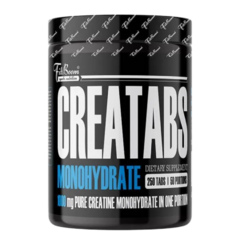
FitBoom Kreatin Monohydrate
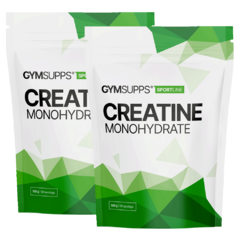
Creatine Monohydrate 500g 1+1
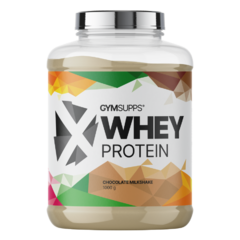
GymSupps XWhey Protein

Real progress may not be immediately apparent
Psychologically, there’s another challenge to strength training. Results often come slowly. While we feel pain, sweating, and exhaustion right away, muscle growth or increased strength develop gradually over weeks and months. And that’s exactly why it can be tempting to mistake the immediate feeling of exertion for proof of progress.
It’s much more useful, however, to track long-term indicators: whether we’re gradually handling heavier weights, performing more high-quality reps, improving our form, or increasing our training volume. Progress doesn’t always have to be dramatic. Sometimes it simply means that we can handle the same workout better today than we could a month ago.
.jpg)
The best workout isn’t the one that wipes you out
If you want to build muscle mass over the long term, what you need above all is a workout from which you can recover and that you can repeat regularly. Extreme fatigue isn’t automatically a sign of a good workout. And the absence of muscle soreness definitely doesn’t mean you didn’t train intensely enough.
True discipline doesn’t necessarily mean completely exhausting yourself during every workout. Sometimes it also means knowing when to stop at the right moment.
Because the goal of strength training isn’t to prove how much pain we can endure. The goal is to gradually improve.
| Psychological Barrier | How It Manifests During Training | How to Overcome It |
|---|---|---|
| Fear of failure | You avoid more demanding but safe challenges because you’re afraid you won’t be able to handle them. | View a failed attempt as feedback, not as a personal failure. |
| Fear of being judged | You’re worried about what others at the gym will think of your performance. | Focus on your own technique and progress instead of comparing yourself to others. |
| Perfectionism | You see a single bad workout as proof that you’re not improving. | Evaluate your progress over the course of weeks and months, not based on a single day. |
| Negative self-talk | Before a challenging set, you tell yourself that you’re not up to the task. | Replace these automatic conclusions with a realistic assessment of your abilities and preparation. |
| Identifying with performance | Failing to lift a weight will negatively affect your self-confidence and sense of self-worth. | Separate your personal worth from your current athletic performance. |
| Avoiding Challenges | Over the long term, you stick only to familiar and comfortable training routines. | Gradually increase the intensity in line with your technique, experience, and recovery. |
True strength is also built outside the gym
Mental resilience is an important part of strength training. However, determination alone isn’t enough. If you want to gradually increase your working weights and surpass your previous performance, you also need systematic training, sufficient energy, and quality recovery.
One of the most well-researched sports nutrition supplements is creatine monohydrate. When taken daily at a dose of 3 grams, it enhances physical performance during repeated, short-duration, high-intensity exercises. That’s precisely why it’s a favorite supplement among athletes focused on strength training.
Adequate protein intake is also essential for building and maintaining muscle mass. If you can’t meet your protein needs through your regular diet, you can try GymSupps XWhey Protein, for example.
Of course, no supplement can eliminate the fear of failure. However, it can be part of a well-designed regimen that helps you prepare for your next training challenge.
Recommended
Creatine Monohydrate 500g 1+1
GymSupps XWhey Protein
No posts have been made yet.