




Put your ego aside—it'll save your joints! Science has finally settled the debate over heavyweights and lightweights
 Author:
You know the look. A guy at the gym loads up the leg press with every weight plate within a fifty-meter radius. He yells with every rep, his range of motion is barely five centimeters, and his form is a mess. Everyone’s watching. His ego is sated.
But what about the muscles? They grow from something else entirely. If you’re under the impression that the only path to massive muscle mass is through lifting absurdly heavy weights that crush your spine and destroy your shoulders, it’s time to wake up. Science has a clear verdict, and it might just save your athletic longevity.
What you’ll learn in this article:
- No more barroom arguments. Science takes the stage
- Three Rules for Muscle Growth Without Ego
- Heavy vs. Light Weights: Which Should You Choose?
No More Barroom Arguments—Science Takes the Stage
For years, a dogma has been passed down in gyms: Heavy weights and few reps build muscle. Light weights and many reps define muscle. Today, we know that this is nonsense.
Definitive proof came from a large-scale meta-analysis led by renowned hypertrophy expert Brad Schoenfeld and his colleagues (published in the Journal of Strength and Conditioning Research, 2017). The researchers collected data from studies where people trained with heavy weights (for a few reps) and compared them with those who worked out with light weights (for 20+ reps).
The result—which shocked personal record chasers? Muscle growth was virtually identical in both cases.

Three Rules for Muscle Growth Without Ego
Why is this the case, and how can you apply it to your workout right away? Here are the hard facts:
1. It’s the loss of strength that matters, not the weight (Failure is king)
It doesn’t matter to the muscle whether there are 50 or 100 kilos on the barbell. A muscle has no eyes; it doesn’t read the numbers on the plates. It responds only to mechanical tension and metabolic stress. Muscles grow when you force them to work close to their absolute limit (to failure). Whether you reach this point after 6 heavy reps or 25 lighter ones makes almost no difference in terms of building muscle mass.
2. Do you want strength or size? Take your pick.
You need to draw a clear line here. If your goal is to lift as much as possible for a single maximum rep (you’re a powerlifter), you have to lift heavy weights. Your nervous system must learn to activate all the muscle fibers at once. Strength is a skill. But if you’re purely after muscle size and aesthetics (hypertrophy), heavy weights aren’t the only way—and often not even the best way.
3. Your joints will thank you
This is the most important point. Constantly training to failure with maximum weights is a one-way ticket to the orthopedist. With lighter weights, you can maintain strict, clean form. You’ll feel the muscle, stretch it through the full range of motion, and significantly spare your elbows, shoulders, tendons, and back. The result? You can train consistently for years without unnecessary injuries.
Your catalyst for muscle growth:
Don’t make excuses—rely on hard work and the right fuel. If you want to squeeze the most out of light weights and push a set to true failure, you need to bring out the big guns. Before your workout, take GymSupps XPre Workout —a proven pre-workout that delays fatigue, guarantees extreme focus, and pumps blood into your muscles even during the toughest reps. Follow that up with a post-workout serving of GymSupps XWhey Protein. This highly absorbable whey protein immediately delivers building blocks to your exhausted muscles and ensures that your hard work at the point of failure won’t go to waste—your muscles will grow.
Recommended
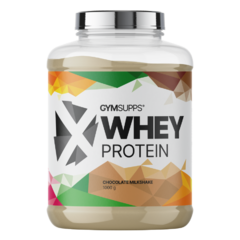
GymSupps XWhey Protein
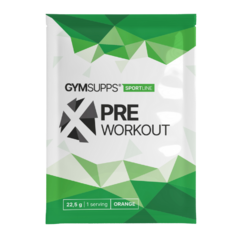
GymSupps XPre Workout

Heavy vs. Light Weights: Which Should You Choose?
| YOUR APPROACH AT THE GYM | HOW IT LOOKS IN PRACTICE | YOUR SMART MOVE |
|---|---|---|
| Ego Lifting (Maximizing Weight) | You load the bar with everything you can find. Technique goes out the window; you lift with your back and risk injury just for the thrill of lifting heavy weights. | Leave your ego in the locker room: Muscles don’t have eyes—they don’t know what number is on the plate. They grow from fatigue. Lower the weight, improve your form, and go for it. |
| Light-Weight Training | You do 20–25 reps. Your joints don’t hurt, and you’re easy on your elbows and shoulders, but you often finish the set before it really starts to burn. | Go to failure: Light weights build muscle just as effectively, but you have to push the set all the way to the point where your body simply can’t do another rep. |
| Building absolute strength | Focus on surpassing your one-rep max. Here, pumping with an empty bar won’t save you. | Heavy weights have their place: Light weights are enough for muscle mass, but to lift your maximum in strength, you logically need heavy weights. |
Your Next Step
Your ego is the biggest enemy of your progress. A properly executed set with strict form and a controlled lowering phase is the best training partner you can have. That doesn’t mean you should throw your heavy barbells out the window. It means you need to start using them wisely and stop being afraid of lighter dumbbells.
Stop. Evaluate your workout.
When was the last time you really felt a muscle without having to cheat with your whole body during the movement? Leave your ego in the locker room today. Cut the weight by 20%, slow down your pace, focus on your form, and push yourself to failure. That pumped-up feeling and pure muscle soreness will quickly convince you that science is right.
Recommended
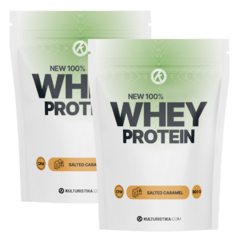
New 100% Whey Protein 800g 1+1
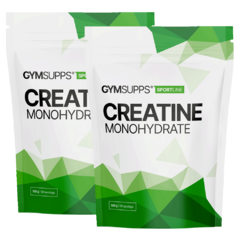
Creatine Monohydrate 500g 1+1
No posts have been made yet.