





Ditch the mat—you'll save your energy! Science has finally settled the debate over stretching before a workout
 Author:
 You know the look. A guy walks into the gym, tosses his bag into the corner, and—with a sense of total responsibility for his health—lies down on the mat for twenty minutes. He carefully stretches his chest muscles against a pole, stretches his hamstrings, holds a static pose for a minute in pain with every exercise, and looks as if he’s just averted every conceivable injury in the world. His conscience is clear. His ego is sated by the feeling of perfect preparation.
But what about his maximum strength? That has just taken a hard hit. If you live with the deep-seated belief (which even our elementary school PE teachers drummed into our heads) that the path to brutal performances and lifting maximum weights lies in long, static muscle stretches, it’s high time to wake up. Science has a crystal-clear verdict, and it might just save your personal records and restore your lost explosiveness.
What you’ll learn in this article:
- No more barroom arguments. Science takes the stage
- Three Rules for Proper Preparation Without Losing Strength
- Static vs. Dynamic Stretching: Which Should You Choose?
No More Barroom Arguments—Science Takes Center Stage
For years, an absolute dogma has been passed down in gyms, on track fields, and in locker rooms: Before any athletic or strength activity, you must thoroughly perform static stretches; otherwise, you’ll immediately tear a muscle, and your workout will be a waste of time. Fortunately, we now know for certain that this is complete nonsense and a relic of the last century.
Dozens of sports studies, including extensive meta-analyses published in the prestigious *Journal of Strength and Conditioning Research*, have provided definitive proof. Researchers conducted a detailed analysis of data from studies in which both elite athletes and amateurs held their muscles in maximum stretch for more than 30 seconds (typical static stretching) before strength training. They then compared their performance on basic exercises with that of participants who did not perform any static stretching at all, but instead opted for a dynamic warm-up or just a series of warm-up exercises.
The result, which shocked all fans of pre-workout yoga and slow stretching? The group that performed static stretching before their workout demonstrably lost, on average, 5 to 8% of their maximum strength and explosiveness. This means that if you’re supposed to bench press 100 kilos, after twenty minutes of static stretching, your own body will only let you lift a maximum of 92 kilos.

Three Rules for Proper Preparation Without Losing Strength
Why is this the case, and how can you immediately apply these laboratory findings to your daily training to get the most out of it? Here are the hard scientific facts that are a game-changer:
1. The Stretched Rubber Band Effect (Stiffness Is King)
To understand this, we need to look at biomechanics. Imagine your muscle and the surrounding tendons as a strong, firm, and thick rubber band. When you do a heavy squat, this muscular “rubber band” stretches as you move downward. This causes it to store a huge amount of elastic energy. At the bottom of the squat, this stored energy is released rapidly and literally propels you and the barbell upward (the so-called stretch-shortening cycle). But if you statically stretch this rubber band on the mat before your workout and hold it under tension for tens of seconds, you literally “stretch it out.” The muscle loses its natural elastic stiffness. The result? The muscle weakens and is unable to generate the explosive force you absolutely need to overcome the sticking point during a heavy lift.
2. You’re putting your own brain to sleep (suppression of the nervous system)
This is an absolutely fascinating paradox. Your muscles contain tiny sensors (muscle spindles and Golgi tendon organs) that constantly monitor tension and impending danger. When you stretch a muscle for a long time in a static position, feeling the tension and breathing through the pain, you send a clear evolutionary signal to your brain: “We’re safe, there’s no threat—let go and relax.” Your central nervous system (CNS) obeys and switches to parasympathetic mode. Your heart rate slows, your blood pressure drops, and the speed at which nerve impulses are transmitted to your muscles is reduced. But wait—in five minutes, you’re about to lift a barbell loaded with 150 kilos! Before a workout like that, you need to get your CNS as fired up as possible; you need adrenaline and aggression, not to lull it to sleep like in a meditation class.
3. Dynamic and Sport-Specific Warm-Ups Will Save You
Let’s make this crystal clear to avoid any confusion. Don’t confuse the absence of static stretching with the absence of a warm-up! Coming into the gym from the cold and going straight to lifting your max is a one-way ticket to the orthopedist. Your joints and muscles will thank you—but only if you warm them up the right way. Your body needs to reach its operating temperature, but it has to do so through movement. The solution is dynamic stretching. Do arm swings, arm circles, and walking lunges with torso rotation. These movements will raise your heart rate, lubricate your joints with synovial fluid (joint lubricant), and pump warm blood into your muscles. And the most important thing? Right before your workout, do 2 to 3 quick warm-up sets with an empty bar or very light weights. This teaches your nervous system the precise path of movement and activates all your motor fibers without losing elastic strength.
Your catalyst for muscle growth and strength:
Don’t make excuses; rely on hard, logical work backed by the right fuel. If you want to squeeze the absolute maximum out of your dynamic warm-up and subsequent heavy workout and push every working set to true failure, you need to bring in the big guns. Static stretching has put your CNS to sleep; now you need to kick it back to life.
Take GymSupps XPre Workout before your workout —a proven and extremely powerful pre-workout that, thanks to the perfect synergy of its stimulants, will delay fatigue, guarantee brutal laser focus, and, thanks to citrulline, pump your muscles full of nutrients and oxygen even during the hardest and most painful reps. Follow that up immediately after your workout with a generous post-workout serving of GymSupps XWhey Protein. This highly absorbable whey protein will instantly deliver top-notch building material to your exhausted and torn muscles. It ensures that your hard work—pushing to the point of failure with the heaviest possible weight—won’t go to waste, and your muscles will grow exactly as they should.
Recommended

GymSupps XWhey Protein
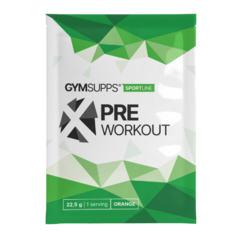
GymSupps XPre Workout

Static vs. Dynamic Stretching: Which Should You Choose?
| YOUR APPROACH AT THE GYM | HOW IT WORKS IN PRACTICE | YOUR SMART MOVE |
|---|---|---|
| Static Stretching (Before your workout) |
You sit on a mat for 20 minutes. You stretch your muscles until they hurt, hold the stretch for long seconds, and breathe deeply. Your nervous system slows down, and your muscles lose their natural elasticity. | Leave the mat at home: Muscles need tension and stiffness to generate force. Static stretching robs you of explosiveness. Save it exclusively for post-workout relaxation or days off. |
| Dynamic Warm-up (Dynamics) |
You’re moving. You’re swinging your arms, rotating your torso, and doing dynamic lunges. You’re raising your heart rate, increasing blood flow to your tissues, and lubricating your joints. | Get moving: Your body desperately needs to reach its operating temperature. Dynamic movement safely “wakes up” your brain and physically prepares you for the workout without robbing you of weight on the barbell. |
| Warm-up Set (Ramp-up) |
Instead of stretching your chest in the corner of the room, lie down directly on the bench press and do 3 quick and precise sets with an empty bar or minimal weight. | Practice makes perfect: By running through the exact path of a heavy lift in a dry run—without fatigue—your CNS adapts. It’ll know exactly what to expect and will then be able to engage your muscles at 100%. |
Your Next Step
Ingrained habits and old-school dogmas are often the biggest enemies of your progress. Long, static stretching right before heavy lifts is the worst training partner you can have on your journey toward strength and muscle mass. This doesn’t mean you should throw stretching out the window entirely and let your muscles shorten. It means you need to start using it wisely, be mindful of your body’s physiology, and reserve this form of recovery exclusively for after your workout or on rest days.
Stop. Objectively evaluate your current training. When was the last time you tried stepping up to the barbell with a perfectly primed nervous system after a dynamic warm-up, instead of lying motionless on the floor for half an hour beforehand, lulling yourself to sleep? Leave static stretching in the locker room today. Get moving at a brisk pace, warm up your joints, do a few light warm-up sets to practice your technique, and show that cold iron your maximum explosiveness. That feeling of pure strength, the pump, and newly broken personal records will quickly convince you that science simply doesn’t lie.
Recommended

New 100% Whey Protein 800g 1+1

Creatine Monohydrate 500g 1+1
No posts have been made yet.








