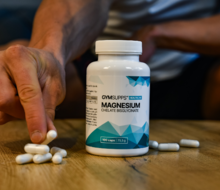
How does magnesium malate work
 Author:
 Magnesium malate has become one of the most popular supplements among athletes, fitness enthusiasts and people who want to boost their vitality and regeneration. Made up of magnesium ion bound to malic acid, this compound combines two key ingredients that have a synergistic effect on energy metabolism, muscle function and overall mental well-being. Let's take a closer look: we'll explain how magnesium malate works on a molecular level, what benefits it provides, and why it should be your new must-have supplement - all with direct links to scientific studies.
Article Content:
- What is magnesium malate?
- The mechanism of action of magnesium malate
- Increase muscle strength and performance
- Improve recovery and reduce muscle tension
- Improving mental well-being and concentration
- Support metabolism and energy levels
- Potential benefits for overall vitality and immunity
- How and when to take magnesium malate?
- Practical tips for taking magnesium malate effectively
What is magnesium malate?
Magnesium malate is a form of magnesium in which the mineral is bound to malic acid (malate). Malic acid plays a key role in the Krebs cycle, which is the central metabolic pathway responsible for energy production in cells. Combining magnesium with malic acid produces a compound that not only increases the bioavailability of magnesium, but also promotes efficient energy production in the body. This combination is therefore very attractive especially for athletes who require maximum performance and fast recovery after a hard workout.
Mechanism of action of magnesium malate
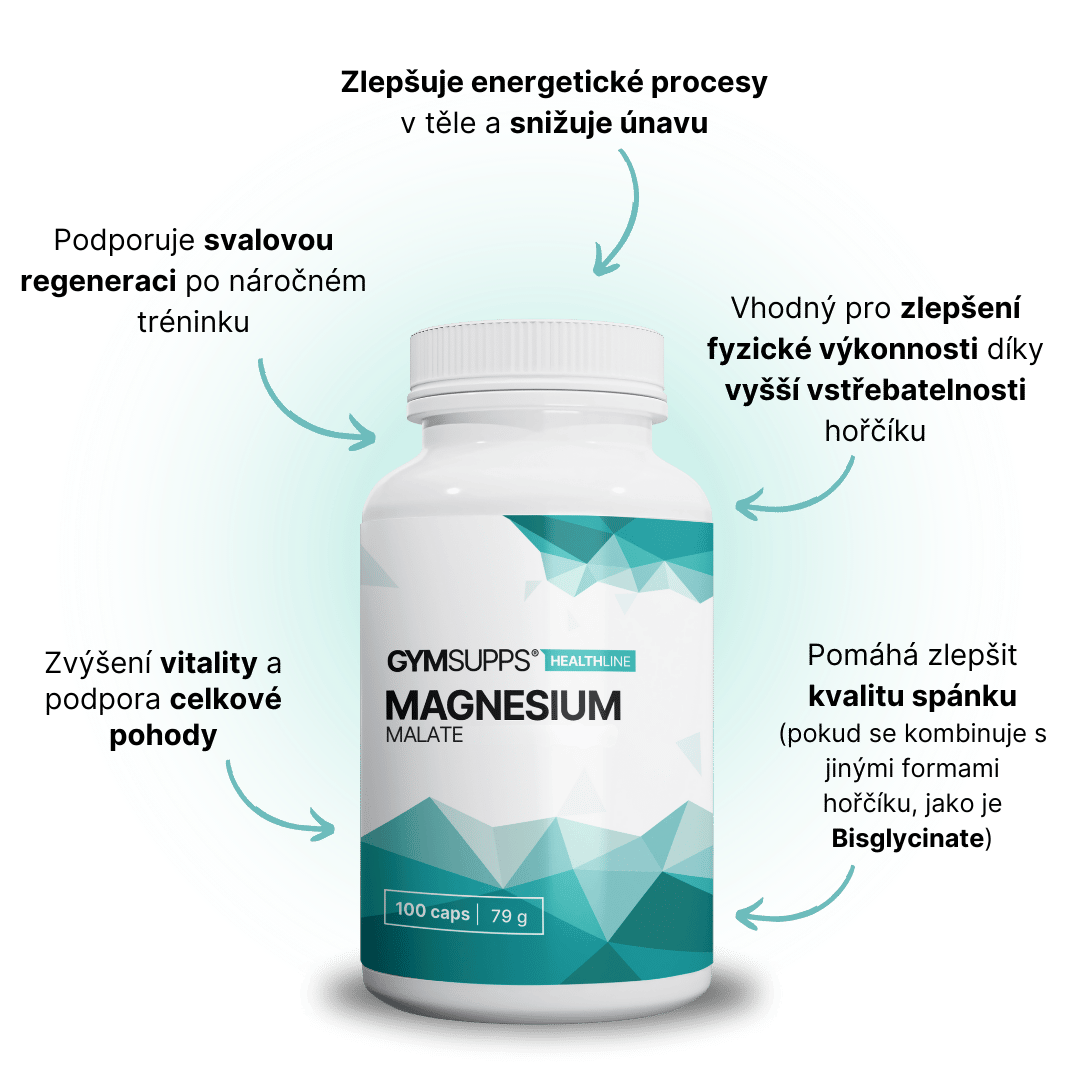
Magnesium is an essential mineral that is involved in more than 300 enzymatic reactions in the body, including protein synthesis, energy production and nervous system regulation. When magnesium binds to malic acid, magnesium malate is formed, which:
- Promotes ATP production: malic acid is a key intermediate in the Krebs cycle. Supplying this ingredient to cells allows for more efficient generation of adenosine triphosphate (ATP) - the main source of energy for muscles.
- Improves muscle contraction and relaxation: magnesium helps regulate muscle contraction, prevents cramping and promotes relaxation, which is especially important after physical exertion.
- Reduces fatigue: With increased energy production and reduced muscle cramping, magnesium malate helps reduce feelings of fatigue and exhaustion, which is important for training performance and recovery.1
Increasing muscle strength and performance
One of the biggest benefits of taking magnesium malate is its support of muscle strength. By supporting ATP production, athletes have more energy available during intense workouts. This means you can lift more, repeat more sets, and feel less fatigued after a tough workout. Studies show that magnesium supplementation improves muscle contraction and can increase overall performance, which you'll especially appreciate during strength training and endurance sports. When you have more energy, it's like adding fuel to your muscles-you have the power to push past limits and perform better.2
Improved recovery and reduced muscle tension
Magnesium malate acts as a great regenerator. After an intense workout, muscles become overloaded and accumulate metabolites that can slow recovery. Due to its properties, it increases the production of ATP, which aids in faster muscle recovery and the elimination of fatigue. In addition, magnesium counteracts muscle cramps and relieves tension, allowing for faster recovery and reducing the risk of injury. Athletes often praise feeling "fresher" and having a shorter recovery time between training units, which is key to improving overall performance.2
Improved mental wellbeing and concentration
The creative and mental aspects of your training regime are often overlooked, but this is where magnesium malate has another interesting function. Magnesium is known for its effect on the nervous system - helping to reduce stress, improve concentration and positively affect mood. Studies show that adequate levels of magnesium can improve cognitive function, which can be crucial not only during athletic performance, but also in everyday activities when you need to be fully focused. When you have mental clarity, your reactions are quicker and your overall performance increases - and that's exactly what magnesium malate can offer you.3
Support metabolism and energy levels
Malic acid, a component of magnesium malate, is essential for the efficient running of the Krebs cycle, the main pathway that generates energy in cells. Incorporating this ingredient into your daily regimen will ensure that your body has enough "fuel" even during strenuous workouts. Scientific studies confirm that magnesium malate increases energy levels and may help reduce feelings of fatigue, which is essential for endurance and overall recovery after training.1;3

Potential benefits for overall vitality and immunity
In addition to its direct effects on muscles and performance, magnesium malate also has an effect on overall vitality and the immune system. Magnesium helps maintain electrolyte balance, supports proper heart and vascular function, and improves metabolism. All of this contributes to better overall health and allows you to better face challenges not only in the gym, but in everyday life. Improving immune function helps you resist the adverse effects of stress and inflammation, which is especially important during tough training cycles or during flu season.4
How and when to take magnesium malate?
Timing of supplementation
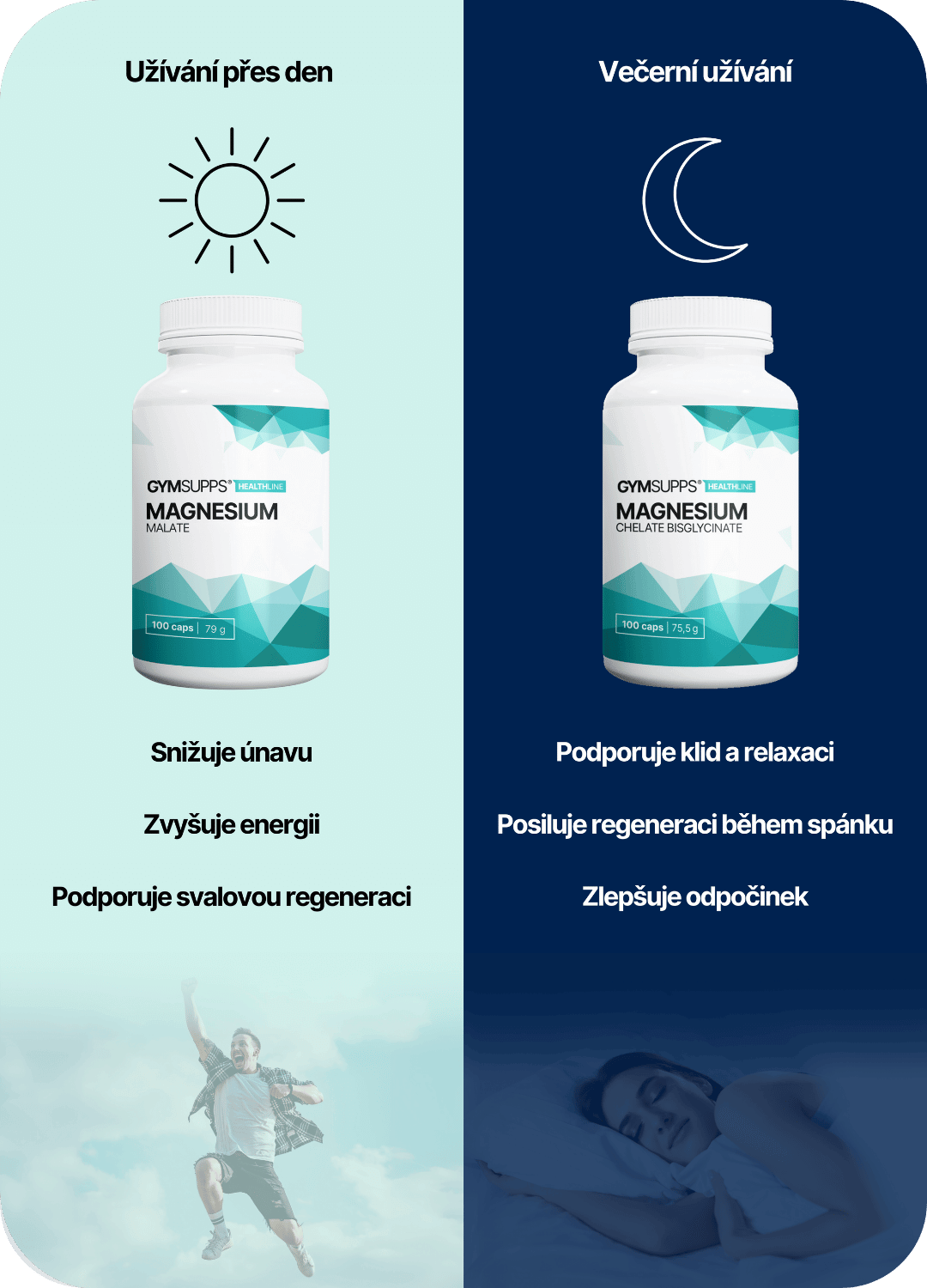
For maximum effect, it is ideal to take magnesium malate daily. Many athletes prefer to take it before training to get extra energy and reduce the risk of muscle cramps during exercise. Others, on the other hand, choose to consume it after training, when the body is recovering and needs enough minerals for recovery. The key is regularity - whatever time you choose, it's important to make the supplement part of your daily regimen.
Recommended daily dose
For magnesium malate, dosage may vary depending on individual needs and goals. It is usually recommended to take 200-400 mg of magnesium in the form of magnesium malate daily, possibly split into two doses - one before training and one after training. However, for athletes, the optimal dose is individual.
How best to supplement with magnesium malate
Magnesium malate can be combined with other supplements, such as BCAAs or protein, for more effective recovery and energy support. In addition, don't forget about adequate hydration, which is key for optimal mineral absorption and metabolism. Intake of a high quality diet rich in natural sources of magnesium, such as nuts, seeds, whole grains and green leafy vegetables, can further enhance supplementation.
Practical tips for taking magnesium malate effectively
- Regularity continues to win out: make sure you take magnesium malate every day, ideally at the same time to achieve optimal blood levels.
- Split the dose: If you suffer from mild muscle cramps or fatigue, try splitting your daily dose into two smaller portions - one before your workout and one after.
- Hydration is key: Drink plenty of water throughout the day to ensure proper functioning of the digestive system and efficient absorption of minerals.
- Monitor your body: If you notice that your muscles continue to cramp up after a workout or you feel fatigue, this may be a signal that your dose needs to be adjusted slightly. Every body is unique, so experiment with dosages until you find the ideal regimen for you.
- Consult a professional: If you have health concerns or are unclear about dosing, consult a trainer or nutritionist to help you tailor supplementation to your individual needs.
Conclusion
Magnesium malate is a fascinating supplement that can add a new dimension to your training regime. Its unique combination of magnesium and malic acid promotes efficient energy production, reduces muscle fatigue and aids in recovery. Whether you're training for peak performance or aiming for faster recovery and fewer muscle cramps, magnesium malate taken correctly can be your key ally. Regular supplementation, proper timing and combining it with a balanced diet will help you harness the full potential of this mineral. Be sure to monitor how your body responds and fine-tune your dosage to your individual needs. With this approach, you can enjoy greater strength, increased energy and overall improved physical well-being - all with a scientific basis that speaks for itself.
Recommended
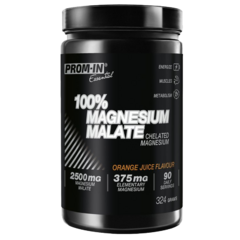
Prom-in 100% Magnesium Malate
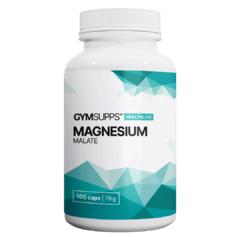
GymSupps Magnesium Malate
Magnesium Malate 100cps 1+1
Sources:
- 1) Ivy, J.L., et al. (2002). Nutrient timing: the means to improved exercise performance, recovery, and training adaptation. Journal of Sports Sciences.
- 2) Volpe, S.L. (2013). Magnesium in health and disease. In: Magnesium in the Central Nervous System [Internet]. University of Adelaide Press.
- 3) Cuciureanu, M.D. & Vink, R. (2011). Magnesium and stress. In: Vink, R. & Nechifor, M. (eds) Magnesium in the Central Nervous System. University of Adelaide Press.
- 4) Walker, A.F., Marakis, G., Christie, S., Byng, M., & Robinson, P.A. (2003). Mg citrate found more bioavailable than other Mg preparations in a randomised, double-blind study. Magnesium Research, 16(3), 183-191.
- 5) Cinar, V., et al. (2011). The role of magnesium in the pathogenesis of disease. European Journal of Clinical Nutrition, 65(6), 660-666.
No posts have been made yet.