





GymSupps Super Immunity: Get through temperature changes, flights, and festivals without catching a cold
 Author:
 It’s mid-July, and your instinct tells you that your immune system is focused on vacation right now, not on you. The reality is different. Paradoxically, summer is one of the most demanding seasons of the year for your immune system—sudden shifts between scorching sidewalks and freezing air conditioning in the office or on a train, nights spent chatting at a festival instead of sleeping, planes full of foreign viruses, pools and lakes teeming with foreign bacteria—not to mention food and water from anywhere from Croatia to Bali. It’s no coincidence that “summer strep throat” or vacation diarrhea is called a cliché for a reason.
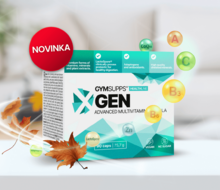
Imagine your body as a castle that faces a different kind of siege in the summer than in the winter—the attack doesn’t come from outside through snow-covered walls, but through open gates through which dozens of strangers, foods, and environments pass every day. The GymSupps Super Immunity formula is designed precisely for this type of summer “traffic”—a combination of eleven ingredients, each of which guards a different section of the castle walls. Let’s take a closer look at this defense and see why it makes sense even in the middle of summer, not just in November.
Article Contents:
- The Walls and Guards: The First Line of Defense
- Rapid Response Unit: What to Deploy Immediately When the Alarm Sounds
- Herbal Allies from Grandma’s Garden
- Modern Mercenaries: Beta-Glucans and Probiotics
- The Construction Squad: What Keeps the Castle Standing Over the Long Term
- What the Garrison Needs to Understand
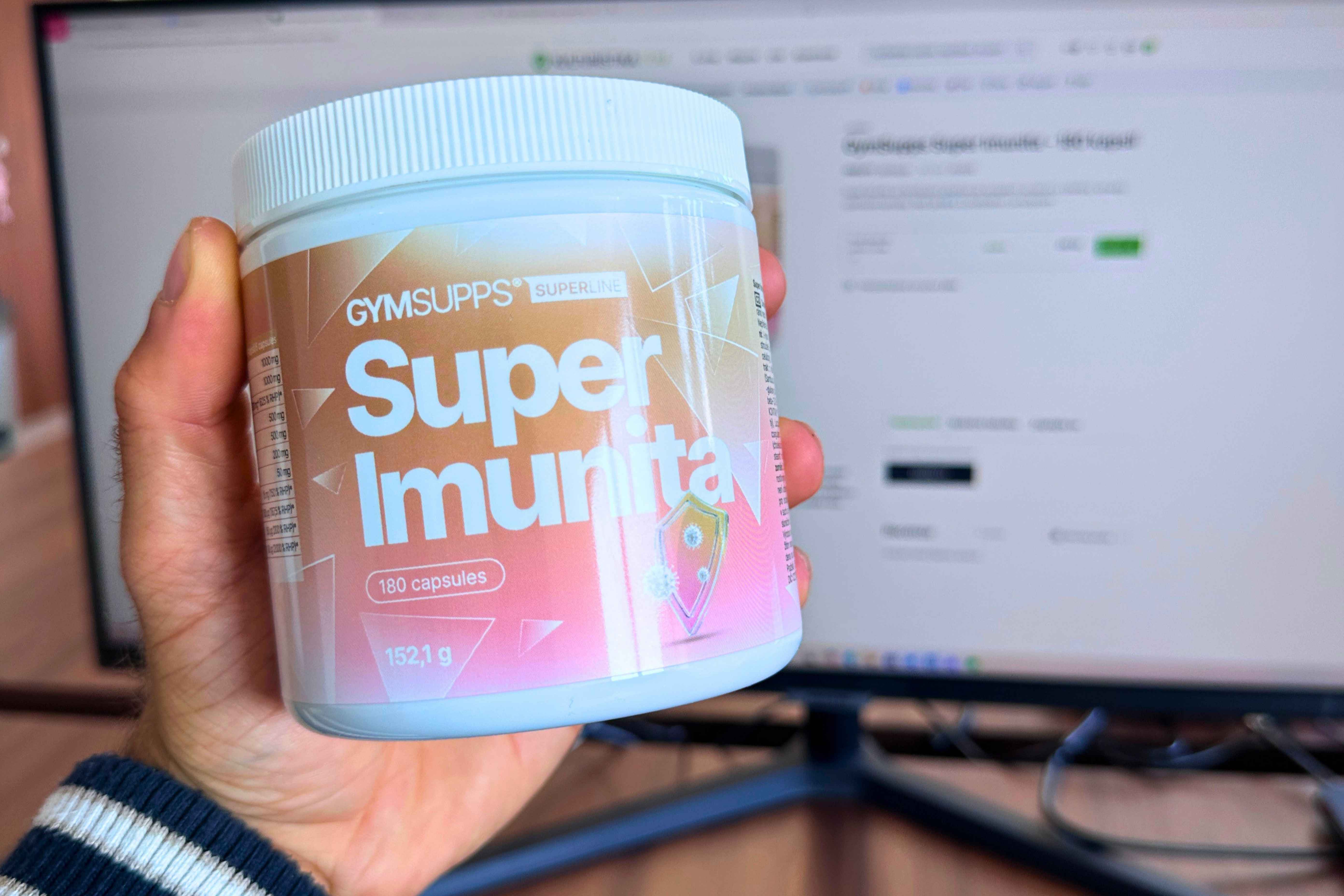
Walls and Guards: The First Line of Defense
In the summer, your mucous membranes are working nonstop—dealing with dust from hot streets, chlorinated pool water, and air conditioning that dries out your nose and throat. Vitamin A is the building block of these walls—it keeps mucosal cells strong and intact, so pathogens have no way to slip through¹.
If someone does manage to get past the wall, the guards in the towers—white blood cells—step in. And they need their commander: zinc. Without it, immune cells can’t multiply properly or coordinate with each other to decide who will attack whom. A meta-analysis published in the journal CMAJ showed that people taking zinc had colds that lasted, on average, nearly two days shorter than those on a placebo² —which comes in handy even in July, because viral infections don’t take a vacation; they just get a different name (“I caught a cold from the air conditioning”). And as a bonus—a study on athletes found that zinc helps maintain testosterone levels even after strenuous physical exertion³, which anyone who trains outdoors in the blazing sun during the summer instead of in an air-conditioned gym will appreciate.
Quick Fix: What to Take Right Away When Symptoms Strike
Vitamin C is the classic go-to remedy—the most widely used and most extensively studied “immune-boosting” substance of all. A new meta-analysis by Finnish researcher Harri Hemilä confirmed that it can reduce the severity of cold symptoms by 15% compared to a placebo⁴. Interestingly, there are situations where it doesn’t work: a systematic review found no convincing effect on post-workout muscle soreness⁵—so it’s good for a summer cold caused by air conditioning, but not for sore legs after a hot outdoor workout.
Vitamin D3 is a somewhat paradoxical topic, especially in July—the sun produces it naturally in the skin for free during the summer. Yet many people still don’t get enough of it because they spend their days sitting in an office or an air-conditioned car, or they deliberately limit their sun exposure by using sunscreen (which is, of course, perfectly fine and recommended—it just happens to reduce vitamin D production in the skin). A large-scale analysis of data from more than 10,000 people (Martineau et al., published in the BMJ) showed that taking supplements protects against respiratory infections, most notably in people who had low levels of it in their blood⁶ —so feel free to take it even in the summer, if the only daylight you see is on your walk from the subway to the office.
Herbal Allies from Grandma’s Garden
Every decent castle has its outdoor allies—herbs that grandmothers used long before clinical medicine existed, and which modern science is gradually confirming. And yes, they work even outside of flu season.
Garlic is a double agent—it works on both the immune and cardiovascular fronts at the same time, which comes in handy if the hot summer is causing your blood pressure a bit of trouble. A randomized study of 120 healthy adults found that after 45 days of taking aged garlic extract, the function of NK cells—one of the body’s fastest defenders—improved⁷. Furthermore, a more recent meta-analysis showed a decrease in systolic blood pressure of more than 8 mmHg in people with hypertension⁸.
Although elderberry is traditionally associated with winter, its antiviral effects work regardless of the season. A meta-analysis of randomized studies confirmed that it significantly reduces upper respiratory tract symptoms⁹, and one specific study is particularly interesting for the summer—it involved passengers on intercontinental flights, where the risk of catching a cold is higher due to the dry air in the cabin and the presence of hundreds of strangers on board. It showed a shorter duration of colds in the group that took it¹⁰. If you’re flying on vacation in July and August, this is exactly your situation.
Propolis is the most unconventional member of the group—a bee product with antimicrobial effects. A randomized study using a propolis spray found that symptoms of upper respiratory tract infections subsided, on average, two days earlier than with a placebo¹¹. Just be careful—this is indeed a bee product, so people with allergies to bee stings or honey should exercise caution, even if it isn’t clearly indicated on the packaging.
Recommended
GymSupps XGen
GymSupps Super Imunita
Modern Mercenaries: Beta-Glucans and Probiotics
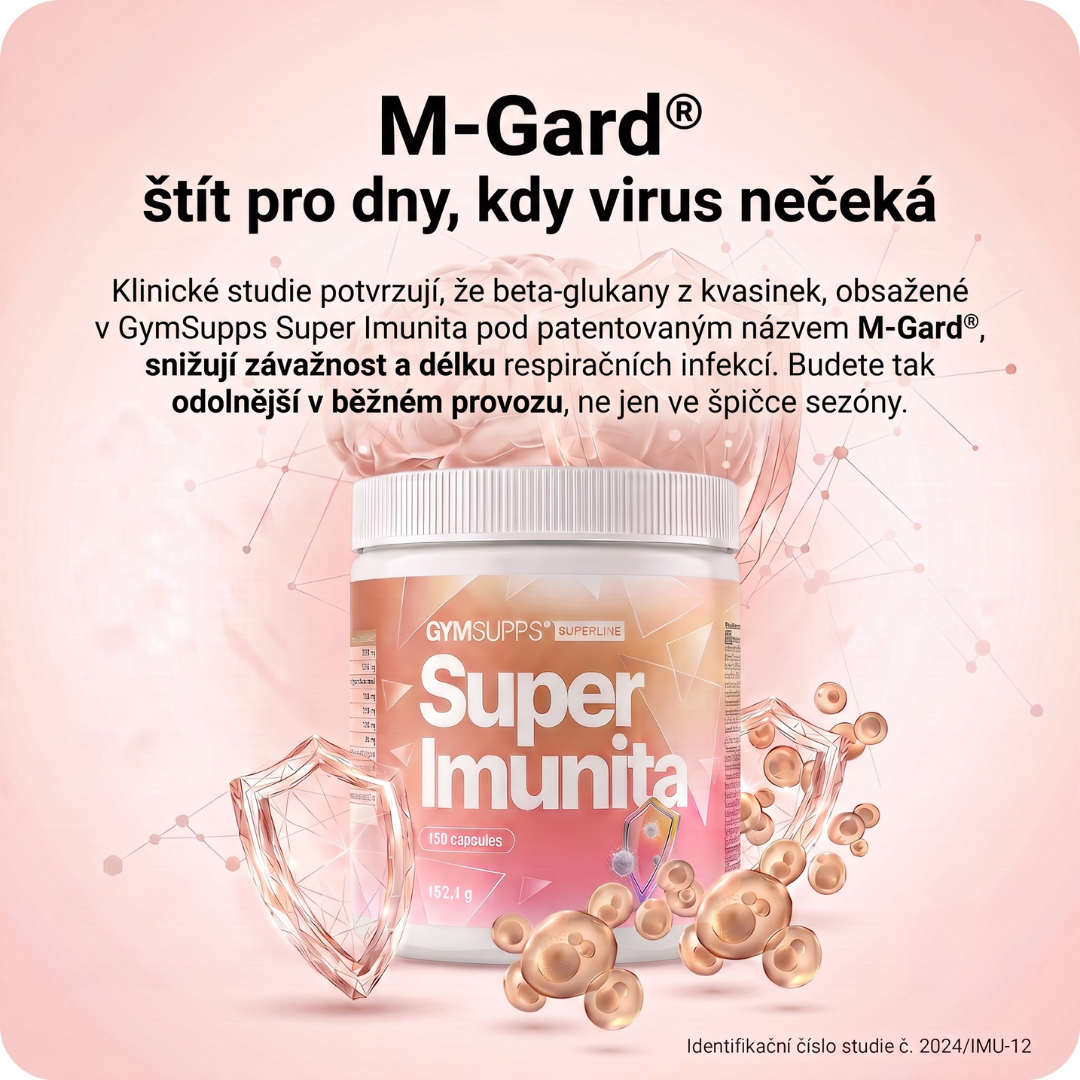
Not all crew members have to be hundreds of years old. M-Gard® beta-glucans come from the cell walls of baker’s yeast and function like fresh mercenaries with modern training—and the strongest evidence for their effectiveness comes directly from the summer season. A study of marathoners and endurance runners found a lower overall severity of respiratory infections in the group that took them¹², which is directly relevant to anyone who runs races in the summer, cycles long distances, or trains outdoors in the heat—intense endurance exercise temporarily weakens the immune system, and that’s exactly the window when infections are most likely to strike. Another randomized study of 299 adults with recurrent colds confirmed the benefits at a higher dose than what is contained in a single daily serving of this product¹³—good to know if you’re comparing it to clinical data.
.png)
LactoSpore®, on the other hand, is more of a support specialist than a frontline fighter—a patented strain of the probiotic Bacillus coagulans that takes care of the “supply lines,” i.e., the intestines. This is especially helpful during summer travel: new foods, new water, and street food on vacation—all of which put your digestive system to the test. A study in people with irritable bowel syndrome showed an improvement in digestive symptoms compared to a placebo¹⁴, and since a healthy gut means better absorption of everything else in the formula, its role here is far from marginal.
The Construction Crew: What Holds the Castle Together in the Long Run
Vitamin K2 (menaquinone-7) isn’t a classic “immune” player, but it belongs to the construction crew—one that’s easily forgotten when the weather’s nice and you’re mainly thinking about vacation. A three-year study in postmenopausal women found that it slows the loss of bone density¹⁵, and a study in hemodialysis patients showed that it also slows the hardening of blood vessels¹⁶. In other words—while vitamin D3 (which you’re getting plenty of from the sun right now in the summer) tells your body to “absorb calcium,” K2 makes sure that calcium ends up in your bones, not in your blood vessels. Without it, vitamin D3 is a bit like a delivery of bricks to a construction site without any masons—and in the summer, when you naturally produce the most D3 throughout the year, this pairing is particularly relevant.
What the formula fails to explain
An honest review must also mention a gap in the formula. The second most highly dosed ingredient in the entire formula (1,000 mg, the same as garlic) is L-lysine, yet the product’s marketing makes no mention of it. In the scientific literature, it is mainly studied in connection with cold sores—and, incidentally, cold sores often worsen in the summer due to sun exposure, stress, and a weakened immune system. Older studies from the 1980s showed promising results with long-term lysine use¹⁷. However, a comprehensive Cochrane review from 2015, which examined 32 randomized studies, found no consistent evidence supporting lysine¹⁸. Furthermore, lysine isn’t a typical choice for general immune support, so its quiet inclusion in the formula remains somewhat questionable—not necessarily a bad thing, but certainly without a clear rationale.
Conclusion: Defense on Multiple Fronts at Once, Even in July
GymSupps Super Immunity doesn’t rely on a single miracle ingredient, but on a principle that makes sense even outside the realm of supplementation—it’s better to have several smaller, well-positioned sentries than one giant tower that covers only one direction. And this principle isn’t dependent on the season. For anyone who’s on a plane this week, sleeping four hours at a festival, running a summer race, or simply alternating between baking in the sun and freezing in the air conditioning, a combination of vitamins, minerals, herbal extracts, and modern functional ingredients can make sense right now, not just in November. However, anyone dealing with a specific problem—such as digestion while traveling or a vitamin K2 deficiency—will likely achieve better, more targeted results more affordably with a standalone, precisely targeted supplement.
Sources:
- ¹ Stephensen, C. B. (2001). Vitamin A, infection, and immune function. Annual Review of Nutrition, 21, 167–192.
- ² Singh, M., & Das, R. R. (2013). Zinc for the common cold. Cochrane Database of Systematic Reviews — data reanalyzed in: Science, D., et al. (2012). Zinc for the treatment of the common cold. CMAJ, 184(10), E551–E561.
- ³ Kilic, M., et al. (2006). The effect of exhaustion exercise on thyroid hormones and testosterone levels of elite athletes receiving oral zinc. Neuroendocrinology Letters, 27(1–2), 247–252.
- ⁴ Hemilä, H., & Chalker, E. (2023). Vitamin C reduces the severity of common colds: a meta-analysis. BMC Public Health, 23, 2468.
- ⁵ Bjørklund, G., et al. (2021). Supplementation with Vitamins C and E and Exercise-Induced Delayed-Onset Muscle Soreness: A Systematic Review. Antioxidants, 10(2), 279.
- ⁶ Martineau, A. R., et al. (2019). Vitamin D supplementation to prevent acute respiratory infections: individual participant data meta-analysis. Health Technology Assessment, 23(2), 1–44.
- ⁷ Nantz, M. P., Rowe, C. A., Muller, C. E., Creasy, R. A., Stanilka, J. M., & Percival, S. S. (2012). Supplementation with aged garlic extract improves both NK and γδ-T cell function and reduces the severity of cold and flu symptoms. Clinical Nutrition, 31(3), 337–344.
- ⁸ Wang, H., et al. (2025). The effect of garlic on lowering blood pressure in patients with hypertension: an updated meta-analysis and trial sequential analysis. (open-access preprint, PMC).
- ⁹ Hawkins, J., Baker, C., Cherry, L., & Dunne, E. (2019). Black elderberry (Sambucus nigra) supplementation effectively treats upper respiratory symptoms. Complementary Therapies in Medicine, 42, 361–365.
- ¹⁰ Tiralongo, E., et al. (2016). Elderberry Supplementation Reduces Cold Duration and Symptoms in Air Travelers. Nutrients, 8(4), 182.
- ¹¹ Esposito, C., Garzarella, E. U., Bocchino, B., et al. (2021). A standardized polyphenol mixture extracted from poplar-type propolis for remission of symptoms of uncomplicated upper respiratory tract infection. Phytomedicine, 80, 153368.
- ¹² Mah, E., Kaden, V. N., Kelley, K. M., & Liska, D. J. (2020). Soluble and Insoluble Yeast β-Glucan Differentially Affect Upper Respiratory Tract Infection in Marathon Runners. Journal of Medicinal Food, 23(4), 416–419.
- ¹³ Dharsono, T., Rudnicka, K., Wilhelm, M., & Schoen, C. (2019). Effects of Yeast (1,3)-(1,6)-Beta-Glucan on the Severity of Upper Respiratory Tract Infections. Journal of the American College of Nutrition, 38(1), 40–50.
- ¹⁴ Skrzydło-Radomańska, B., et al. (2023). The Efficacy and Safety of Single-Strain Probiotic Formulations Containing Bifidobacterium lactis or Bacillus coagulans in Adult Patients with IBS. Journal of Clinical Medicine, 12(14), 4838.
- ¹⁵ Knapen, M. H., Drummen, N. E., Smit, E., Vermeer, C., & Theuwissen, E. (2013). Three-year low-dose menaquinone-7 supplementation helps decrease bone loss in healthy postmenopausal women. Osteoporosis International, 24(9), 2499–2507.
- ¹⁶ Effect of Menaquinone-7 Supplementation on Arterial Stiffness in Chronic Hemodialysis Patients: A Multicenter Randomized Controlled Trial. (2023). Nutrients, 15(11), 2422.
- ¹⁷ Griffith, R. S., et al. (1987). Success of L-lysine therapy in frequently recurrent herpes simplex infection. Dermatologica, 175(4), 183–190.
- ¹⁸ Chi, C. C., Wang, S. H., Delamere, F. M., Wojnarowska, F., Peters, M. C., & Kanjirath, P. P. (2015). Interventions for the prevention of herpes simplex labialis (cold sores on the lips). Cochrane Database of Systematic Reviews, (8), CD010095.
No posts have been made yet.








