





Do you lack energy, sleep poorly and forget? Maybe you lack magnesium!
 Author:
 You know the feeling: you're eating pretty healthy, trying to move, and yet sometimes you feel like you're running on empty. Your sleep is shallow, your muscles cramp, and you feel like an opaque fog has descended on your head during the workday. If you recognize yourself in this, perhaps it's due to one subtle but absolutely crucial mineral. The statistics are clear: up to half of the adult population is magnesium deficient.
Magnesium acts as an imaginary spark that powers more than 300 different biochemical reactions in our bodies - from energy production to the nervous system to sleep quality and memory. When you're low on it, the body doesn't immediately collapse, but it does start to "stutter."
Many people therefore logically reach for dietary supplements. But they quickly run into two big problems.

Why conventional supplements often do more harm than good
Most of the magnesium you commonly find on pharmacy and supermarket shelves has a catch. They contain forms (such as oxide or citrate in high doses) that are very difficult for the human body to absorb where they are actually needed.
Instead of nourishing your brain and nervous system, these supplements stay in your digestive tract where they bind water to themselves. The result? Uncomfortable abdominal cramps and compulsive running to the toilet. Because of this, many people stop taking magnesium altogether, believing that it simply "doesn't make them feel good." But the problem is not the mineral itself, but its form.
The solution for the brain and the stomach: Magnesium L-threonate (Magtein)
If you want to get the most out of magnesium for your mind while avoiding any digestive problems, science offers an elegant solution. It's a specific, patented form called Magnesium L-threonate, which you'll find under the brand name Magtein.
This form was developed by a team of neuroscientists and, unlike conventional magnesium, it has one completely unique property: it can effectively cross the blood-brain barrier. This means that it goes directly into the brain, where it can take effect immediately.
Recommended

What does Magtein bring to your body?
- Improved cognitive function: Studies show that this form of magnesium has been shown to improve both working and episodic memory. Reaction time is accelerated and the feeling of "foggy brain" disappears.
- Deeper and better quality sleep: Magtein helps calm the nervous system, making it easier to fall asleep and deepening the stages of sleep during which the body and brain regenerate the most.
- Absolute stomach friendliness: A normal dose contains approximately 145 mg of elemental magnesium. This is targeted so precisely that unpleasant laxative effects are completely avoided. Your digestion remains completely calm.
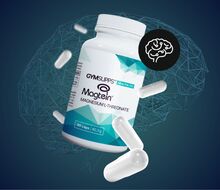
What to look out for when buying
There is no "threonate" like threonate. If you want to make sure you are buying the exact substance that has been successfully tested in clinical trials, you need to be careful when reading labels.
Generic substitutes may sound similar, but may not produce the same results. The number one rule is to look for the Magtein trademark on the packaging. This is your guarantee that you are investing in the right form that your body will use without fail.
Magnesium deficiency doesn't have to be your lifelong standard. Choose the right form, be consistent in your use, and watch your energy and clear mind gradually return.
No posts have been made yet.








