Creatine Under the Microscope – How It Works and the Most Common Myths Surrounding Its Use
 Author:
 Creatine is one of the most widely used supplements of all. But it’s also one of the most debated, surrounded by more questions and myths than almost any other. You’ve surely heard of creatine, even if you’ve only recently started working out. That’s because not only bodybuilders and recreational strength athletes can benefit from it, but athletes in any sport. Fortunately, it’s one of the most thoroughly researched supplements out there, so we can confidently answer any questions you might have.
Article Contents:
- All right, so how does creatine actually work?
- So why take creatine?
- Does taking creatine harm the liver and kidneys?
- Does creatine cause digestive problems?
- Does taking creatine cause cramps and dehydration?
- Can creatine cause weight gain?
- Is a loading phase necessary?
- Which form of creatine is best?
Well, how does creatine actually work?
First, we need to mention that our bodies CAN produce creatine on their own, although this process is quite complex, so we won’t bore you here with a lengthy description of how the amino acids glycine and arginine are converted into creatine in the body; instead, we’ll move straight to its effects. Creatine is very important in the production of ATP. ATP, or adenosine triphosphate, is a compound consisting of the sugar ribose, adenine, and three phosphate groups. It is then transported to the muscles via the bloodstream. Our body is able to utilize approximately 1.5% of the total amount daily, i.e., 2 g. This creatine is then replenished either through the body’s own synthesis or through diet (endogenously, for example, via a supplement). Creatine capacity is limited, although it increases with greater muscle mass. A man weighing around 70 kg has a creatine reserve of about 120 g.
Creatine plays a role in the body by supplying energy to muscle and nerve cells—specifically through ATP. This substance thus provides a rapid source of energy for muscle contraction. During exercise, ATP is broken down by water into adenosine diphosphate (ADP). The problem is that the body cannot use ADP to produce energy. However, the body needs energy constantly, so ATP must be gradually replenished. The body therefore draws phosphate from PCr, or creatine phosphate. Once ATP reserves are depleted, the body draws on creatine stores; if creatine levels are also low, the intensity of the workout decreases. Creatine supplementation increases PCr levels in the muscles by approximately 20%. An increase in PCr levels in muscle cells means that more ATP can be produced during exercise, which leads to increased strength, performance, speed, and muscle mass growth.
In humans, the resynthesis of creatine phosphate depends on oxygen supply. While there may be variations, research indicates that muscles are capable of replenishing 50% of their creatine stores in about one minute. Creatine levels are fully replenished after about 4–5 minutes, depending on genetic factors and the individual’s level of fitness. It could be said that the more fit an individual is, the faster ATP is replenished.
So why take creatine?
Creatine is one of the most effective supplements that can help you improve your body composition—meaning it can help you build muscle mass at the expense of fat—and it can also significantly help you delay fatigue, increase strength, and overall improve your athletic performance. Studies show that creatine can increase performance by as much as 10–20%. In addition, it helps reduce oxidative stress, supports brain function, improves glucose utilization, and increases bone density. It is also being tested in connection with the treatment of severe neurological diseases. Creatine also has a positive effect on the cardiovascular system and may influence cholesterol levels.
However, there are also many questions surrounding creatine—does it cause weight gain? Is it harmful to our kidneys? Does it cause digestive problems? So let’s take a look at what the facts really are—an overview of the most common myths surrounding creatine use.
How should creatine be dosed?
According to the International Society of Sports Nutrition, the recommended dosage is 3–5 grams per day, or 0.1 grams per kilogram of body weight. For the vast majority of people, this means one scoop a day—and that’s all you need to worry about.
The key word is “daily.” Creatine doesn’t work like a pre-workout supplement that you take right before exercising. Its effect relies on gradually replenishing muscle stores, so be sure to take it even on days when you’re not working out. Interrupting your intake is the most common mistake that leads people to say that “creatine didn’t work for them.”
When should you take it?
Studies that have specifically examined timing are still small and methodologically weak, so no clear recommendations can be drawn from them. In practice, this means you can choose the time that’s easiest for you to remember. Many people take creatine after their workout because it’s easy to combine with a post-workout protein shake—but consistency is the key factor, not the time on your alarm clock.
One practical note: taking creatine on an empty stomach can cause mild digestive issues for some people. If this is the case for you, try washing it down with plenty of fluids or taking it with a meal.
What about the loading phase?
The loading phase involves a higher dose, typically around 20 grams per day divided into four servings, for five to seven days. This helps replenish muscle stores more quickly.
However, it isn’t necessary. With a dose of 3–5 grams per day, you’ll achieve the same saturation, though it will take about three to four weeks. So if you’re not rushing toward a specific race or deadline, feel free to skip it—you’ll save on creatine and avoid any potential digestive issues from higher doses.
Do you need to take breaks?
No. According to available data, long-term use of creatine at recommended doses is safe, and there’s no reason to cycle it. Even after prolonged use, there’s no evidence that the body “forgets” how to produce creatine on its own—natural production gradually returns to normal after discontinuation.
Does creatine use harm the liver and kidneys?
This myth has a surprisingly logical origin. Creatine breaks down into creatinine in the body—and it is precisely the level of creatinine in the blood that doctors use as a marker to assess kidney function. So when someone takes creatine and gets their blood drawn, their creatinine level will indeed be slightly higher. But that doesn’t mean their kidneys are damaged—it just means there’s more creatine in their system.
This is precisely what a systematic review and meta-analysis from 2025, which examined twenty-one studies, confirms: creatine was associated with a statistically significant but clinically negligible increase in serum creatinine, without any deterioration in glomerular filtration. In other words: the number on the lab report changes, but kidney function does not.
In healthy individuals with fully functioning kidneys and livers, no negative effects on these organs have been demonstrated at the recommended doses. This also applies to long-term use.
When to exercise caution: If you have been diagnosed with kidney disease or are taking medications that put a strain on your kidneys, consult your doctor before starting supplementation. And if you’re having blood tests, mention that you’re taking creatine—it will save both you and your doctor from unnecessary speculation about the results.
Does creatine cause digestive problems?
As mentioned in the previous paragraph, creatine is a safe supplement, but it’s true that it can cause minor digestive issues, although this is relatively rare. In fact, these issues occur in only 5–7 percent of people who take creatine. Digestive issues usually arise when you take too high a dose of creatine or take it on an empty stomach. If taking creatine causes you digestive issues, it’s advisable to choose a supplement that contains micronized creatine—that is, creatine ground into a finer consistency—such as Creatine HCL. Reducing the size of creatine particles increases its solubility, which can potentially lower the risk of digestive issues; at the same time, this form may contribute to faster creatine absorption.
Does creatine use cause cramps and dehydration?
We have not found sufficient relevant evidence to support this claim. On the contrary, creatine supplementation tends to increase the body’s overall water content, which logically helps maintain hydration. In fact, there is currently no research whatsoever to confirm that creatine has a diuretic effect or causes dehydration. Creatine also tends to cool the body. This means that, thanks to this property, creatine supplementation can improve performance in hot environments that are uncomfortable for the body. As for muscle cramps, no research has been conducted to confirm that creatine supplementation contributes to their occurrence.

Can creatine cause weight gain?
Actually, yes, it can. Starting creatine supplementation can indeed lead to a 0.8–2.8% increase in body weight in the first few days, because creatine “draws” water into the muscles, which become full and are therefore heavier. However, the myth is that this weight gain is caused solely by water. Yes, the initial gains may be due to an increase in the volume of water retained in the muscles, but research suggests that creatine supplementation, combined with a well-designed training program, leads to an increase in muscle mass while simultaneously reducing body fat percentage. So you may be gaining weight, but it’s much more likely to be muscle than fat. This is likely due to higher concentrations of PCr and ATP stores, which allow you to train more intensely and more frequently.
Is a loading phase necessary?
We’ll answer simply and concisely: No. A loading phase is not actually necessary to start creatine supplementation. This phase can serve as an indicator of how your body will respond to creatine, or it can be used to slightly accelerate results. Whether or not you choose to do a loading phase is entirely up to you, and it is by no means necessary.
Which form of creatine is best?
On the market, you’ll find creatine monohydrate, hydrochloride (HCl), Kre-Alkalyn, ethyl ester, nitrate, malate, and others. From a marketing perspective, they all claim to be improved versions of that old, boring monohydrate. The data does not yet support this.
Monohydrate is the gold standard. The vast majority of the research that forms the basis of everything we know about creatine—from strength gains to its safety profile—was conducted using monohydrate. It’s also the cheapest option on the market.
Alternative forms have not yet proven their superiority. A systematic review of seventeen randomized studies found that only three of them directly compared an alternative form with monohydrate—and they found no consistent evidence of superior efficacy. A direct comparison of monohydrate and HCl in athletes at a dose of 5 grams per day for eight weeks showed comparable results for both forms.
So where’s the difference? Not in the effect, but in how it’s used. HCl is more soluble in water, so it mixes more smoothly, and some people tolerate it better if they experience digestive issues with monohydrate. However, higher solubility doesn’t automatically mean better results.
Start with monohydrate. It’s the most thoroughly researched and the cheapest. If it doesn’t agree with your digestive system, HCl is a legitimate alternative—but you’re buying convenience, not a better effect. Plus, if you want assurance of the raw material’s purity, look for the Creapure label.
Recommended
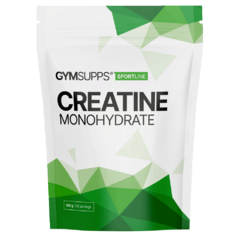
GymSupps Creatine Monohydrate

Creatine Monohydrate 500g 1+1
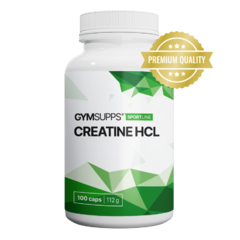
GymSupps Creatine HCL

Creatine and the Brain: What We Know So Far
In recent years, research into creatine has expanded beyond its role in muscle tissue. The brain utilizes creatine through the same mechanism—to recycle ATP—and its stores in brain tissue can be influenced by supplementation.
A 2024 meta-analysis of sixteen randomized studies suggests potential benefits in certain areas, particularly memory and information processing speed. However, the authors themselves note that the certainty of the evidence is low for most of the areas studied and that larger, higher-quality studies are needed.
It is also worth noting the difference in dosages. While 3–5 grams per day is more than sufficient for muscle saturation, research on measurable changes in brain creatine levels uses significantly higher doses over a period of several weeks—this is an interesting and rapidly evolving area of research, not a settled matter. If you’re taking creatine for training, any potential cognitive benefits are more of a bonus than a reason to buy it.
Frequently Asked Questions
- Can women take creatine? Yes. The mechanism of action is the same, as is the safety profile. Creatine has nothing to do with hormonal stimulation and does not cause masculinization.
- Do I need to cycle creatine or take breaks? No. Long-term use at recommended doses is safe, and taking breaks offers no proven benefit.
- Does creatine work for beginners? Yes, and often very effectively. Especially during the first few months of training, when the body responds most quickly to exercise, creatine allows you to handle a greater volume of work.
- Do I need to drink more water when taking creatine? Creatine draws water into the muscles, so staying well-hydrated makes sense—but this isn’t a special measure beyond what you should be doing during your workout anyway.
- Is creatine suitable for vegetarians and vegans? Yes, and they’ll likely benefit from it more than others. Creatine occurs naturally mainly in meat and fish, so a plant-based diet means lower baseline levels.
- Is creatine a steroid? No. It is a substance that the body produces itself from amino acids, and it has nothing in common with steroid hormones, either chemically or in terms of its mechanism of action.
What should you take away from this article?
Creatine is one of the few supplements where we don’t have to speak in the conditional tense. It works, it’s been well-researched, and it’s safe when taken at the recommended dosage.
Three things to remember:
- 3–5 grams per day, every day, even on rest days. The loading phase is optional, not necessary.
- Monohydrate is the default choice. Alternative forms have not yet been shown to be more effective—only more expensive. HCl makes sense if monohydrate upsets your stomach.
- Creatine does not harm the kidneys of a healthy person. Elevated creatinine levels in blood tests are an expected consequence of supplementation, not a sign of damage.
If you haven’t tried creatine yet just because of one of the myths we’ve discussed here, now you have one less reason not to.
Recommended
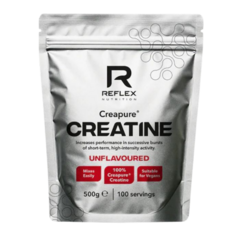
Reflex Creapure Creatine
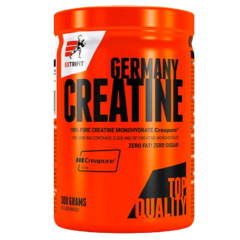
Extrifit Creatine Creapure
Sources:
- Kreider RB, et al. International Society of Sports Nutrition position statement: safety and efficacy of creatine supplementation in exercise, sport, and medicine. J Int Soc Sports Nutr. 2017. PMID 28615996
- Antonio J, et al. Common questions and misconceptions about creatine supplementation: what does the scientific evidence really show? J Int Soc Sports Nutr. 2021. PMID 33557850
- Antonio J, et al. Part II. Common questions and misconceptions about creatine supplementation. J Int Soc Sports Nutr. 2024. PMID 39720835
- Kreider RB, Stout JR. Creatine in health and disease. Nutrients. 2021. PMID 33572884
- Effect of creatine supplementation on kidney function: a systematic review and meta-analysis. 2025. PMID 41199218
- de Souza e Silva A, et al. Effects of creatine supplementation on renal function in athletes. Eur J Nutr. 2021. PMID 34939768
- Fazio C, et al. Efficacy of alternative forms of creatine supplementation on improving performance and body composition in healthy subjects: a systematic review. J Strength Cond Res. 2022. PMID 36000773
- Londoño-Velásquez D, et al. Creatine monohydrate versus creatine hydrochloride on strength and body composition in elite team-sport athletes. J Int Soc Sports Nutr. 2025
- Xu C, et al. The effects of creatine supplementation on cognitive function in adults: a systematic review and meta-analysis. Front Nutr. 2024. PMID 39070254 (including corrigendum, Front Nutr. 2025)
- Avgerinos KI, et al. Effects of creatine supplementation on cognitive function in healthy individuals. Exp Gerontol. 2018
No posts have been made yet.