




Can magnesium really improve our nighttime recovery?
 Author:
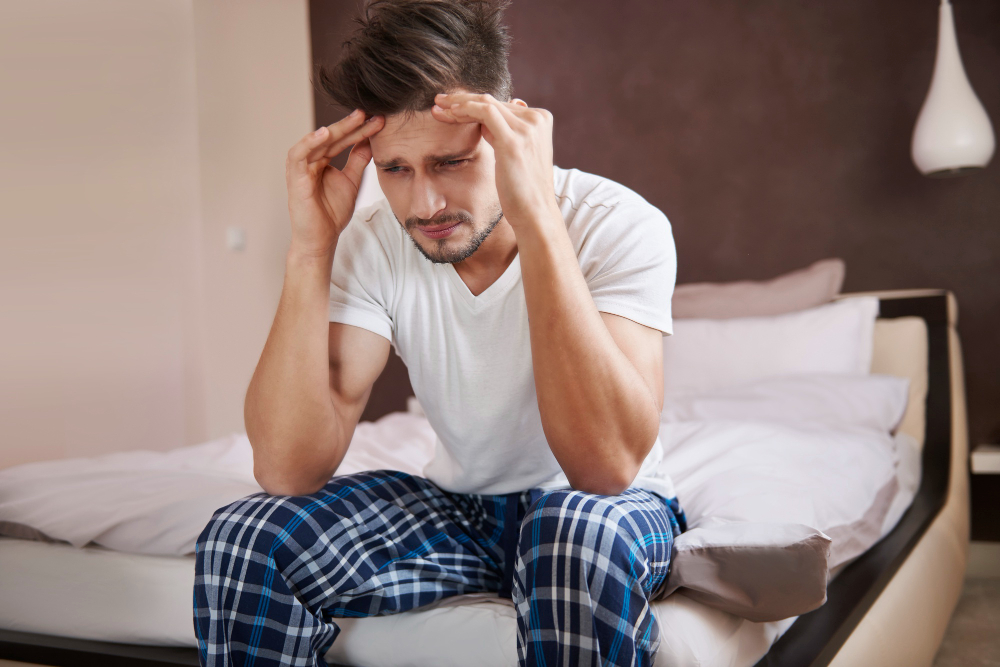
Imagine you’ve had a tough day. Work in the morning, an intense workout in the afternoon, and finally a moment of peace in the evening. Even though you’re physically tired, falling asleep isn’t as easy as you’d expect. Your thoughts keep returning to your responsibilities, your body can’t seem to wind down, and the next morning starts just like the one before.
It’s in situations like these that many people turn to magnesium. This mineral has become one of the most commonly recommended supplements for evening recovery. What’s more, there are a wide variety of forms available on the market, some of which promise better absorption, while others claim to support brain function or promote better sleep.
But to what extent do these claims align with scientific evidence? The editors of Arnold’s Pump Club also highlighted an interesting clinical study in their November newsletter.
And its results suggest that there may be a surprising discrepancy between the perception of better sleep and its actual measured parameters.
Article contents:
- One Hundred Participants and Six Weeks of Supplementation
- The results were surprising: People felt better, but their sleep didn’t change significantly
- Second study: Did magnesium bisglycinate work better?
- What did a large review of studies from 2026 find?
One hundred participants and six weeks of supplementation
In January 2026, a randomized, double-blind, placebo-controlled study focusing on the effects of magnesium L-threonate was published in the scientific journal Frontiers in Nutrition. This is a form of magnesium also known under the brand name Magtein®, which is often associated with supporting cognitive function.
The researchers enrolled 100 adults aged 18 to 45 who were dissatisfied with the quality of their sleep. The participants were divided into two groups. The first group took 2 grams of Magtein® daily, which corresponded to approximately 145 milligrams of elemental magnesium. The second group received a placebo.
The experiment lasted six weeks.
The researchers did not merely monitor the participants’ subjective feelings. They also used Oura Rings, which recorded selected sleep parameters, resting heart rate, and heart rate variability. The goal was to determine whether supplementation would change not only how people rated their sleep but also what the measuring devices were able to detect.
.jpg)
The results were surprising: People felt better, but their sleep did not change significantly
After six weeks, the researchers analyzed the data. Compared to the placebo group, participants taking magnesium L-threonate showed greater improvement on a questionnaire measure that assessed the extent to which sleep problems interfere with their daily functioning.
That sounds like a very positive result. However, a closer analysis revealed an important surprise.
No significant differences were found between the two groups in the objective sleep metrics recorded by the smart ring.
There were also no significant differences in the overall changes in subjectively assessed sleep disturbances or the feeling of refreshment upon waking. On the other hand, in the group taking Magtein®, the resting heart rate during sleep decreased and heart rate variability (HRV) increased. These parameters may be related to the activity of the autonomic nervous system.
The researchers therefore acknowledged that supplementation may have influenced certain physiological processes associated with the regulation of the stress response. However, it is important to emphasize that an increase in HRV alone does not indicate better sleep quality or faster athletic recovery.
The results thus raised an interesting question.
Can we feel better after taking a certain supplement, even if the duration or other objective measures of our sleep do not change significantly?
This experiment suggests that we can. However, it cannot yet explain exactly why.
Second Study: Did Magnesium Bisglycinate Work Better?
Researchers also addressed a similar question in a study published in 2025 in the journal *Nature and Science of Sleep*. This time, they examined another popular form of magnesium—magnesium bisglycinate. They enrolled 155 adults who reported problems with sleep quality in the experiment.
For four weeks, participants took either 250 milligrams of elemental magnesium in the form of bisglycinate or a placebo. The researchers then monitored changes using the Insomnia Severity Index questionnaire, which assesses the severity of subjectively experienced sleep problems.
The results showed that in the group taking magnesium, the score decreased by an average of 3.9 points. In the placebo group, the decrease was approximately 2.3 points. The difference between the groups was statistically significant, but the effect size was small.
The authors therefore concluded that bisglycinate may bring about a slight improvement in the subjectively assessed severity of sleep problems. However, even this experiment does not prove that it is a universal solution for insomnia. Furthermore, the participants were not monitored using objective sleep measurement methods, so we do not know whether their sleep architecture actually changed.
What did a large review of studies from 2026 find?
Individual studies may offer interesting results. However, it is far more important to determine whether similar findings are replicated in other independent studies. Therefore, in August 2026, a systematic review was conducted focusing on the effects of magnesium supplementation on adult sleep. The researchers included 12 randomized controlled trials in the main analysis and evaluated three additional studies addressing issues related to nighttime movements or cramps separately.
And the overall conclusion was much more cautious than some marketing claims. The results of the individual studies varied considerably. Some experiments reported improvements in subjectively assessed sleep quality or the severity of insomnia. Others failed to demonstrate any convincing benefit.
At the same time, the researchers pointed out significant differences in the forms of magnesium used, dosages, duration of supplementation, and measurement methods.
According to the authors, we do not yet have sufficient high-quality evidence to recommend magnesium as a standard treatment for insomnia.
The certainty of the available evidence was rated as low to very low. However, this does not mean that magnesium is useless. It means that its potential effects on sleep are not yet convincing enough for us to consider them reliably proven in most people.
| RESEARCH | WHAT THE RESEARCHERS STUDIED | KEY FINDINGS |
|---|---|---|
| Magnesium L-threonate (2026) | 100 participants, 6 weeks of supplementation | Improvements in certain subjective measures and physiological parameters. However, objective sleep measurements showed no significant differences compared to placebo. |
| Magnesium bisglycinate (2025) | 155 participants, 4 weeks of supplementation | A small, statistically significant improvement in the subjective severity of insomnia compared to placebo. |
| Systematic review (2026) | 12 randomized clinical trials | Inconsistent results. The certainty of the evidence was low to very low. Based on the available evidence, routine use of magnesium as a treatment for insomnia cannot be recommended. |
Note: Individual studies used different forms of magnesium, dosages, and methods of sleep assessment. Therefore, the results cannot be considered a direct comparison of the efficacy of individual forms of magnesium.
How to Choose Magnesium for Your Daily Routine?
If you have a demanding training program and also want to ensure adequate intake of essential minerals, a carefully chosen dietary supplement can be a practical solution. However, it’s important to consider not only the specific form but, above all, the amount of elemental magnesium and your total intake from your regular diet.
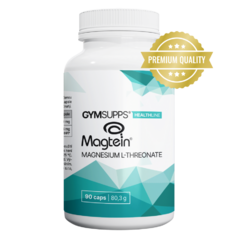
One option is GymSupps Magtein® Magnesium L-Threonate. It contains a patented form of magnesium L-threonate, which was also used in the clinical study described above. The recommended daily dose of three capsules provides approximately 144 mg of elemental magnesium. However, it is important to note that the study examined a specific product, and its results cannot be automatically guaranteed for every user.
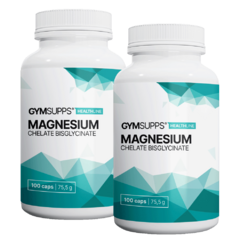
Another option is GymSupps Magnesium Chelate Bisglycinate. One capsule contains 125 mg of elemental magnesium. Bisglycinate is one of the forms that has also been featured in clinical studies focusing on subjective sleep quality.
However, none of these products is a medication for insomnia. Their primary purpose is to supplement magnesium if you are unable to obtain sufficient amounts from your regular diet.
Recommended


Does the form of magnesium really matter?
There are several forms of magnesium available on the market. Popular ones include citrate, bisglycinate, malate, and L-threonate. Each has different chemical properties and may vary in solubility, elemental magnesium content, or tolerability. But does any of them actually improve sleep significantly better than the others?
There is currently no convincing answer to this question. A systematic review from 2026 noted that the available studies do not allow for a clear determination of the best form of magnesium for promoting sleep. This is because the individual studies differed so greatly that their results cannot be easily compared.
Magnesium L-threonate has shown interesting results in some studies regarding subjective sleep quality and cognitive function. Bisglycinate, on the other hand, led to a slight improvement in the severity of sleep disturbances in one randomized trial.
However, this does not mean that one form is automatically better than the other. Furthermore, we do not yet have enough high-quality direct comparisons to reliably confirm this difference.
When does magnesium supplementation actually make sense?
Magnesium is an essential mineral for the human body that plays a role in many physiological processes. It contributes to normal muscle function, nervous system function, mental performance, and the reduction of fatigue and exhaustion. These are well-documented functions that are also part of the approved health claims in the European Union.
Natural sources of magnesium include nuts, seeds, legumes, whole grains, and certain vegetables. However, if a person does not consume sufficient amounts of magnesium in their diet over the long term, supplementation may be appropriate.
Supplementation alone, however, is no guarantee of better sleep. If we regularly sleep only five hours, consume large amounts of caffeine in the evening, or lack a consistent sleep schedule, no form of magnesium will automatically resolve these issues.
Similarly, it is important not to exceed the recommended dosage. Higher magnesium intake from supplements can cause digestive problems and pose a health risk to people with certain medical conditions, particularly kidney dysfunction.

So can magnesium really improve our sleep?
At first glance, we might expect a simple answer. Magnesium is important for the nervous system, plays a role in a number of metabolic processes, and some experiments show positive results. But human sleep is much more complex.
It is influenced not only by nutrition but also by mental state, physical activity, the regularity of one’s daily routine, lighting conditions, and a number of other factors.
Studies to date suggest that magnesium supplementation may slightly help some people with subjectively perceived sleep difficulties. However, we do not yet know who will benefit the most, which form is most suitable, and whether the positive effects will also be reflected in objective sleep parameters.
For athletes, there is one more crucial factor to consider.
Quality sleep is one of the most important components of recovery. However, it cannot simply be replaced by any dietary supplement.
So perhaps the most important question isn’t which form of magnesium to take before bed. Perhaps we should first consider whether we’re even creating the conditions necessary to actually get a good night’s sleep.
Recommended


References
- Lopresti, A. L., Smith, S. J. (2026). The effects of magnesium L-threonate (Magtein®) on cognitive performance and sleep quality in adults: a randomized, double-blind, placebo-controlled trial. Frontiers in Nutrition.
- Schuster, J. et al. (2025). Magnesium Bisglycinate Supplementation in Healthy Adults Reporting Poor Sleep: A Randomized, Placebo-Controlled Trial. Nature and Science of Sleep.
- Lopresti, A. L. et al. (2026). Magnesium Supplementation for Sleep in Adults: A Systematic Review of Randomized Controlled Trials. Journal of Dietary Supplements.
- NIH Office of Dietary Supplements. Magnesium – Health Professional Fact Sheet.
No posts have been made yet.