



Why might even enough protein not be enough to maintain our performance?
 Author:
Imagine an athlete who decides to lose a few kilograms of fat. He works out regularly, counts calories, and carefully monitors every serving of protein. A protein shake after his workout, chicken for lunch, cottage cheese before bed. Everything looks exactly as a properly structured weight-loss diet should.
Yet after a few days, a problem arises. Training suddenly feels more demanding, energy runs out faster during intense sets, and performance begins to fluctuate. How is this possible when protein intake remains sufficient? This is precisely the question scientists addressed in an experiment published in April 2026 in the European Journal of Sport Science. The editors of Arnold’s Pump Club subsequently highlighted their findings.
And it turns out that sufficient protein does not automatically mean sufficient energy for high-quality athletic performance.
Article contents:
- Nineteen participants, three diets, and a five-day experiment
- The results were surprising: More protein did not mean better performance
- Why might carbohydrates have been the deciding factor?
- So does a high protein intake even make sense when trying to lose weight?
- Protein can help. But it shouldn’t crowd out the rest of the diet
- Why isn’t one experiment enough to change the recommendations?
- Weight loss isn’t just a matter of calories and protein
Nineteen participants, three diets, and a five-day experiment
A research team led by Bruna Aguera Reina enrolled 19 healthy and physically active adults in a randomized study. Specifically, the group consisted of nine women and ten men with an average age of approximately 29 years. The goal was to determine how a short-term, very significant restriction in energy intake affects metabolism, subjective feelings, and performance during intense exercise.
Each participant followed three different five-day dietary regimens, with breaks in between. The researchers controlled not only the amount of available energy but also the ratio of individual macronutrients. The first regimen provided sufficient energy and approximately 1.5 grams of protein per kilogram of body weight per day. The second regimen significantly restricted energy availability while proportionally reducing the intake of protein, carbohydrates, and fats.
The third regimen had the same low energy availability as the second but maintained the original amount of protein. Consequently, the researchers had to restrict carbohydrates and fats even more significantly. On the last day of each regimen, participants completed a 45-minute session on a stationary bike. After a short rest, they performed a 30-second Wingate test, during which they had to exert maximum effort.
It was the results of this test that yielded the most interesting findings.
The results were surprising: More protein did not mean better performance
At first glance, it might seem that the group maintaining protein intake would have an advantage under calorie restriction. However, the research showed otherwise. Compared to the adequate-energy diet, participants on the diet with maintained protein intake experienced a statistically significant decrease in average power output during the Wingate test.
The difference was approximately 38 watts. The total amount of work performed during the 30-second sprint also decreased. Surprisingly, however, no statistically significant decrease compared to the energy-sufficient regimen was observed in the diet where protein, carbohydrates, and fats were restricted proportionally.
Does this mean, then, that it is better to consume less protein when losing weight? Definitely not. In fact, the researchers found no statistically significant difference between the two weight-loss diets. The study therefore does not prove that a higher protein intake alone impairs performance.
The results merely suggest that, under extreme caloric restriction, maintaining protein intake may not be sufficient to preserve intense performance, especially if carbohydrate intake drops significantly.

Why might carbohydrates have been the deciding factor?
During intense exercise, muscles need readily available energy. Muscle glycogen—the stored form of carbohydrates in muscle tissue—plays a significant role in this process. The more demanding and intense the exercise, the more important sufficient carbohydrate availability may be. And this is precisely where a possible explanation for the experiment’s results lies.
In the third dietary regimen, the amount of protein remained the same as with adequate energy intake. However, because the participants were simultaneously consuming significantly less energy, there had to be an even greater restriction of carbohydrates and fats. The researchers speculate that the lower availability of carbohydrates may have negatively affected performance during the final intense sprint.
It is important to emphasize, however, that the researchers did not directly measure muscle glycogen levels. They therefore cannot confirm with certainty that a decrease in muscle glycogen was the cause of the poorer performance.
This is a biologically plausible explanation, not a definitively proven mechanism.
So does a high protein intake make any sense at all when losing weight?
Of course it does. And this is precisely where it’s important to distinguish between two things that are often confused in nutritional recommendations. The first is maintaining muscle mass. The second is the ability to perform at a high athletic level. Adequate protein intake helps create the conditions for maintaining muscle mass during a caloric deficit. It is especially important when combined with regular strength training.
However, protein alone cannot fully replace the energy role of carbohydrates during intense training. For athletes who want to lose weight while maintaining their performance, it is therefore not ideal to focus solely on reaching a certain amount of protein.
It is equally important to set a reasonable calorie deficit, not to underestimate carbohydrate intake, and to take into account the overall training load.
How much protein do we really need?
Expert recommendations for active athletes typically range from approximately 1.6 to 2.4 grams of protein per kilogram of body weight per day when aiming to reduce body fat and preserve muscle mass. The specific requirement depends on training intensity, body composition, and the size of the energy deficit.
For example, an 80-kilogram athlete can aim for approximately 128 to 192 grams of protein per day, depending on their individual needs. However, even a higher intake does not automatically guarantee better results. If a person significantly restricts other important nutrients in favor of protein, their overall nutrition may no longer meet the demands of their training.
Protein can help, but it must not crowd out the rest of the diet
When losing weight, one of the biggest challenges is balancing a calorie deficit with sufficient intake of high-quality nutrients. Protein contributes to the growth and maintenance of muscle mass, but we shouldn’t neglect carbohydrates, fats, and overall energy balance just because of the amount of protein we consume.
If you’re unable to meet your daily protein needs through your regular diet, GymSupps XWhey Protein can be a practical supplement. It combines whey concentrate, isolate, and hydrolysate, making it easy to boost your protein intake after a workout or throughout the day. On its own, however, it won’t provide enough energy for strenuous physical activity.
Conversely, if you’re losing strength and energy during your workout, another dose of protein may not be the solution. Sometimes it’s more important to check your total calorie intake and the amount of carbohydrates in your diet. Rice, potatoes, oatmeal, or fruit can be just as important a part of sports nutrition as protein itself, provided your diet is properly balanced.
Recommended
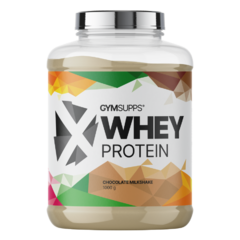
GymSupps XWhey Protein
Amix Gold Whey Protein Isolate

Why Isn't One Experiment Enough to Change the Recommendations?
Although the study yielded interesting results, its limitations must also be taken into account. Only 19 people participated in the study, and 16 participants completed all experimental phases. Furthermore, the participants were physically active adults, not elite athletes or experienced bodybuilders in long-term competitive training.
The individual dietary regimens lasted only five days. Therefore, the results cannot be automatically applied to a weight-loss diet lasting several months. The intensity of the energy restriction itself is also important. Participants were subjected to conditions of significantly lower energy availability than what should be the normal goal of healthy weight loss.
Furthermore, the study did not examine long-term changes in muscle mass or adaptations to strength training. And most importantly: it did not rule out the possibility that the two weight-loss diets differ little or not at all in their actual effect on performance. Therefore, it cannot be concluded from the results that a higher protein intake causes a decline in athletic performance. A much more accurate conclusion is that, under conditions of extremely restricted energy intake, factors other than protein intake alone may have a negative impact.
Weight loss isn’t just a matter of calories and protein
Research on sports nutrition repeatedly reminds us that the human body does not function like a simple calculator. It’s not enough to simply cut a few hundred calories and add protein. If we want to lose body fat while simultaneously improving our performance at the gym—or at least maintaining our current level of performance—we need to think of our diet as a whole.
Protein plays an irreplaceable role. Carbohydrates are especially important for intense physical activity. Fats, in turn, fulfill a number of important physiological functions. And without an adequate energy intake, the body cannot function at the same level over the long term as it does with a balanced diet.
So perhaps the biggest mistake when losing weight isn’t that we’re not eating enough protein. Perhaps it’s the notion that enough protein can solve everything else.

We recommend: Nutrition for Training and Weight Loss
If you’re trying to preserve muscle mass while losing weight, it’s important not to underestimate the value of high-quality protein sources. GymSupps XWhey Protein can be a practical way to supplement your daily intake, especially if you have a busy schedule and don’t always have time to prepare a balanced meal.
However, a protein shake is not a substitute for a varied diet. To maintain high-quality training, your body also needs sufficient energy, carbohydrates, healthy fats, and other nutrients. Therefore, the best results come from a sustainable, long-term approach, not from trying to lose weight as quickly as possible.
Recommended
New 100% Whey Protein 800g 1+1
Prom-in Pentha Pro Balance
GymSupps XWhey Protein
Scientific sources:
- Reina, B. A. et al. (2026). The Influence of Short-Term, Severe Low Energy Availability With Varying Protein Content on Substrate Metabolism, High-Intensity Exercise Performance, and Subjective Responses in Young Adults. European Journal of Sport Science.
- Kanaan, M. F., Nait-Yahia, S., Doucet, É. (2025). The Effects of High Protein Intakes During Energy Restriction on Body Composition, Energy Metabolism, and Physical Performance in Recreational Athletes. European Journal of Clinical Nutrition.
- Murphy, C. H. et al. (2018). Protein Recommendations for Weight Loss in Elite Athletes: A Focus on Body Composition and Performance
- Jäger, R. et al. (2017). International Society of Sports Nutrition Position Statement: Protein and Exercise.
No posts have been made yet.