




Can higher doses of vitamin D really improve our health?
 Author:
It’s a November morning. It’s cloudy outside; the sun hasn’t really come out for several days, and we spend most of our time at the office or at the gym. There are several dietary supplements sitting on the kitchen counter. Creatine, magnesium, omega-3, and, of course, vitamin D. In recent years, vitamin D has become an almost indispensable part of a healthy lifestyle. It’s taken by athletes, office workers, and anyone looking to boost their immunity during the winter months.
Some take 1,000 IU a day, others 2,000 IU, and still others as much as 5,000 IU or more. The logic seems simple. If vitamin D is important for the body, a higher intake should be even more beneficial. But this is where we come to one of the biggest misconceptions in modern supplementation. Vitamin D is essential. However, that doesn’t mean that the more we take, the healthier we’ll be.
Article Contents:
- What Does Science Say? Higher Doses Don’t Necessarily Mean Better Health
- How much vitamin D do we really need?
- Can too much vitamin D be harmful?
- Vitamin D and sports: Will it make us stronger?
- How to Supplement Vitamin D Wisely?
- The biggest mistake? Confusing “more” with “better”
What does science say? Higher doses don’t necessarily mean better health
Arnold Schwarzenegger also highlighted this issue in his magazine, Arnold’s Pump Club. He pointed out that the effectiveness of supplementation depends primarily on whether a person is actually deficient in vitamin D. If their levels meet the body’s needs, further increases may not provide the expected benefits.
This view is also supported by the Endocrine Society’s 2024 expert recommendations. After evaluating clinical studies, the expert panel recommended that healthy adults under the age of 75 without specific medical indications should not routinely take vitamin D in doses exceeding the standard recommended intake solely for the purpose of disease prevention.
This does not mean they should stop taking vitamin D.
It means that a higher dose is not automatically a better dose.
At the same time, experts pointed out that there is insufficient evidence to support widespread laboratory testing of vitamin D levels in the general healthy population. Individual testing, on the other hand, is warranted when there is a medical reason or a suspected disorder in its metabolism.
How much vitamin D do we actually need?
Vitamin D is fat-soluble and performs several important functions in the body. It plays a role in the absorption of calcium and phosphorus, helps maintain healthy bones, and contributes to the normal function of muscles and the immune system. A deficiency can lead to problems with bone mineralization and, in severe cases, to muscle weakness.
However, there is a fundamental difference between correcting a deficiency and striving to achieve the highest possible levels. According to U.S. reference values, the recommended daily intake for adults up to age 70 is 600 IU, or 15 micrograms. For older adults, it is 800 IU, or 20 micrograms.
European recommendations may differ in detail. These values represent total intake, not necessarily the dose that each person must take in the form of capsules. This is because we obtain some vitamin D from our diet and, under suitable conditions, through its synthesis in the skin via exposure to UVB radiation.
However, in the Czech context, it is important to take the season into account. During the fall and winter, vitamin D production from sunlight is typically limited. This can increase the importance of obtaining it from food or supplements. Even in winter, however, it is not true that everyone needs the same high dose.
Vitamin D in Winter: When Does Supplementation Make Sense?
During fall and winter, it can be more difficult to ensure an adequate intake of vitamin D solely through sunlight and a regular diet. That is precisely when dietary supplements can be a practical solution, especially if a person eats little fish or spends most of their time indoors.
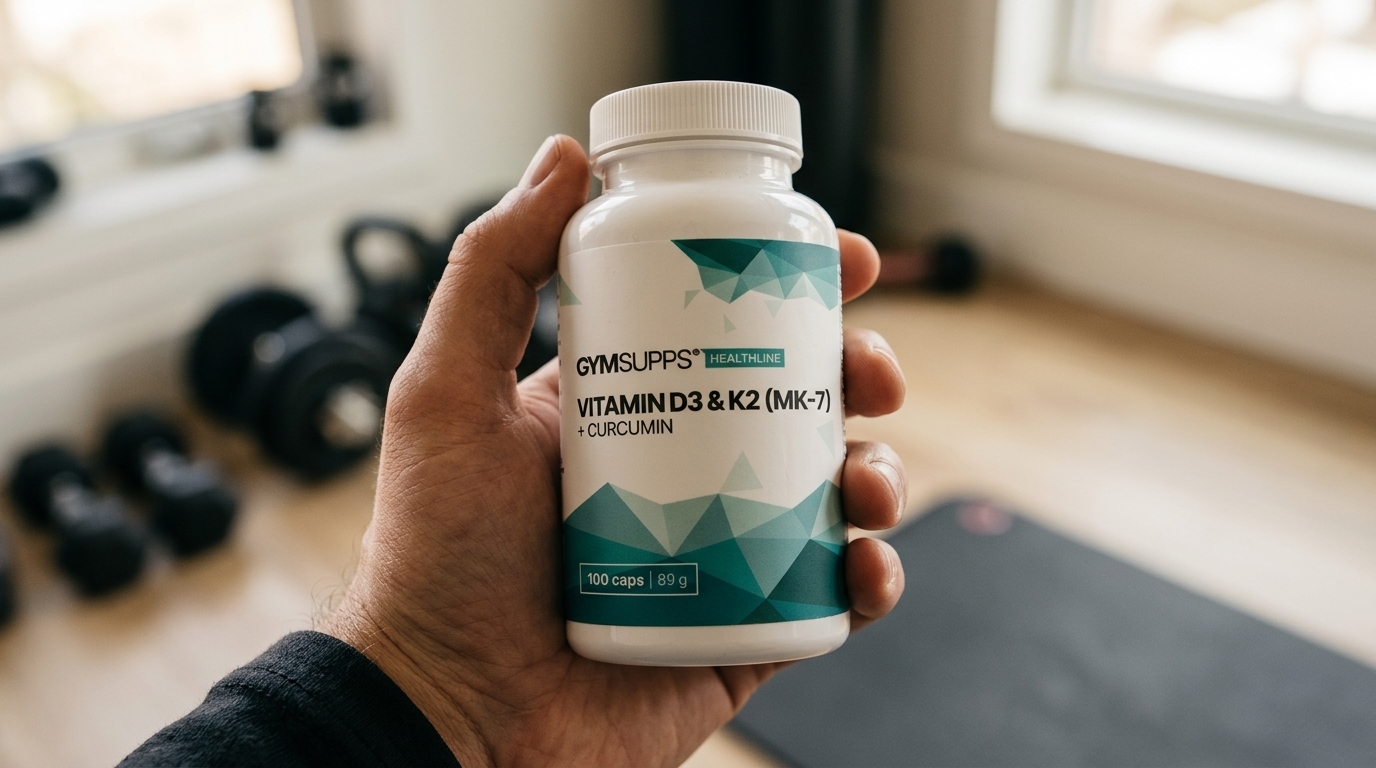
When choosing a vitamin D3 supplement, it is important to pay close attention to the amount of active ingredient per dose and your total intake from all sources. It is not necessary to automatically choose the strongest option. In some products, vitamin D is combined with vitamin K2. However, this combination does not in itself demonstrate greater effectiveness for everyone, and vitamin K can interfere with the effects of certain medications, such as warfarin.
Recommended
GymSupps Vitamin D3
Vitamin D3 100cps 1+1

Can too much vitamin D be harmful?
Yes. And this is precisely what sets vitamin D apart from the notion of a harmless supplement that can be taken with virtually no restrictions. Because it is a fat-soluble vitamin, excessive intake can lead to its accumulation in the body. Long-term use of unreasonably high doses carries the risk of hypercalcemia, or an excessive increase in blood calcium levels.
This can manifest as nausea, weakness, excessive thirst, or frequent urination. In severe cases, it can also lead to kidney damage. The European Food Safety Authority (EFSA) sets the tolerable upper limit for long-term total intake in adults at 100 micrograms, or 4,000 IU per day.
However, this value does not represent a recommended dose. It is an upper limit below which adverse effects are not expected in most healthy adults with long-term intake. Higher doses may be used under medical supervision in certain medical situations, such as in the treatment of a confirmed deficiency.
However, taking high doses long-term solely as a preventive measure may not be advisable.

Vitamin D and Sports: Will It Make Us Stronger?
For athletes, vitamin D is of particular interest because of its role in muscle function. A deficiency can negatively affect musculoskeletal health, and in cases of severe deficiency, it can lead to muscle weakness. However, it cannot be automatically concluded from this that supplementation will increase strength or muscle mass even in people who have sufficient vitamin D.
Here, a principle similar to that of many other supplements applies. Correcting a deficiency in a particular nutrient can be essential for health. However, increasing its intake beyond the body’s needs may not provide any additional performance benefit.
So if you strength train regularly, there’s no point in considering high doses of vitamin D as a means to achieve faster muscle growth. A well-structured training program, adequate energy and protein intake, sleep, and recovery remain more important.
How can you supplement vitamin D sensibly?
The key is to assess your total intake and individual circumstances. Natural sources of vitamin D include, for example, fatty fish, egg yolks, and certain fortified foods. Sunlight also plays a significant role, though its effectiveness varies depending on the season, geographic location, skin type, and other factors.
In the Czech Republic, supplementation during the winter can be a practical way to ensure adequate intake. At the same time, it’s a good idea to check whether vitamin D is already included in other supplements you’re taking, such as multivitamins.
If a person suffers from a condition that affects fat absorption, has a calcium metabolism disorder, or other relevant health issues, they should consult a doctor regarding dosage. Similarly, it is not advisable to increase doses on your own based solely on claims found on social media.
| Age Group | Recommended Daily Intake | Upper Limit |
|---|---|---|
| 19–50 years | 600 IU (15 µg) | 4,000 IU (100 µg) |
| 51–70 years | 600 IU (15 µg) | 4,000 IU (100 µg) |
| Over 70 years | 800 IU (20 µg) | 4,000 IU (100 µg) |
The Biggest Mistake? Confusing “More” with “Better”
Vitamin D is a prime example of how easily we can confuse the importance of a particular nutrient with the idea that a higher intake must automatically be healthier. Vitamin D deficiency is a real health problem. However, this does not mean that a person with adequate intake will be healthier if they start taking doses several times higher. Modern research thus reminds us of a simple principle that also applies to sports nutrition.
The goal of supplementation should not be to consume as much as possible. The goal is to consume exactly as much as the body actually needs.
When choosing a vitamin D supplement, the most important factor isn’t the number on the package, but whether the specific dosage meets your needs. Especially during the winter months, a high-quality vitamin D3 supplement can be a practical addition to your regular diet. However, it’s worth checking the amount of vitamin D in each capsule and keeping in mind other products that may contain it. If you take a multivitamin, it’s not always necessary to automatically add another standalone supplement. As with other supplements, it’s important to remember that the highest dose isn’t necessarily the best one. The goal is to ensure adequate intake, not to exceed the body’s needs.
Recommended
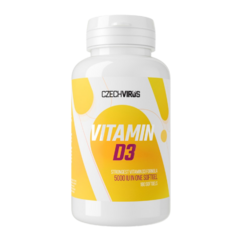
Czech Virus Vitamin D3
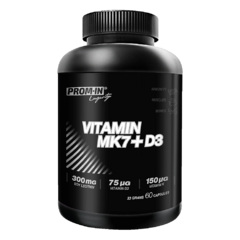
Prom-in Vitamin MK7+D3
No posts have been made yet.