Benefits of L-Arginine HCL for athletes and bodybuilders
 Author:
 L-Arginine HCL is one of the most popular dietary supplements in the world of fitness and bodybuilding. It is an amino acid that can affect athletic performance, recovery and overall muscle vitality. In this article, you'll learn what l-arginine is good for, what effects arginine has, and how aacg vs. l-arginine stacks up.
Article Content:
- What is L-Arginine HCL?
- What is L-arginine good for?
- Arginine effects for athletes
- AAKG vs. L-Arginine
- Possible risks and proper dosage
What is L-Arginine HCL?
L-Arginine (or just arginine) is a semi-essential amino acid, meaning that the body can make it on its own under certain conditions, but at higher loads (such as intense training or during periods of stress) its production may be insufficient1. The HCL (hydrochloride) version is characterized by good solubility and stability, which is why it is often preferred in dietary supplements.

What is L-arginine good for?
Arginine is involved in a number of metabolic processes in the body. The main reasons what l-arginine is good for include:
Promoting the production of nitric oxide (NO)
L-Arginine is converted in the body into nitric oxide, which is a blood vessel dilating gas. This can improve blood flow, oxygen and nutrient supply to the muscles, while helping to flush out metabolites produced during exercise2.
Faster recovery
With better blood flow and supply of building blocks, muscles can recover better and faster after intense training.
Supporting the immune system
Arginine is involved in the production of proteins and other important compounds that are essential for the proper functioning of immunity.
Arginine effects for athletes
- "Muscle pump".
- Stamina and strength: Some studies suggest that getting enough arginine could boost performance in both endurance and strength events2.
- Anabolic processes: L-Arginine indirectly affects growth hormone and insulin secretion, which may be involved in promoting muscle growth1.
.png)
AAKG vs. L-Arginine
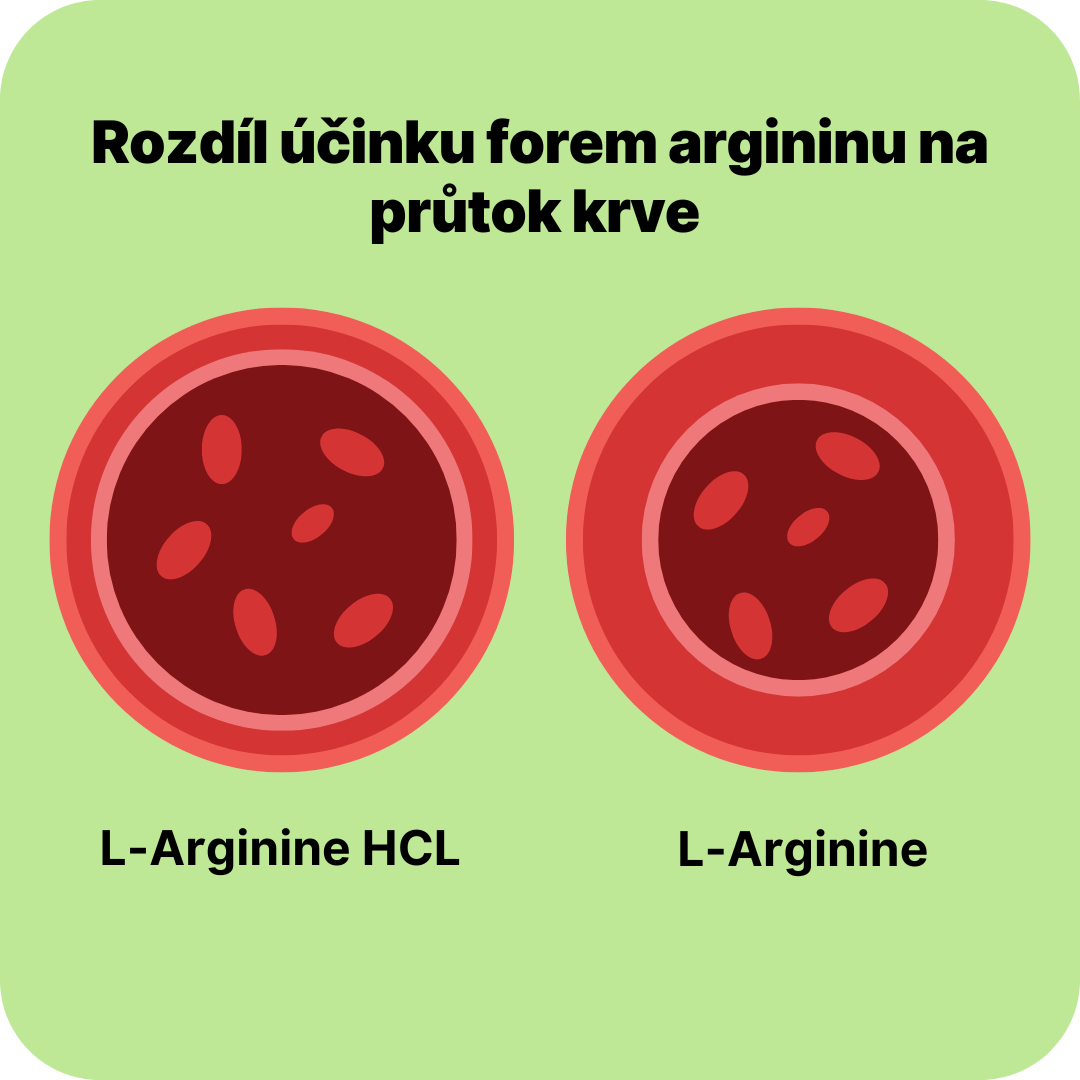
In dietary supplements, you will often see the label AAKG vs. L-arginine. AAKG (Arginine Alpha-Ketoglutarate) is a compound of arginine and alpha-ketoglutarate. According to some claims, this form might have better absorption and higher nitric oxide production, but scientific studies are not always completely consistent in this regard3.
- L-Arginine HCL: a stable, highly soluble form.
- AAKG: it is often suggested that it may have better bioavailability, but the evidence so far is rather limited.
Thus, the choice of a particular form may be individual - it is worth trying both variants and monitoring your own body's response.
Possible risks and correct dosage
- Indigestion: In higher doses (above 10 g per day), unpleasant indigestion, bloating or diarrhoea may occur.
- Combinations with medications: Arginine can affect blood pressure, so people taking medication for hypertension should be especially careful. It is always a good idea to consult a physician about use.
- Recommended amount: For sports purposes, 3-6 g of arginine per day is usually recommended, ideally in a pre-workout dose. However, the exact amount depends on body weight, type of exercise and individual tolerance.
Conclusion
Although often talked about mainly in terms of protein or creatine, arginine's effects are also attractive to athletes looking for a way to improve performance, recovery, and the muscle "pump" effect. Knowing what l-arginine is good for allows you to incorporate this amino acid into your diet or supplementation plan in a targeted manner and with specific training goals in mind. The question of AAKG vs l-arginine depends mainly on the individual reaction of the body - some athletes are more suited to AAKG, others to the classic form of L-Arginine HCL.
It is important to remember a balanced diet and appropriate dosage. While arginine can be a great supplement, remember that the foundation of quality performance and recovery is always a comprehensive approach including proper nutrition, rest and an appropriate training program.
Recommended
GymSupps L-Arginine HCL
L-Arginine HCL 500g 1+1
Reference
- [1] Curis E, Crenn P, Messager A, et al. (2005). Arginine metabolism in mammals. The Journal of Nutrition, 135(10), 1981-1988.
- [2] Alvares TS, Meirelles CM, Bhambhani YN, Paschoalin VM, Gomes PS. (2011). L-Arginine as a potential ergogenic aid in healthy subjects. Sports Medicine, 41(3), 233-248.
- [3] McConell GK. (1999). Arginine and nitric oxide in the control of blood flow during exercise. Medicine & Science in Sports & Exercise, 31(5), S238-S243.
No posts have been made yet.