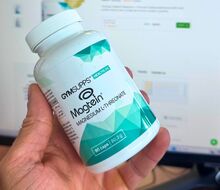
You're Not Tired—Your Brain Is Just Getting Older: How Can You Clear Your Head and Regain Your Lost Agility After 30?
 Author:
 We all worry about our first wrinkles, gray hairs, or staying in shape, but the most significant and subtle sign of aging isn’t visible in the mirror at all. By the time you’re in your thirties, your brain’s ability to process information, assess situations, and react instantly begins to slow down inexorably. Most of us mistakenly attribute this to ordinary fatigue from stress or work, so we try to fix it with another cup of coffee. The truth, however, is that your nervous system is crying out for something completely different than another dose of stimulants. Let’s take a look at what’s really happening to your brain, how to stop this hidden process, and what will help you regain a clear mind, sharp reflexes, and deep vitality.
Article Contents:
- The Invisible Thief of Your Energy and Focus
- Why Another Espresso or Energy Drink Won’t Save You
- Scientific Breakthrough: Why Regular Magnesium Isn’t Enough and What Magtein Can Do
- Hidden Bonus: How to Boost Your HRV and Kickstart Deep Recovery
- Your Practical Plan for Every Day
The Invisible Thief of Your Energy and Focus
When you hear the term “reaction time,” you might picture a professional athlete, a fighter pilot, or an esports player. In reality, though, you rely on it every single day—even when you’re just sitting in the office or cooking dinner. It’s that critical fraction of a second when you have to slam on the brakes in your car because someone unexpectedly cuts you off, when you instinctively catch a falling glass, or when you have to respond quickly and accurately to an unexpected question during a work meeting.
The biological reality of the human body is relentless. Once you turn thirty, your reaction time naturally begins to slow down, by about 5 to 10 percent with each passing decade. At first, of course, you won’t notice it—the changes are so subtle that you’ll chalk them up to a bad day. Gradually, however, these tiny delays add up. The result is that ever-present feeling that you’re just a little behind, that the “infamous” brain fog is clouding your thoughts, that you have a harder time concentrating, and that you’re exhausted when you get home much sooner than reality would suggest. The aging of the nervous system happens quietly, but its impact on daily life is enormous.

Why Another Espresso or Energy Drink Won’t Save You
How do we usually react when we feel tired, experience a drop in concentration, or notice our thinking slowing down during the day? Most people automatically reach for the tried-and-true classic—caffeine. A cup of strong coffee, an energy drink, or a potent pre-workout booster has become our daily crutch.
Caffeine works great as a temporary fix. It can successfully block the fatigue receptors in the brain and give you a false sense of being full of energy and ready to move mountains for a few hours. But this doesn’t solve the underlying problem of your exhausted nervous system at all. It works exactly like whipping a tired horse. The horse may speed up for a moment out of fear, but its inner exhaustion and thirst won’t go away—on the contrary, it will eventually collapse even sooner.
In the long run, overusing stimulants literally wears down your nervous system. It worsens the quality of your sleep, increases anxiety, and leads to chronic exhaustion. The real solution lies not in brutal stimulation, but in the deep optimization and nourishment of nerve cells. The goal is not to constantly push the brain to superhuman feats, but to streamline signal transmission so that it functions lightning-fast, clearly, and completely naturally.
Scientific Breakthrough: Why Regular Magnesium Isn’t Enough and What Magtein Can Do
Anyone who has even a passing interest in a healthy lifestyle knows that magnesium is an absolute essential. It helps prevent muscle cramps, calms the body, and supports recovery. But when it comes to brain function and the speed of nerve impulses, common forms of magnesium (such as citrate, oxide, or standard bisglycinate) have one major drawback—they cannot effectively cross the blood-brain barrier, which is a natural protective barrier that prevents foreign substances from entering the brain.
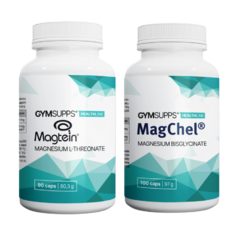
After years of research, scientists have therefore developed a specific compound known asmagnesium L- threonate (often marketed under the patented name Magtein). It consists of magnesium cleverly bound to L-threonic acid, which gives it a truly unique property: it can easily penetrate directly into the cerebrospinal fluid, thereby dramatically increasing magnesium levels exactly where your brain needs them most.
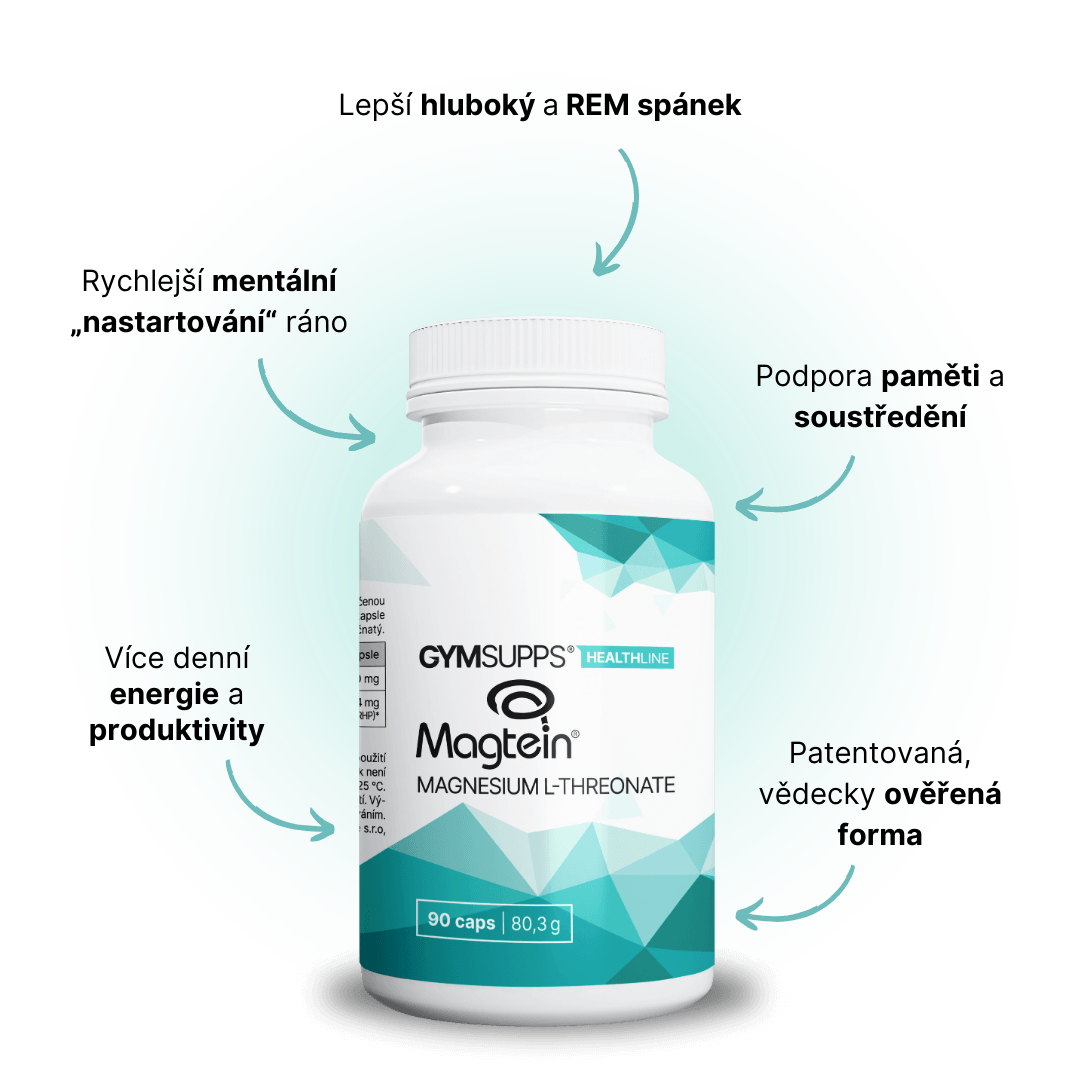
And the scientific data speaks for itself. In controlled studies focusing on cognitive performance and visuomotor tests, adults took this form of magnesium for six weeks. The results showed that participants experienced dramatic improvements in reaction time, visual information processing speed, hand-eye coordination, and overall ability to maintain attention, while the placebo group showed no improvement.
This is because L-threonate acts as a perfect “cleaner of neural noise” in the brain. As we age, static noise accumulates in our neural network—signals interfere with one another, become delayed, and the brain must exert enormous effort to assemble them into meaningful information. Magtein effectively reduces this background noise, stabilizes the connections between cells (synapses), and ensures that electrical impulses flow with absolute precision. If you feel like your mental capacity is running low during a demanding workday, that you’re having trouble thinking clearly, or that you’re losing your ability to concentrate deeply, this is exactly the missing piece of the puzzle.
Recommended
Hidden Bonus: How to Boost Your HRV and Kickstart Deep Recovery
But the most interesting aspect of modern research focused on the nervous system goes far beyond reflex speed. One of the most valuable findings has been a massive shift in HRV (Heart Rate Variability) values.
If you own a modern smartwatch or fitness tracker, you’ve surely at least heard of HRV. Today, in both medicine and sports training, it’s considered the most accurate indicator of how well your body has recovered and how effectively it can withstand everyday stress. The higher and more stable your HRV is, the better your nervous system can switch between two basic modes: the “fight or flight” state (sympathetic nervous system) and the state of deep rest, digestion, and physical recovery (parasympathetic nervous system).
Participants in the studies experienced a massive increase in HRV thanks to proper supplementation targeting the nervous system. What does this mean in practice? Although these people spent exactly the same number of hours in bed as before, their sleep was many times more effective. Their nervous system was able to regenerate at a much deeper level overnight. In the morning, they woke up feeling truly rested, with a clear head and much greater resilience to stress.
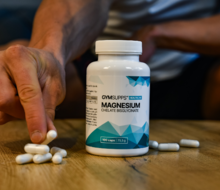
Achieving this level of quality recovery, however, requires smart synergy. During the day, you support your brain with L-threonate for clear and rapid focus, but in the evening, you must purposefully “shut down” your body. About an hour before bed, taking a highly absorbable form of magnesium—which targets the release of muscle tension and calms the body—has proven to be highly effective. Among the absolute staples that thousands of our customers swear by are the tried-and-true Prom-IN Magnesium Bisglycinate and the top-of-the-line GymSupps Magnesium Chelate Bisglycinate. Just take two capsules before bed, and you’ll feel the difference within the first few nights—your stiff body, after a full day of sitting in the office or a tough workout, will relax, and you’ll drift off into a deep, undisturbed sleep.
Recommended
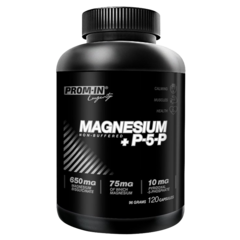
Prom-in Magnesium + P5P

Your Practical Plan for Every Day
| Daily Phase | Goal for Your Body | Practical Tip for an Ordinary Day |
|---|---|---|
| Morning (until 10:00 a.m.) | A natural wake-up and energy boost | Expose your eyes to natural daylight. Ideally, wait an hour and a half after waking up before having your first cup of coffee to prevent an afternoon energy slump. |
| Afternoon | Mental Clarity and Quick Reactions | The ideal time to take magnesium L-threonate. It will help clear brain fog and support deep concentration without having to reach for another cup of coffee. |
| Evening | Deep recovery and HRV growth | An hour before bed, put away your cell phones (blue light blocks melatonin) and take calming magnesium (bisglycinate) for maximum nighttime rest. |
Maintaining sharp reflexes, lightning-fast thinking, and a healthy nervous system doesn’t require any complicated biohacking experiments. All you need to do is incorporate smart timing into your daily routine and avoid constantly masking your fatigue.
Slowed reactions, constant brain fog, and chronic fatigue after age 30 are definitely not an inevitable fate you have to accept. Your body and brain are incredibly adaptable systems that simply need to be supported with the right, scientifically proven nutrients. Break your addiction to that fifth cup of coffee and start taking smart care of your nervous system.
Recommended

No posts have been made yet.