




You have muscles, but it's still not enough for you. Why?
 Author:
A few years ago, he started going to the gym. He was skinny, had almost no muscle, and his main goal was to get stronger. Today, he has gained several kilograms of muscle mass, works out regularly, and his physique has changed significantly. But when he looks in the mirror in the morning, he still sees, above all, what he’s missing.
His shoulders could be broader. His arms bigger. His abs more defined. And so it goes. Another workout, another diet, another goal. At first glance, it might seem like this is just healthy motivation. After all, it’s the desire to improve that brings many people to the gym.
But what if the line beyond which we’ll finally be satisfied keeps shifting?
What if the problem isn’t how our body actually looks, but how we perceive it?
Article Contents:
- Why Do We Get Used to Our Own Muscles So Quickly?
- The mirror doesn’t just show our bodies. It also reveals our beliefs
- Social media can change our ideas about what a “normal” body looks like
- When does the desire for muscle turn into a psychological problem?
- Why might an extra kilogram of muscle not bring us satisfaction?
- How can you build muscle without losing a healthy relationship with your own body?
- Maybe you don’t need bigger muscles. Maybe you need to change how you see yourself
Why do we get used to our own muscles so quickly?
One possible explanation is psychological adaptation. People gradually get used to changes they previously considered extraordinary. What brought us great joy at first can, over time, become something we take for granted. The same principle can apply to building muscle mass. When we first manage to lift a certain weight or notice a significant change in our physique, we feel a sense of satisfaction. But after a few months, this new achievement becomes a normal part of our lives.
And instead of appreciating the progress we’ve made, we start looking for more shortcomings. Adaptation itself isn’t a bad thing. It helps us set new goals and continue our personal development. The problem, however, can arise when our satisfaction becomes permanently dependent on achieving the next result.
That’s when a strange paradox can arise.
The more we improve, the more we expect of ourselves.
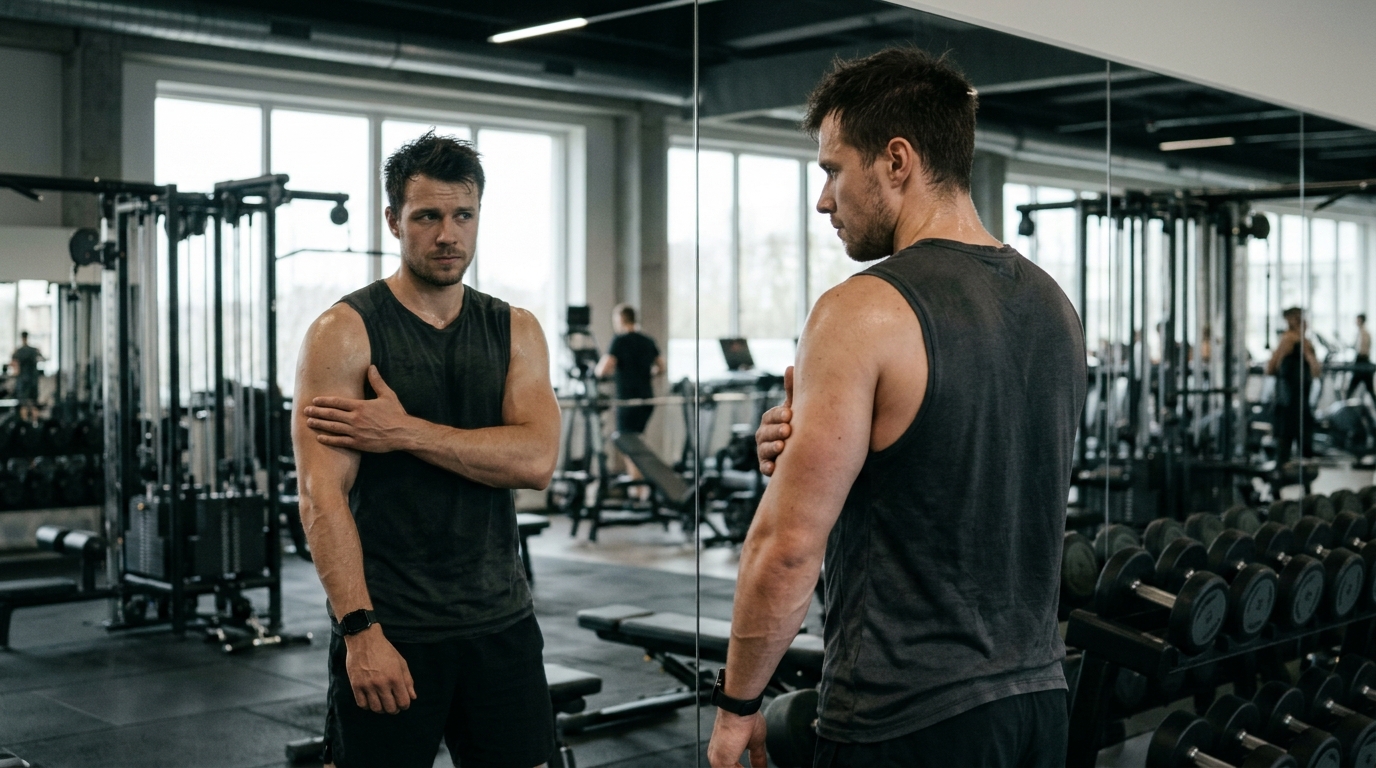
A mirror doesn’t just show our body. It also reveals our beliefs
Psychology distinguishes between a body’s actual appearance and its subjective perception. Body image encompasses not only how we see our figure but also the thoughts, emotions, and evaluations we associate with it. Two people with similar physiques may therefore have completely different levels of satisfaction with their appearance.
One perceives a muscular body as the result of long-term effort. The other, when looking in the mirror, notices above all the areas that, in their view, still fall short. Personal expectations, past experiences, and the environment in which we live can all play an important role here.
For example, if a person has long believed that they must be significantly more muscular to be attractive or respected enough, this belief can influence their daily assessment of their own physique. The mirror thus becomes more than just a tool for observation.
It can become a place where we constantly seek confirmation of our own shortcomings.
Social media can change our ideas about what a “normal” body looks like
Imagine looking at dozens of photos every day of professional bodybuilders, fitness influencers, and people with exceptionally toned physiques. Gradually, you’ll get used to these images. Bodies that are very uncommon in the general population will begin to seem like the norm.
And this is where social comparison comes into play.
As early as 1954, psychologist Leon Festinger described how people tend to evaluate their abilities and traits by comparing themselves to others. In a fitness setting, this mechanism can be particularly pronounced. If we constantly compare ourselves to people who have more muscle, a lower body fat percentage, or better genetic predispositions, we can easily overlook our own progress.
Furthermore, research shows links between certain ways of using social media, comparing appearances, and body dissatisfaction. However, this does not mean that social media automatically causes mental health issues. It also depends on what content we consume, how we interpret it, and our own psychological predispositions.
When does the desire for muscle turn into a mental health issue?
It’s important to distinguish between a normal effort to improve one’s physique and a state in which dissatisfaction with one’s own body begins to significantly interfere with daily life. One such problem can be muscle dysmorphia, sometimes referred to as muscle dysmorphia. It is a form of body dysmorphic disorder in which a person is excessively preoccupied with the idea that their body is not muscular or bulky enough.
This is true even when, objectively speaking, they have well-developed muscles.
For example, a person may spend an excessive amount of time checking their physique, experience intense anxiety when they miss a workout, or avoid social situations due to dissatisfaction with their appearance. Some people may also continue to work out despite injuries or prioritize their diet and exercise routine over nearly every other aspect of their lives.
However, the desire for larger muscles alone does not mean that a person is suffering from a mental disorder. What matters most is the intensity of the difficulties, their impact on daily functioning, and the degree of psychological distress. If body dissatisfaction significantly disrupts daily life, it is advisable to consult a psychologist or another qualified professional.
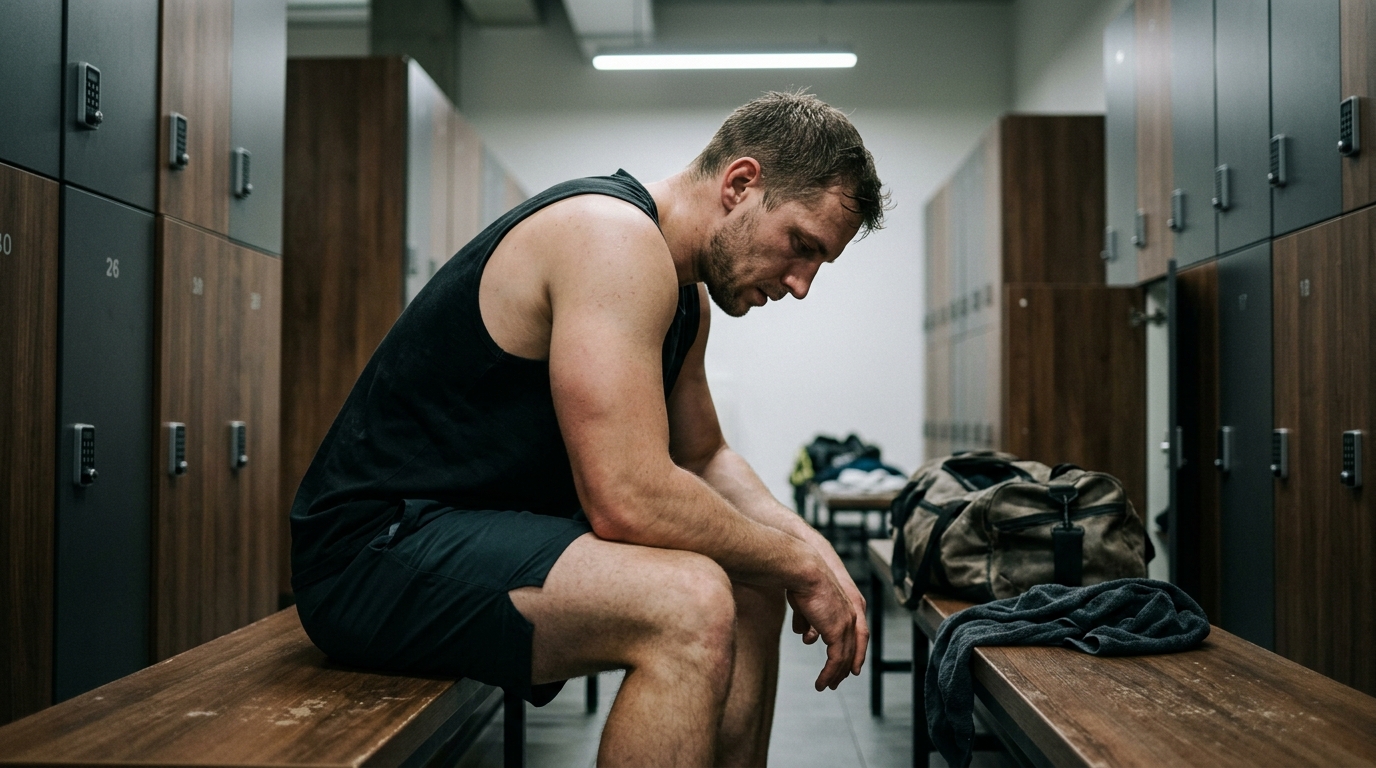
Why might an extra kilogram of muscle not bring us satisfaction?
In psychology, a distinction is often made between intrinsic and extrinsic motivation. Some people exercise primarily because they enjoy physical activity, want to get stronger, or simply enjoy the process of improvement. Others may base their motivation mainly on the approval of those around them, their appearance, or the belief that they will only gain sufficient self-worth once they achieve a certain physique.
In reality, these two types of motivation often overlap. The difference, however, may lie in how a person experiences failure. If our satisfaction depends solely on our appearance, every shortcoming can feel like a personal failure.
And every goal achieved may be only a short-term relief before we set the next one. This doesn’t mean we should give up on our ambitions. Rather, it’s important to learn to separate our self-worth from our current body image.
Build muscle the healthy way. Don’t forget to recover
The desire for a better physique can be a great motivation for regular exercise. However, it’s important that the pursuit of muscle growth not be based on constant dissatisfaction with your own body. The foundation of long-term progress remains a properly structured workout routine, a high-quality diet, and sufficient rest.
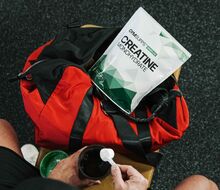
If you want to support muscle growth and maintenance, focus primarily on getting enough protein. GymSupps XWhey Protein can be a practical aid to help supplement the protein in your diet. Creatine monohydrate is another well-researched supplement; when taken at a daily dose of 3 grams, it enhances physical performance during repeated, short-term, high-intensity exercises.
Remember, however, that no dietary supplement can resolve long-term dissatisfaction with your own appearance. Sports nutrition should support your training goals, not the notion that bigger muscles alone will make you a more valuable person.
Recommended
Creatine Monohydrate 500g 1+1
GymSupps XWhey Protein
How can you build muscle without losing a healthy relationship with your own body?
One of the first steps might be to change the way we evaluate our own progress. Instead of constantly focusing on our shortcomings, we can concentrate more on what our bodies are capable of. Improvements in strength, technique, fitness, or training consistency represent tangible results that aren’t solely dependent on appearance.
It can also help to be mindful of who we’re comparing ourselves to. A professional bodybuilder preparing for a competition isn’t an appropriate benchmark for a normal, healthy physique. Similarly, photos on social media may not reflect what a person actually looks like on a daily basis.
It’s also important to make room in our lives for relationships, work, rest, and other interests. After all, training can be an important part of our identity without becoming its sole foundation.
| Area | A Healthy Approach | Warning Sign |
|---|---|---|
| Body Image | You want to improve, but you can appreciate the progress you’ve made so far. | Despite your results, you constantly feel that you aren’t muscular enough. |
| Training | You work out regularly and respect the need for recovery. | You feel significant anxiety when you skip a workout, or you exercise despite an injury. |
| Diet | Your diet supports your goals and allows for some flexibility. | Strict rules around food significantly disrupt your daily life. |
| Social Comparison | You draw inspiration from others, but you focus primarily on your own progress. | Comparing yourself to influencers or bodybuilders regularly puts you in a bad mood. |
| Personal value | Appearance and performance are just one of many aspects of your life. | Your self-confidence depends almost entirely on muscle size and appearance. |
| Relationships and Leisure | You’re able to balance exercise with work, relationships, and rest. | Because of concerns about your body, you avoid people or everyday activities. |
Maybe you don’t need bigger muscles. Maybe you need to change how you see yourself
Building muscle mass can be an extremely positive part of life. It teaches us consistency, patience, and the ability to work toward long-term goals. The problem, however, can arise when we start to believe that our self-worth increases along with our arm circumference or the weight on the barbell.
Because if our satisfaction keeps shifting to the next kilogram of muscle mass, we may never reach the point where we allow ourselves to be content.
Real change, then, doesn’t necessarily consist solely of building a better physique. Sometimes it can begin the moment we learn to perceive our own bodies differently.
Recommended

New 100% Whey Protein 800g 1+1

XGen 90cps + Omega 3 90cps
No posts have been made yet.