





Hydration under the magnifying glass: When is water enough and when is it necessary to reach for electrolytes?
 Author:
 Most people approach drinking regimens with the same concerns as dietary supplements: 'Am I doing it right? Am I drinking enough or not enough?" The truth is, thankfully, less stressful and much clearer than it seems on social media. Scientists have spent years separating myths from reality, and now we have the data to show exactly how hydration affects our athletic performance.
Here's a summary of what the latest meta-analyses say and how to put that information into practice.
How dehydration destroys performance (hard data)
Dehydration is the silent enemy. It doesn't destroy your performance immediately, but it gradually increases the stress on the cardiovascular system, limits the body's ability to cool itself, and alters the functioning of the neuromuscular system.
According to extensive studies, lack of fluid has a direct impact on two main types of activity:
1. Endurance sports (running, cycling)
A large meta-analysis of 64 studies confirmed that hydration has a direct effect on performance. If you are dehydrated:
- Fatigue sets in more quickly (especially with activities over 1 hour or in the heat).
- VO2 max (maximum oxygen consumption) decreases.
- Lactate threshold (the ability of muscles to work without acidification) is impaired.
2. Strength training
If you prefer weights to running, dehydration will affect you too. A meta-analysis of 28 studies showed that fluid deficiency reduces:
- Muscular endurance by almost 10%.
- Strength by 5%.
- Explosive force (power) by 6%.
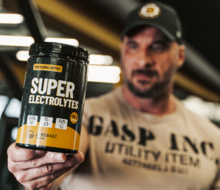
The 60-minute rule: When to drink water and when to "refill"
The key to success is not to drink constantly, but to adapt your drinking to the length and intensity of your workout.
- Train within 60 minutes: If you've been exercising for less than an hour, you're not sweating extremely hard, and it's not too hot, regular water (and normal hydration throughout the day) is perfectly adequate. Short workouts won't deplete the body so much that dehydration becomes a limiting factor. Studies even suggest that it's more important to come to a workout hydrated than to drink between sets.
- Training over 60 minutes (or in the heat): this is where the game changes. For longer activities (1-2 hours or more), hydration needs to be planned.
- Recommendation: drink roughly 150-350 ml of fluid every 15-20 minutes of activity.
Role of electrolytes (Sodium, potassium, magnesium)
For longer and more strenuous exercise, water alone may not be enough because you are not only losing fluids with sweat, but minerals as well. This is where electrolytes ( LMNT, mentioned in the text) come in.
Electrolytes help:
- Prevent muscle cramps.
- Maintain optimal brain and muscle function.
- Improve water absorption into the cells.
The ideal solution for tough workouts is a blend of electrolytes without unnecessary sugar and artificial additives that replenishes sodium, potassium and magnesium at the exact moment the body calls for it most - before or after a tough workout.
Conclusion
Hydration is not about drinking as much as possible at all costs. It's a tool. For short workouts, just "not being thirsty" is enough. But if you're aiming for long distance or maximal strength performances, a water bottle and electrolytes can be the deciding factor that pushes you further.
Recommended
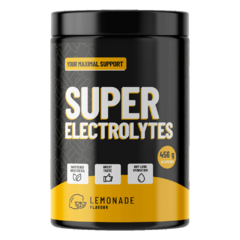
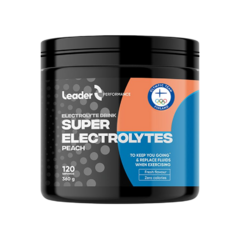
Leader Super Electrolytes
No posts have been made yet.








