





How to lose weight properly and effectively? We will show you exactly how to do it.
 Author:
 It's summer, a time of sunshine and warm weather, and everyone wants to look their best in a swimsuit. In most cases, that means shedding a few extra pounds. Now comes the question of how to lose them, and as quickly as possible and at the same time without costing us too much effort.
If we want to shed excess pounds effectively, it is important to remember that proper weight loss has important principles. The biggest mistake is to think that starving equals losing weight, but the opposite is true. Initially, this method may work and one will lose some of those pounds. This method only works until our body realizes what we have done to it and starts to fight back. As I say, the human body is a very clever apparatus that can adapt to many conditions. In this case, it finds out that we have taken away its calorie intake, it automatically switches to the so-called "economy mode" and learns to live with the little it has. In other words, the weight loss stops. So it follows that the first point of effective weight loss is to have a proper calorie balanced diet. We will come back to a more detailed description of the eating plan later.
The second essential point is getting enough active exercise. The body takes in calories with food and stores the ones it doesn't consume as fat reserves for "rainy days". If our diet consists of meals containing large amounts of fat and simple carbohydrates and at the same time we do not have any active movement, sooner or later this will be reflected in our weight. If we plan to lose a few pounds as soon as possible, we can't do it without exercise!
Now let's get back to more specific dietary adjustments. Our diet consists of proteins, carbohydrates and fats.
Protein is the basic building block for muscle growth. The most common sources of protein are meat, eggs, and dairy products such as cottage cheese and milk.
Carbohydrates provide our body with energy and also serve as a short-term energy store. Sources of carbohydrates are pasta, rice, potatoes, etc.
The third component of food is fat. These act as a long-term energy store in the body. The body stores in fats all the excess calories that are not consumed during the day. Fat is vital for the human body because it stores and dissolves many vitamins such as A, D, E, K. However, an excess of fat is undesirable for the body, both from an aesthetic and health point of view.
Losing excess fat is not easy. Since it serves as a long-term energy storage, our body will only reach for this reserve when it really has no other option, i.e. when we run out of energy from carbohydrates and partly from proteins.
It logically follows that only a properly composed diet during the day can ensure that we burn excess fat efficiently, and active exercise will further enhance this burning.
The daily meal composition should be spread over approximately 5 - 6 meals, with a consumption time of about 3 hours. Breakfast, morning snack, lunch, afternoon snack, dinner 1, dinner 2. The most important meal of the day is breakfast. This is the meal that literally jump starts our metabolism after a few hours of sleep. With the next meals we keep our metabolism going throughout the day.

Breakfast should therefore be richer in carbohydrates. From my own experience I can recommend porridge, milk rice, muesli with milk.....variants are many.
The morning snack should already contain more protein, e.g. egg white omelette with wholemeal bread and vegetables.
For lunch, choose a meal with a combination of a reasonable amount of protein and carbohydrates. Here again there are many variations, so for example I will give chicken steak and rice, beef steak and potatoes, etc.
The afternoon snack should not be too heavy. Expect it to be about 1-2 hours followed by a workout. Serving some physical exercise with a full stomach doesn't go together very well. So we will choose foods containing carbohydrates. In this case, I would choose rice bread combined with one piece of fruit. So it is a combination of slow and fast carbohydrates.
After physical exercise, the body needs to be given the nutrients it needs to recover. This is where a similar meal to the one we had for lunch will follow.
For the second dinner, about 1 hour before bedtime, we will eat for the last time. The meal will be rich in slower absorbing proteins. Such a meal might be a plain low-fat cottage cheese, which contains casein-based protein.
A sample menu for the day:
| Order. | Meal schedule for a day | |
| 1. | Breakfast 7.00 a.m. | |
| Instant porridge (75g) | ||
| 2. | Snack in the morning 9.30 a.m. | |
| Toasted wholemeal bread (2 slices - approx. 60g) + any vegetables | ||
| Egg pancake (4 eggs, only two yolks) | ||
| 3. | Lunch 12.00 pm. | |
| Rice (50g) | ||
| Meat chicken / turkey / lean beef / fish (100g) + vegetables | ||
| 4. | Afternoon snack 3 p.m. (approx. 1 hour before training) | |
| Racio sandwiches (5pcs) | ||
| 1 piece of fruit (apple) | ||
| 5. | 1. dinner - approx. 30 -45 min. after training (approx. 7 pm) | |
| Potatoes - baked, boiled (200g) | ||
| Meat chicken / turkey / lean beef / fish (100g) + vegetables | ||
| 6. | 2nd dinner - approx. 45 - 60 min. before bedtime (9 pm) | |
| Low-fat cottage cheese (250g) + 1 tomato | ||
This schedule cannot be taken as a one size fits all. Detailed dietary adjustments depend on many factors of each individual, which must be based on - weight, height, current calorie intake and expenditure, etc.
However, nowadays we don't have to depend only on "meat and rice". We can enrich the schedule built in this way with so-called supplements. What are these supplements anyway?! They are, in other words, food supplements. I emphasize the word supplement, because it is not a substitute for regular food, but a supplement to it!Many of us already know what it is, but most of us are still confused and lost in the huge range of these products and do not know when to take which why and how. Therefore, here I will give an example of a diet enriched with some supplements.
Sample of a full day's menu including supplementation:
| Order. | Meal schedule | |
| 1. | Breakfast 7.00 a.m. | |
| Instant porridge (75g) | ||
| Mineral Pack 1pc, Therm Core 2.0 Burner 2pc | ||
| 2., | Snack in the morning 9.30 a.m. | |
| Whey Pure Fusion (50g) | ||
| B Complex + Vitamin C, E 1pc | ||
| 3. | Lunch 12.00 pm. | |
| Rice (50g) | ||
| Meat chicken / turkey / lean beef / fish (100g) + vegetables | ||
| 4. | Afternoon snack 3 p.m. (approx. 1 hour before training) | |
| Racio sandwiches (5pcs) | ||
| 1 piece of fruit (apple) | ||
| Burner Therm Core 2.0 2pcs | ||
| BCAA New (40 ml) 30 minutes before training | ||
| 5. | 1. dinner - approx. 30 -45 min. after training (approx. 7 pm) | |
| Potatoes - baked, boiled (200g) | ||
| Meat chicken / turkey / lean beef / fish (100g) + vegetables | ||
| B Complex + Vitamin C, E 1pc | ||
| BCAA Gold 2:1:1 3 pcs - immediately after training | ||
| 6. | 2. dinner - approx. 45 - 60 min. before bedtime (9 pm) | |
| Night Pro Elite (50g) | ||
Again, this schedule is individual with respect to each individual's factors mentioned above. When comparing the two schedules, it can be seen that some meals are supplemented with supplements and some are replaced with them. Nutritionally, the two schedules are almost identical.
For breakfast, we added vitamins, minerals and a fat burner. We have replaced the morning snack with protein powder and we will again add vitamins, this time a B vitamin complex and antioxidants C and E. Lunch remains the same. For the afternoon snack, we will again add a fat burner and then pre-workout liquid branched chain amino acids to help us protect muscle mass during the workout. Immediately after the workout we give the body again branched chain amino acids, now in tablet form. For the second dinner we will have a specially formulated protein powder with gradual absorption of protein.
Now let's get back to active movement or training. I mentioned above that if we want to lose weight, we can't do it without exercise.
If someone normally goes to the gym 3 times a week, in this case it will be necessary to increase it to at least 4 times, better up to 5 times a week. And what should the workout look like!
We will divide the whole body into parts that we will train on each day. In this case I would definitely not choose fullbody training etc.
Example of a basic breakdown of the parts:
- Monday: Back, abs, cardio (45min.)
- Tuesday: chest, shoulders
- Wednesday: Free
- Thursday: Quadriceps, Hamstrings, Calves, Abs, Cardio (45min.)
- Friday: Biceps, Triceps
- Saturday: Abdominals, Cardio (60min.)
Example of selecting and arranging exercises for each part:
Back:
- Trapeze Shrugs5x5
Pulley pull-ups 5x10
Seated pulley pulls3x10
Delt deck4x12
Chest:
- Bench press on a straight bench 5x5
Bench in machine head up3x10
Peck deck4x12
Shoulders:
- Press in machine behind head3x10
Dumbbell chin-ups4x12
Deadlifts5x10
Quadriceps:
- Squat with dumbbell4x10
Legpress3x15
Lunges4x10
Hamstrings:
- Deadlift with legs extended5x10
Calves:
- Seated/standing lunges5x12-15
Biceps:
- Big dumbbell lifts5x5
Scott bench 3x10
Triceps:
- Bench press3x10
French press with EZ head up3x12
Pulley Pull3x20
Abdominals:
- Combination of two free exercises6-8x20
Cardio:
- 45 -60 minutes (treadmill, orbitrac, etc.)
There are countless combinations and types of workouts. Here I have described the most common one, where each part is exercised with one main exercise and one or two supplementary ones depending on the size of the part. In the main exercise, the load is used for fewer reps and the opposite is true for the additional exercises. The weight is taken off appropriately and the number of repetitions is increased.
The last series of the last exercises can be trained more intensively, e.g. by dropping the weight or if you want to drop the superseries. For those who haven't heard of crash series, I will try to explain what they are. We start a series just like any other, we do a given number of reps, but it doesn't end there. We take off about half the weight of the previous one and immediately continue on without a break. We can repeat this multiple times. I certainly wouldn't recommend doing this in every exercise in every set, but rather with the last additional exercise for that particular part. For example, for a quadriceps workout, we could apply this to the pre-kicking exercise in the last two sets max.
At the end of the workout, on some days there is an added cardio or aerobic activity. By doing cardio training we force our body to use stored energy even more and therefore burn fat.
One factor that cannot be overlooked is the proper timing of the workout. Obviously, we have to subordinate our program to our daily life, work, school and other obligations.
The best time is first thing in the morning, when the body is not yet so saturated with glycogen, which is the sugar in the muscles, and therefore will draw its energy mainly from fats.
If we go by the above sample training plan, then on a weekday, the most likely time to train is probably around 4 pm. On Saturday, I would recommend using the morning hours.
In this article, we've covered the general principles of weight loss and balanced eating in general. Next time, we'll take a closer look at and discuss the carbohydrate wave striation method, which is also used by bodybuilders in competition training.
This article was written for you by successful bodybuilding competitor Zdeněk Červený
Recommended

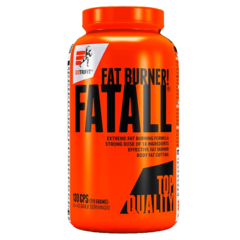

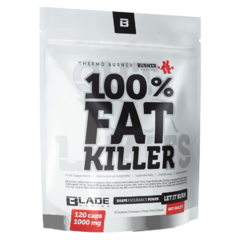
HiTec BS Blade 100% Fat killer
No posts have been made yet.








