





Why Bodyweight Exercises Will Cause You to Lose Back Muscles and Hinder Further Progress
 Author:
 The distorted reality of social media constantly feeds us the illusion that lifting 200 or 250 kilograms is the absolute norm—something the average gym-goer does just to warm up. In reality, the situation out on the streets is completely different. Due to spending eight hours a day sitting in offices, in cars, and on couches, has such a weakened core and shortened hip flexors that they cannot safely lift even their own body weight off the ground without seriously injuring themselves.
In modern physical therapy, there’s a term for this: gluteal amnesia. Simply put, because of constant sitting, your brain literally forgets how to properly activate your gluteal muscles. So when the average person picks up a heavy box from the ground, instead of using strong glutes and legs, they pull the entire weight through the small and vulnerable muscles in the lumbar spine. The result is a herniated disc and months of pain.
Your success with twice your body weight means one thing: you have successfully reversed this decline of modern civilization. You have taught your brain to use your body again the way nature intended—as a perfect biomechanical crane. The glutes and hamstrings in your body are once again functioning as the main diesel engine, while the massive erector spinae and latissimus dorsi form the crane’s steel arm, which safely holds the extreme load.
Article Contents:
- The Biomechanics of Lifting: What Happens Under the Skin?
- The End of Ego-Lifting: How to Smartly Overcome Biological Barriers
- The Neurological Paradox: When Your Brain Starts to Sabotage You
The Biomechanics of the Pull: What’s Happening Under the Skin?
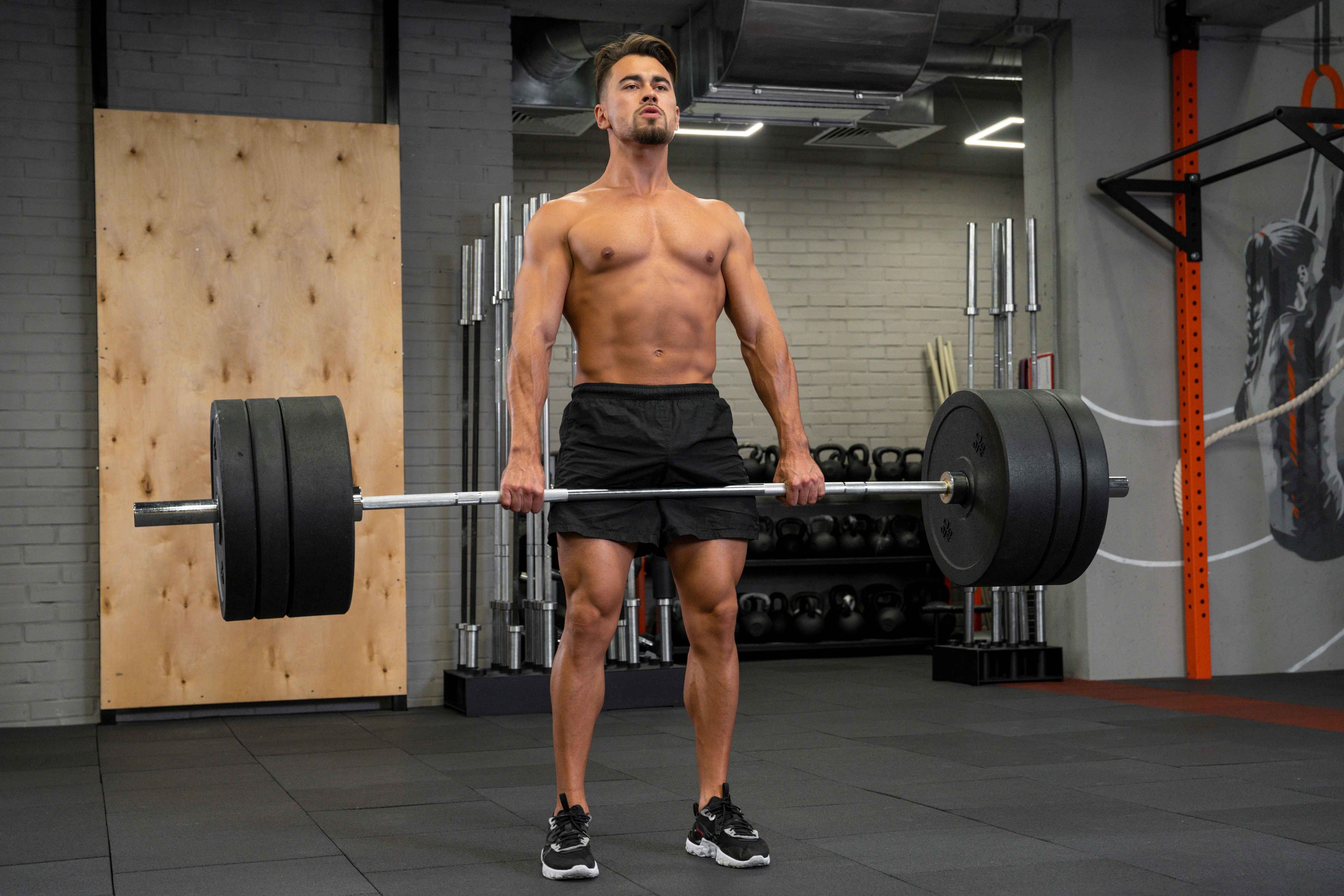
Lifting 160, 180, or 200 kilograms off the ground is no longer just about raw muscle mass. It’s a massive and absolutely exhausting strain on your central nervous system (CNS). When you approach a loaded barbell, grip it, and start pushing your feet into the floor, your brain has to perform an incredibly complex calculation in a fraction of a second.
It must send signals at an extremely high frequency to synchronize dozens of muscle groups. Your body begins to activate what are known as high-threshold motor units —these are the strongest and fastest muscle fibers, which you don’t normally use even when running or during lighter exercise. They are activated only when the brain assesses the situation as a “life-or-death struggle” under extreme stress. And it is precisely here, in the perfect coordination of nerves and muscles, that an unexpected turning point occurs—one that has dashed the dreams of many promising lifters.
The End of Ego-Lifting: How to Smartly Overcome Biological Barriers
If you’re serious about building brutal strength and massive muscle mass, at some point you have to leave your ego at the gym door. Once you reach the level of twice your body weight, it no longer makes any logical sense to prove anything to yourself through obsessive bodyweight exercises at the expense of your overall physical development.
Experienced athletes and professional bodybuilders always turn to proven equipment at this stage. They don’t do this because they’re weak or want to make the exercise easier. They do it to elegantly bypass these natural neurological barriers so they can push their backs much harder than nature would ever allow with bare hands.
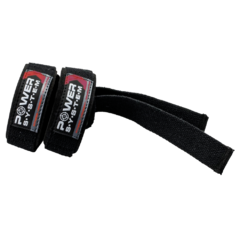
Professional Lifting Straps: Instant 100% Back Isolation
Using lifting straps during heavy sets isn’t cheating—it’s textbook biohacking. A sturdy cotton or leather strap literally locks you to the bar. Your hands and palms stop functioning as limiting points and become nothing more than sturdy connecting ropes. This completely removes your weakening forearms from the biomechanical equation. What happens next? Your brain no longer perceives any risk of the bar slipping out of your grip. The receptors in your tendons remain calm, your nervous system doesn’t send a “stop” signal, and your back muscles can finally receive a 100% signal to pull. You can work through a set until you reach true muscular failure in your back without your fingers holding you back. For building your back muscles, this is the cheapest and most effective investment you can make.
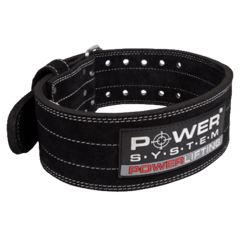
Leather weightlifting belt: Your personal hydraulic press
When lifting extreme weights exceeding 150 kg, it’s no longer just about your muscles—it’s primarily about the safety of your intervertebral discs. A weightlifting belt isn’t worn to make you look better, and it certainly doesn’t work by mechanically “supporting” your back from the outside, as many beginners mistakenly believe. A high-quality weightlifting belt provides a firm, unyielding support wall for your abdominal muscles. The trick is to take a deep breath into your abdomen (known as diaphragmatic breathing) before the lift itself and use your abdominal muscles to press firmly against the belt from the inside. This maneuver creates enormous intra-abdominal pressure in your torso. Your abdomen and lower back lock in place from the inside like a pressurized hydraulic piston or a solid cylinder. This technique safely separates the vertebrae from one another, protects the intervertebral discs from collapsing, and allows your body to transfer much more explosive force to the barbell without the risk of injury.
Recommended
The Neurological Paradox: When Your Brain Starts Sabotaging You
Evolution simply didn’t design our bodies so that the small muscles of the forearms—which primarily serve fine motor control and grip—would grow at exactly the same rate as the largest and strongest muscle groups in our bodies (the back and legs).
The closer you get to your absolute maximum limits in the deadlift, the more often you’ll encounter a very frustrating biological paradox. Your “big engine” (hamstrings, glutes, and back) still has enough strength and energy to complete another two or three clean reps with that weight. But your “small muscle” (forearms) simply can’t hold this massive load. Your grip starts to slip, your fingers slowly splay, and the bar begins to slide out of your palms.
Many people think that at this point, the barbell will simply fall out of their hands. The truth, however, is much more complex and interesting. Your brain actually intervenes actively. There are special receptors (Golgi tendon organs) in our tendons that constantly monitor tension. As soon as your central nervous system detects that your grip is failing, your fingers are opening, and the extreme load is no longer stable, it immediately assesses the situation as critically dangerous for your back muscles.
What does the brain do? To prevent a muscle tear or spinal injury, it completely automatically—and against your will—suppresses the nerve signals to your back muscles. Your back is literally “shut down” neurologically, even though it isn’t actually mechanically exhausted at all. The result is a prematurely ended set. Because of a weak grip, you are chronically depriving your back of the most important stimulus for hypertrophy (muscle growth). You’re doing deadlifts to build a big back, but in the end, you’re only training your forearm endurance.
Reaching twice your own body weight is a monumental milestone and a fascinating demonstration of what the adaptable human body is capable of. Stop unnecessarily hindering your further progress by getting hung up on details that aren’t getting you anywhere.
Recommended


GymSupps XWhey Protein

XGen 90cps + Omega 3 90cps
No posts have been made yet.








