





The Truth About Building Your Back: Why Working Out on Machines Will Rob You of Muscle and Functional Strength
 Author:
 The pull-up is the undisputed and uncrowned king of all upper-body exercises. It’s the most honest indicator of your relative strength and physical fitness. Yet, if you look at any modern fitness center, you’ll often see pull-up bars standing empty, while people are lining up for the lat pulldown machines. Many exercisers live under the illusion that lat pulldowns build back muscles just as effectively as pull-ups, only they’re “more comfortable.” However, modern science and insights into how our nervous system works shatter this illusion. A study published in *The Journal of Physical Fitness, Medicine & Treatment in Sports* recently revealed the shocking truth about just how much machines rob us of muscle activation. Let’s take a detailed, up-close look at the fascinating transformation your nervous system must undergo when you swap a padded seat for the uncompromising pull of gravity, and why stubbornly avoiding the pull-up bar is the biggest obstacle to your massive back development.
Article Contents:
- The Illusion Called Pulldowns: What Happens When the Brain Gets Lazy?
- The Neurology of Pull-Ups: Why Is Gravity Your Best Friend?
- The Neurological Roadblock: When Your Grip Fails You on the Pull-Up
- How to Smartly Overcome Limits and Master the Pull-Up Bar
The Illusion of the Lat Pulldown: What Happens When Your Brain Gets Lazy?
When you sit down on the lat pulldown machine, set the weight, and firmly wedge your thighs under the padded supports, your body enters a state of absolute external stabilization. From a biomechanical and neurological perspective, you’ve just done something your brain absolutely loves—you’ve eliminated any risk of losing your balance.
As soon as your central nervous system (CNS) determines that you are firmly secured to the machine and there is no risk of falling or losing your balance, it does something very logical and energy-efficient. It will immediately “shut down” or significantly reduce the activation of the deep stabilizing system (core), the abdominal muscles, the spinal erector muscles, and the small muscles around the shoulder blades. Your back (specifically the latissimus dorsi) will indeed handle the load, but it works in complete isolation.
In this way, you’re building what’s known as “false strength.” Your back muscles might lift 80 kilograms on a machine, but as soon as you have to pull yourself up on a pull-up bar with that same weight (your own body), you’ll fail. That’s because you lack the neurological connection and the strength of your stabilizer muscles, which were dormant the entire time you were on the machine.

The Neurology of Pull-Ups: Why Is Gravity Your Best Friend?
What happens when you stand under a pull-up bar, jump up, and remain suspended in mid-air? The situation changes dramatically for your nervous system. Your body is suddenly at the mercy of gravity. You have nothing to lean on, no bench beneath you, and your legs are dangling in the air. Gravity is pulling you down, and even the slightest movement of your limbs generates kinetic energy that starts to swing you back and forth.
At that moment, your brain sounds the alarm. In a fraction of a second, your central nervous system (CNS) must activate so-called high-threshold motor units throughout your entire body to ensure stability.
- Your abdominal muscles and core must contract to maximum isometric tension (as if you were bracing for a blow to the stomach).
- The gluteal muscles clench to stabilize the pelvis.
- The shoulder blades must biomechanically lock in place, and the latissimus dorsi begins to work in unison with the biceps in a perfect, synchronized symphony.
Research has clearly demonstrated that, due to this need for constant stabilization, overall muscle activation (measured via EMG) during a classic pull-up is incomparably higher than during a pulley exercise. What’s more, the study revealed something amazing: If you must use a pulley machine, the kneeling version (without securing your feet under the support, using a weight of about 80% of your body weight) activates the latissimus dorsi and core much more and mimics a real pull-up much more closely than the comfortable seated version.
Simply put, comfort is the enemy of progress. If you want a functional, strong, and powerful back that won’t let you down in real life, you have to put your body through the challenge of stabilization.

The Neurological Hindrance: When Your Grip Fails You During Pull-Ups
However, the transition from machines to the pull-up bar brings with it one very specific and often frustrating problem. Just like with the heavy deadlift (which we wrote about last time), you’ll run into a hard biological limit with pull-ups as well. Your back muscles are huge and strong, but in order for them to work, you have to hang from the bar using your fingers and forearm muscles.
It often happens that your back could handle three more clean pull-ups, but your grip starts to burn and your fingers spread apart. As soon as your central nervous system (via receptors in your tendons) detects that your grip is failing and a fall is imminent, it does exactly what it does best—it intervenes. To prevent injury, the brain immediately and automatically suppresses nerve signals to the back muscles. Your back loses strength, and you fall off the bar. You ended the set not because you exhausted your latissimus dorsi, but because your forearms gave out. In doing so, you’re robbing yourself of valuable muscle growth.
How to Smartly Overcome Limits and Master the Pull-Up Bar
If you’re serious about your training, you can’t hide behind pulleys forever, but at the same time, you mustn’t let a weak grip or an initial lack of strength hold you back. Experienced athletes turn to smart tools that help overcome these biological barriers.
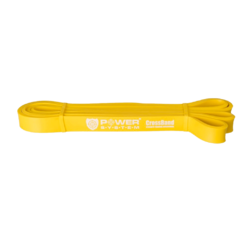
Resistance Bands:Your Personal Path to Strength
If you can’t yet do a clean pull-up, forget about assisted machines (so-called “gravitons”). These will support your knees, disengage your core, and turn you into a “machine-like” exerciser. A much smarter solution is to use a resistance band. Hang the band on the pull-up bar and hook your foot through it. The band will take some of your body weight off during the lowering phase of the movement, but because you’re still suspended in the air, your core has to work at 100%. This way, you’ll gain all the neurological benefits of pull-ups, build functional strength in your stabilizers, and as you get stronger, you can simply switch to a thinner band.
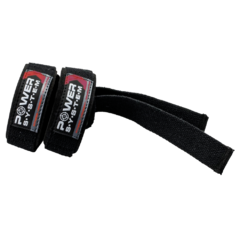
Pull-up straps or callus pads: Back isolation without limiting your forearms
If you’ve already mastered pull-ups but your progress has stalled because you’re falling off the bar due to burning forearms, it’s time to bring in some biohacking. Using grip straps will lock you firmly to the bar. Your hands will essentially become nothing more than connecting hooks. Your brain will immediately stop perceiving the risk of falling due to slipping, turn off the “safety brake,” and channel 100% of your power directly into your back. Finally, you’ll be able to complete a set of pull-ups all the way to true muscle failure in your latissimus dorsi and trigger extreme growth that no pulley machine in the world can give you.
Recommended
No posts have been made yet.








