Why does almost everyone take creatine today? Science speaks clearly
 Author:
 Creatine is one of the longest researched and most widely used dietary supplements in the world. Yet, many myths, half-truths and unnecessary fears still circulate around it. While years ago it was almost exclusively associated with bodybuilding, today it is commonly used by recreational athletes, women, the elderly population and even people who do not play active sports.
The reason is simple: creatine belongs to a very narrow group of supplements whose effects are backed by decades of research and hundreds of clinical studies. It is not a fashion trend or a marketing fad, but a substance naturally occurring in the human body that plays a key role in the energy metabolism of cells.
Therefore, in this article we will systematically explain what creatine really is, how it works, for whom it makes sense to take it and why it is now considered one of the safest and best proven dietary supplements ever. No exaggeration, no scaremongering and no simplification - just based on proven data and current science.
Full video here:
In conclusion, it is good to remember that creatine is not a miracle drug, but one of the few dietary supplements whose effects have been backed by scientific data for a long time. If someone is looking for a supplement with real benefits, creatine is among the most sensible choices.
There is no need for complicated protocols or extreme dosages when taking it. Simplicity has long been shown to work best - regularity, a quality form of creatine, and a sufficient drinking regimen are more important than any "fancy" strategies.
And last but not least, creatine only makes sense as an adjunct to properly set up training, diet and recovery. It won't get results on its own, but in a well put together regimen it can be one of the most effective aids available today.
If you want, we can make the conclusion even more concise or, on the contrary, more motivational, depending on the style of the magazine you are writing the article for.
Recommended
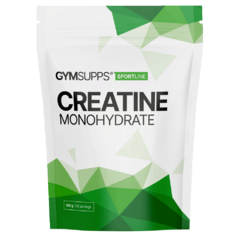
GymSupps Creatine Monohydrate
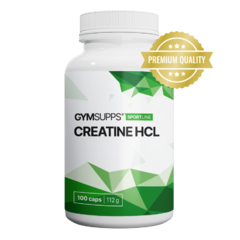
GymSupps Creatine HCL

Creatine Monohydrate 500g 1+1
No posts have been made yet.