





Why Do You Slow Down After 30, and How Can Magnesium L-Threonate Restore Your Lightning-Fast Reflexes?
 Author:
 You lift heavy weights, run to get in better shape, and keep track of every gram of protein. But even if your body is in top shape, one key factor in your performance begins to quietly decline after you turn 30: your reaction time. The ability to react in a flash isn’t just the privilege of MMA fighters or F1 drivers. It’s that invisible force that lets you catch a falling weight plate at the gym, avoid an unexpected obstacle behind the wheel, or dominate during a weekend tennis match.
Article Contents:
- The Invisible Enemy: Slowing Down After 30
- A Game-Changer for the Nervous System: Magnesium L-threonate
- What Did a Recent Study Find?
- The Hidden Bonus: The Secret to Elite Recovery (HRV)
- Summary for Your Training Plan
The Invisible Enemy: Slowing Down After 30
The scientific data speaks clearly—and somewhat relentlessly: after turning 30, our reaction time naturally slows down by approximately 5 to 10% for every decade.
Your nervous system no longer sends signals between your brain and muscles with the same vigor as it did when you were in your twenties. At first, you might not even notice it. It manifests in small moments—a reaction on the road that’s a fraction of a second slower, diminished reflexes in ball sports, or the feeling that you’re just not as “sharp” as you used to be. Most of us mask this decline with higher doses of caffeine or pre-workout supplements, but that only addresses the symptom, not the cause.
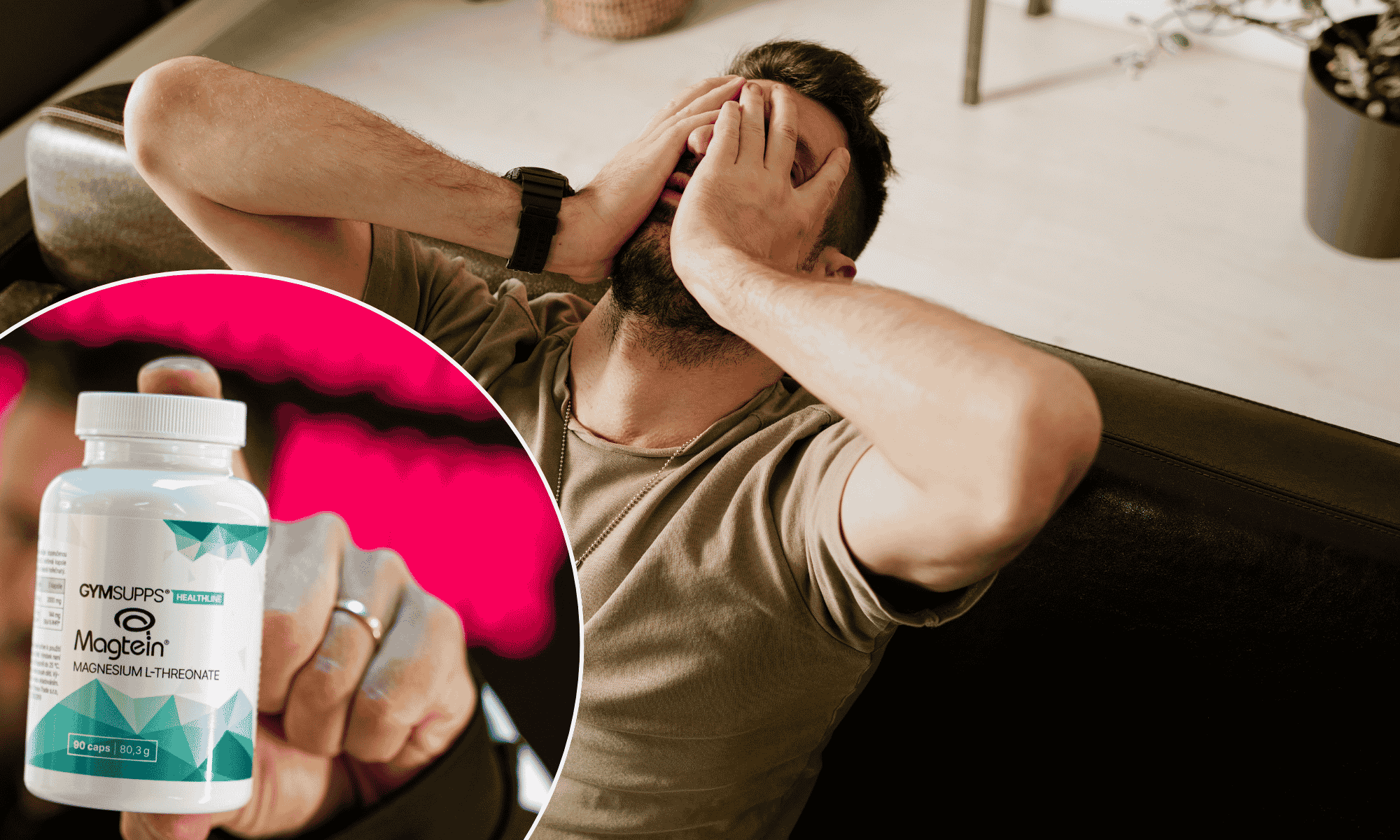
A Game-Changer for the Nervous System: Magnesium L-threonate
In the fitness world, we’re all familiar with regular magnesium. We take it to prevent muscle cramps and to help relax after a hard workout. However, common forms of magnesium have a very hard time reaching where your reflexes are formed—the brain.
This is where a specific form of magnesium called magnesium L-threonate (often patented as Magtein) comes into play. This form was designed to effectively cross the blood-brain barrier, which means it directly “lubricates” the central nervous system. This reduces a kind of neurological “noise” and allows for faster signal transmission along the brain-eye-muscle pathway.
What did a recent study find?
During a recent six-week controlled study, researchers had adult participants undergo tests that measured visual processing speed and motor response. The results showed that supplementation with magnesium L-threonate (Magtein) has a direct impact on performance:
- Faster reactions: Participants demonstrably reduced the time needed to react to external stimuli.
- Improved hand-eye coordination: The visuomotor system functioned more accurately and efficiently (the placebo group showed no improvement).
Recommended

Hidden Bonus: The Secret to Elite Recovery (HRV)
Faster reflexes are great, but what makes this form of magnesium the holy grail for athletes is its effect on recovery.
A study has revealed yet another key benefit— a significant improvement in HRV (heart rate variability). In professional sports today, HRV is one of the most important indicators of how well your body has recovered and is prepared for the next workout. Study participants found that their nervous system switched to a state of deep recovery much more effectively during sleep. They felt more rested and less tired without having to sleep an extra hour.
Summary for Your Training Plan
We can’t stop aging, but we can slow down its effects on our performance. If you’re over thirty and want to maintain not only muscle mass but also mental sharpness, lightning-fast reflexes, and more effective recovery, caffeine alone won’t be enough. Optimizing your nervous system with easily absorbed magnesium, such as L-threonate, may be the missing piece that takes your performance to the next level.
No posts have been made yet.








