





Why Are You Low in Magnesium Even Though Your Test Results Are Within the Normal Range—and How Can You Fix It Today?
 Author:
 You know that feeling all too well. You eat tons of protein, keep track of your macros, and give it your all at the gym, but your body just isn’t functioning the way it should. Your muscles are in a constant spasm, you lie awake at night staring at the ceiling with your heart racing, and during the day, you’re overwhelmed by inexplicable fatigue. Today’s fitness industry has fed you a toxic lie: if you get enough protein and your blood tests from your primary care doctor are within normal range, you’re as healthy as a horse. The result? On paper, you’re perfectly healthy, but in reality, you feel like a burned-out machine with no oil in the engine. Stop and think. It’s not that you aren’t working hard enough. It’s that no one has told you the most important thing—up to 50% of the population is chronically deficient in the body’s hardest-working mineral: magnesium. This guide will show you how to see through the illusion of standard medical tests, target the real cause of your fatigue, and give your body exactly what it needs.
Article Contents:
- The Hidden Deficiency That’s Wrecking Your Performance
- Lessons from Pointless Blood Tests
- Unlock Your True Potential
- How to Replenish Your Reserves Physiologically
- Five Lies Every Hard Worker Believes About Magnesium
The Hidden Deficiency That’s Ruining Your Performance
Most of our failures in training and in life don’t stem from a lack of willpower, but from a complete misunderstanding of what we’re made of. We live under the illusion that success requires nothing more than muscles (protein) and energy (carbs/fats). As soon as you dump another scoop of protein into your mouth, you don’t even take a minute to think about who’s actually going to process that protein.
Think of protein as a building material. Magnesium is the crew of workers who have to work with it. It’s responsible for more than 300 enzymatic processes. Without it, your muscles can’t contract or relax, your nervous system can’t send signals, and your heart loses its rhythm. This hidden deficiency won’t kill you right away, but it has one fatal flaw—it robs you of your ability to function at 100%. Your brain wants to run at full throttle, but your biology is holding you back. If you don’t learn to consciously replenish these essentials, you’ll inevitably hit a wall.

Lessons from Pointless Blood Tests
People usually don’t start paying attention to minerals until their bodies simply leave them no choice. For years, they ignore eye twitches, chronic insomnia, and nervousness because, after all, “their blood test results are normal.”
Here’s the harsh reality: your blood tests are lying to you. Less than 1% of the total magnesium in your body circulates in the blood. Your body is an incredibly smart system, and it strictly regulates blood levels. When you don’t get enough magnesium from your diet, your kidneys limit its excretion, and your body starts ruthlessly stripping it from your bones and tissues just to keep your blood levels “within the normal range” on paper. It’s only when your actual stores are completely depleted that it might show up on a test. Do you really have to wait for a breakdown to realize that a “normal” lab value doesn’t mean optimal health?
Discover Your True Potential
Most people don’t realize what their bodies truly needed until they’re already dealing with inflammation, arrhythmias, or severe cramps. It’s not about having a shelf full of expensive supplements. It’s about bridging the gap between how tired you feel right now and the energy you could have if your body weren’t suffering. Your wiser self wouldn’t tell you to have another cup of coffee right now. It would beg you to get your central nervous system up and running. Your mission is clear: give your body the right tools now—don’t wait for a diagnosis.
Arnold’s Secret: “Don’t Underestimate the Basics!”
When you look at Arnold Schwarzenegger, you see a man who, even at an advanced age, works hard, lifts weights, and pushes himself. But you’re missing the other half of his approach.
Arnold was never satisfied with just superficial advice. He knew that hard work with weights requires just as much hard work during recovery. He didn’t put off replenishing nutrients until “he had a problem,” because he knew that without a solid foundation, the whole structure would collapse. Establishing a routine where you supply your body with the most essential micronutrients isn’t a sign of weakness or an obsession with biohacking. In today’s industrially processed world, it’s the hardest form of personal discipline.
How to Replenish Your Reserves Physiologically
Improving your diet sounds great on paper, but if you’re under long-term stress and your body is running on empty, you won’t be able to replenish your magnesium just by eating an apple every now and then. Until you choose the right form and strategy, your cells will remain hungry.
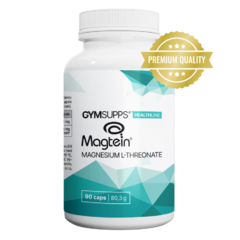
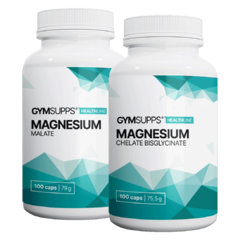
Your biological reset button: Don’t look for esoteric shortcuts—start with what’s on your plate. Add pumpkin seeds (just one handful covers a third of your daily requirement!), spinach, almonds, and black beans to your diet. But if you’re struggling with a chronic deficiency, you need to bring in some heavy-hitting external help. Avoid cheap junk from the pharmacy—magnesium oxide is barely absorbed; it just passes through your intestines and acts like an expensive laxative. Go for highly absorbable forms. Choose Gymsupps L-Threonate, one of the few that crosses the blood-brain barrier and calms your brain, or go for Gymsupps Bisglycinate for a deep evening reset and to relax cramped muscles.
Recommended


| The Critical Moment of Your Day | A Fundamental Mistake (Toxic Illusion) | Your Mental Upgrade (Return to Reality) |
|---|---|---|
| You’ll Get Your Test Results from the Doctor | “My levels are normal, so the fatigue must be from overwork.” | A Radical Shift: A blood test for magnesium is useless. Go by your symptoms (fatigue, cramps, poor sleep) and your diet, not a piece of paper. |
| Choosing a Supplement at the Store | “I’ll buy the cheapest magnesium—it doesn’t matter, magnesium is magnesium.” | Biological fact: Magnesium oxide is useless. Invest in L-threonate or bisglycinate; otherwise, you’re flushing your money down the toilet. |
| Evening muscle cramps and eye twitches | “I need to stretch more and take a break tomorrow.” | Stoic Break: Your body isn’t screaming for a stretch. It’s screaming for minerals that will actually allow your muscle fibers to relax. |
Five Lies Every Hard Worker Tells Themselves About Magnesium
Save yourself years of stagnation and avoid these classic mental traps that have already derailed thousands of ambitious people before you:
- “Blood tests reveal everything.” A complete illusion. Less than 1% of your magnesium is in your blood; the rest is stored in your bones and tissues. The test is blind.
- “Eating healthy is enough for me.” Today’s soil is depleted. Unless you specifically make a point of eating pumpkin seeds, spinach, and nuts, you probably won’t get your daily dose (320–420 mg) from a normal diet.
- “All supplements from the pharmacy work the same.” The opposite is true. Buying magnesium oxide means that most of the dose will end up in the toilet without having any effect.
- “Magnesium is just for calf cramps.” No . It’s essential for regulating blood pressure, protein synthesis, and a healthy heart rhythm. Without it, your nervous system is constantly in a state of panic.
- “The more milligrams on the label, the better.” Your body doesn’t care how many milligrams you swallow, but how many it actually absorbs at the cellular level.
The motivation to change something is a cheap stimulant that will fade by tomorrow morning. So ditch the abstract resolutions and start with just one thing. This afternoon, when you go grocery shopping or are preparing a meal, grab some plain pumpkin seeds from the store. Take a big handful. And if you have some cheap effervescent magnesium from the gas station sitting in a drawer at home, throw it away right away. You’ll discover that taking control of your biology doesn’t mean making things complicated. It means finally starting to do the right things.
Recommended

No posts have been made yet.








