





These 2 supplements will accelerate your muscle mass gain!
 Author:
 In today's oversaturated nutritional supplement market, it is becoming increasingly difficult for athletes and recreational exercisers to distinguish marketing promises from science-based facts. Countless products promise revolutionary results, but few stand up to the rigorous test of scientific research. The goal of this article is to break away from the marketing noise and focus on two of the best researched and most effective substances for promoting muscle growth (hypertrophy): creatine monohydrate and protein supplements. Based on extensive meta-analyses published in the prestigious PubMed database, we will show why these two supplements are the cornerstone of effective volume training.
1. Creatine Monohydrate: The most researched supplement for strength and hypertrophy
Creatine monohydrate is undoubtedly the most studied ergogenic (performance-enhancing) dietary supplement in the world. Its effectiveness is not based on faith, but on decades of rigorous research. Its primary mechanism of action is to increase the availability of phosphocreatine in muscle cells. This phosphocreatine serves as a rapid source for the recovery of ATP (adenosine triphosphate), the basic energy unit for muscle contraction. In practice, this means that creatine supplementation allows an athlete to perform more reps in a set or apply a heavier load, leading to a stronger training stimulus - a key prerequisite for muscle growth.
Although the effect of creatine on strength is often discussed, its direct effect on muscle hypertrophy has been the subject of many studies. The 2023 systematic review and meta-analysis focused specifically on studies that measured changes in muscle mass using high-precision imaging methods such as magnetic resonance imaging or ultrasound. After analysing the available data, the researchers came to a clear conclusion: creatine supplementation combined with strength training resulted in a small but statistically significant increase in muscle mass in both the upper and lower body compared to the placebo group.1 This direct evidence confirms that the effect of creatine goes beyond simply increasing performance and actively contributes to building new muscle tissue.
2. Protein supplements: essential building blocks for muscle proteosynthesis
While creatine optimizes the training stimulus, protein provides the actual material for the subsequent repair and growth of muscle fibers. This process, known as muscle proteosynthesis (MPS), is the absolute foundation of muscle adaptation to training. Without sufficient protein intake, and especially essential amino acids, the body simply has nothing from which to build new muscle mass, no matter how hard you train.
The question of whether protein supplementation provides additional benefits beyond dietary intake was definitively answered in a large meta-analysis in 2017. Researchers analyzed data from 49 high-quality studies involving nearly 2,000 individuals. Their conclusions were conclusive: protein supplementation significantly boosted strength training-induced increases in muscle mass and strength.
In addition, this study provided key practical recommendations. The positive effect of protein intake on muscle growth was shown to peak at a total daily intake of approximately 1.6 grams per kilogram of body weight. Further increases in intake did not lead to significant gains in muscle mass.2 For an 80 kg athlete, this translates to a daily target of approximately 128 grams of protein. Protein supplements such as whey protein are a highly effective and convenient way to achieve this goal and provide the body with a rapid supply of quality amino acids, especially in the critical post-training period.
Synergy of science and practice
Based on the best scientific evidence, it is clear that creatine monohydrate and protein supplements are not just marketing products, but functional tools for maximizing strength training results. The two substances work in perfect synergy:
- Creatine allows for more intense training, thus creating a stronger anabolic signal.
- Protein provides the necessary building blocks to respond to this signal, i.e. to repair and grow muscle tissue.
For anyone who is serious about building muscle mass, a properly designed training plan and a nutritionally rich diet should be the foundation. However, supplementation should immediately follow with these two scientifically proven pillars that have been proven to help turn hard work in the gym into visible and measurable results.
Recommended

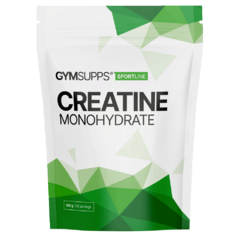
GymSupps Creatine Monohydrate

Creatine Monohydrate 500g 1+1
Sources:
- 1) Burke, R., et al. (2023). The Effects of Creatine Supplementation Combined with Resistance Training on Regional Measures of Muscle Hypertrophy: A Systematic Review with Meta-Analysis. Nutrients, 15(9), 2116.
- 2) Morton, R. W., et al. (2018). A systematic review, meta-analysis and meta-regression of the effect of protein supplementation on resistance training-induced gains in muscle mass and strength in healthy adults. British Journal of Sports Medicine, 52(6), 376-384.
No posts have been made yet.








