





Synephrine & Caffeine - a great duo for weight loss!
 Author:
 Nowadays, as more and more people turn to dietary supplements to improve weight loss and boost energy levels, we often see the combination of synephrine and caffeine. These substances have a synergistic effect on each other that can help increase thermogenesis and fat burning. The following article is based on scientific studies and provides a detailed overview of what effects of synephrine can be expected, what are its possible side effects, what dosage is recommended and how to properly proceed with its use, while also addressing the combination with caffeine.
Article content:
- What is synephrine and how does it work?
- Effects of synephrine
- Synephrine side effects - What to watch out for?
- Synephrine dosage and proper use
- Caffeine + Synephrine - Synergistic Effect for Weight Loss
- Recommendations and precautions
What is synephrine and how does it work?
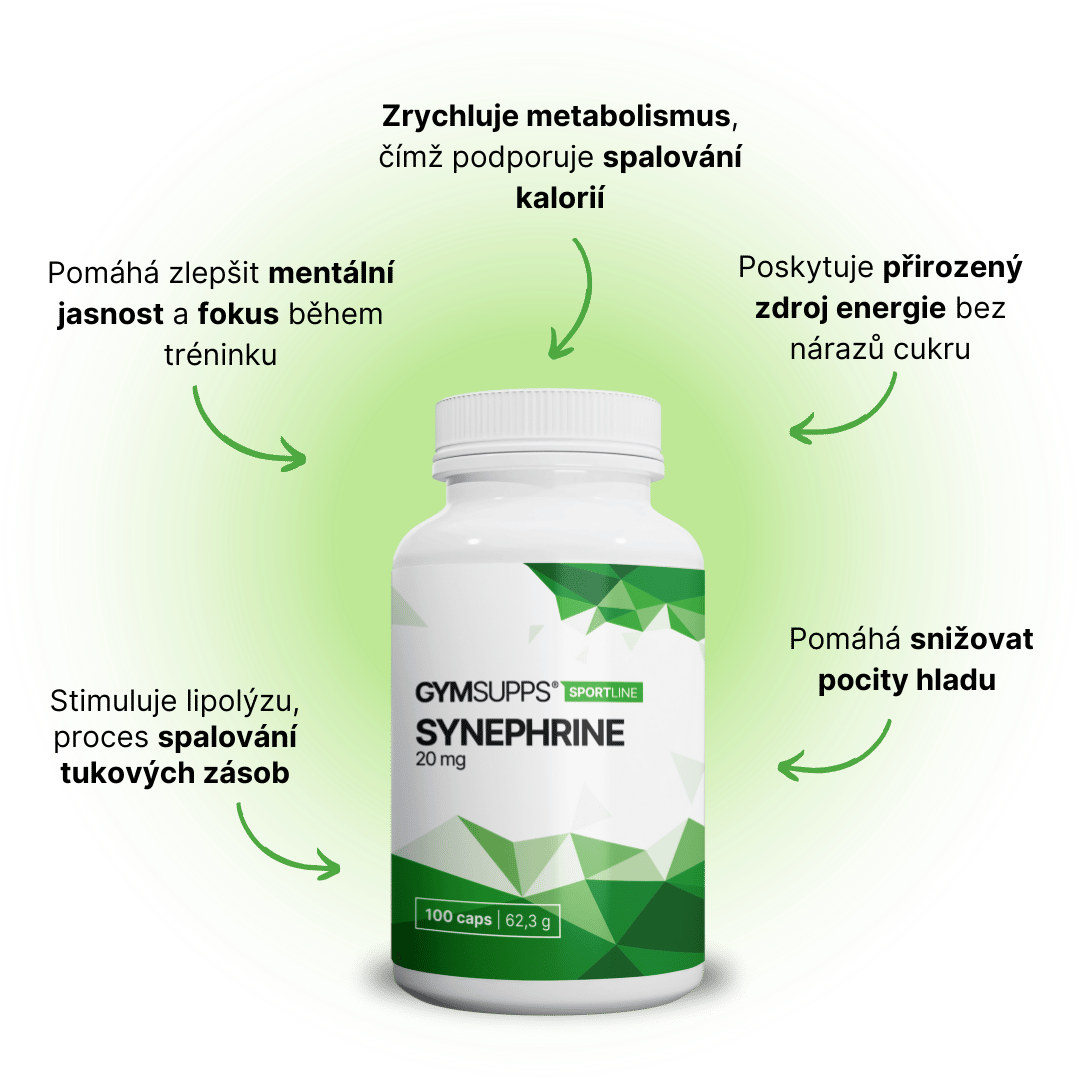
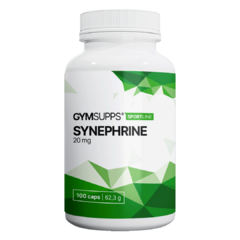
Synephrine is a natural alkaloid that is mainly extracted from the bitter orange (Citrus aurantium). Due to its chemical structure, it acts as a mild stimulant of the sympathetic nervous system. The main mechanism is the activation of β₃-adrenoceptors, which leads to an increase in lipolysis (fat breakdown) and the promotion of thermogenesis, i.e. an increase in body temperature and energy expenditure. Unlike ephedrine, synephrine has significantly weaker effects on the cardiovascular system, although at higher doses or when inappropriately combined with other stimulants, adverse effects such as increased blood pressure and heart rate may occur.1
Effects of Synephrine - What benefits can this substance offer?
Increase thermogenesis and fat oxidation
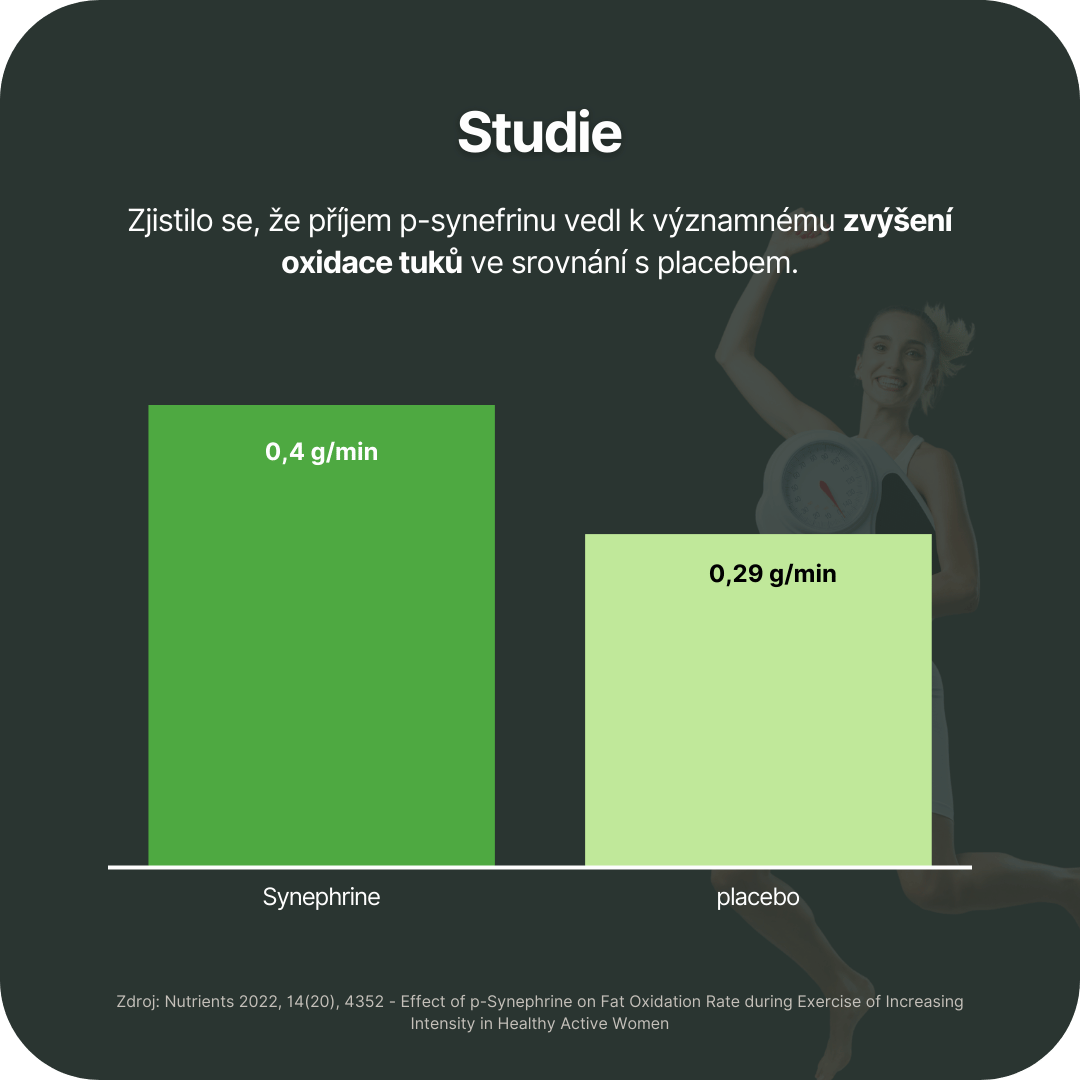
Scientific studies show that synephrine significantly promotes effects in the area of increasing thermogenesis. With the preliminary use of synephrine, metabolic activity increases and there is an increase in fat oxidation during exercise. For example, studies find that acute ingestion of synephrine at an appropriate dose (typically 2-3 mg/kg body weight) shifts the fat oxidation curve upward and increases the maximal rate of fat oxidation during exercise.2 This means that the body uses fat more efficiently during mild to moderate intensity exercise, which is key to long-term body fat reduction.
Promoting energy expenditure and improving performance
In addition to supporting fat burning, synephrine may also slightly increase overall energy expenditure. Although studies focusing on enhancing athletic performance have not seen a significant ergogenic effect, combining it with a proper exercise program can help improve endurance and recovery after training.
Synephrine side effects - What to watch out for?
While synephrine has a number of positive effects, it is important to be aware of its possible side effects as well. The most common include:
- Increase in blood pressure and heart rate: at higher doses or in susceptible individuals, blood pressure and heart rate may increase, which can be especially risky in people with cardiovascular disease.
- Nervousness and sleep disturbances: In some cases, mild nervousness, insomnia or anxiety may occur.
- Gastrointestinal problems: Some users report digestive problems such as stomach cramps or nausea.
These side effects of synephrine usually occur when doses are exceeded or used inappropriately without adjusting for individual tolerance.3 Therefore, it is advisable to start with a lower dose and gradually increase it, paying attention to any signals from the body.
Synephrine dosage and correct use
Optimal synephrine dosing is key to achieving the desired effects and minimizing the risk of side effects. Most scientific studies work with doses in the range of 2-3 mg of synephrine per kilogram of body weight. For example, at a dose of 3 mg/kg, there is a significant increase in fat oxidation during exercise without significantly altering energy balance or cardiovascular parameters.2
Recommended practices for synephrine use
- Gradual dose increase: it is recommended to start with a lower dose and increase the dose slightly after a few days as the body adapts.
- Consult a specialist: It is advisable to consult a doctor or nutritionist before starting use, especially if you have pre-existing medical conditions.
- Individual tolerance: Each individual may react differently; therefore, it is important to monitor your own body signals and adjust the dose if necessary.
Such dosing and careful use of synephrine are essential to safely harness the potential of this substance.
Caffeine + Synephrine - Synergistic effect for weight loss
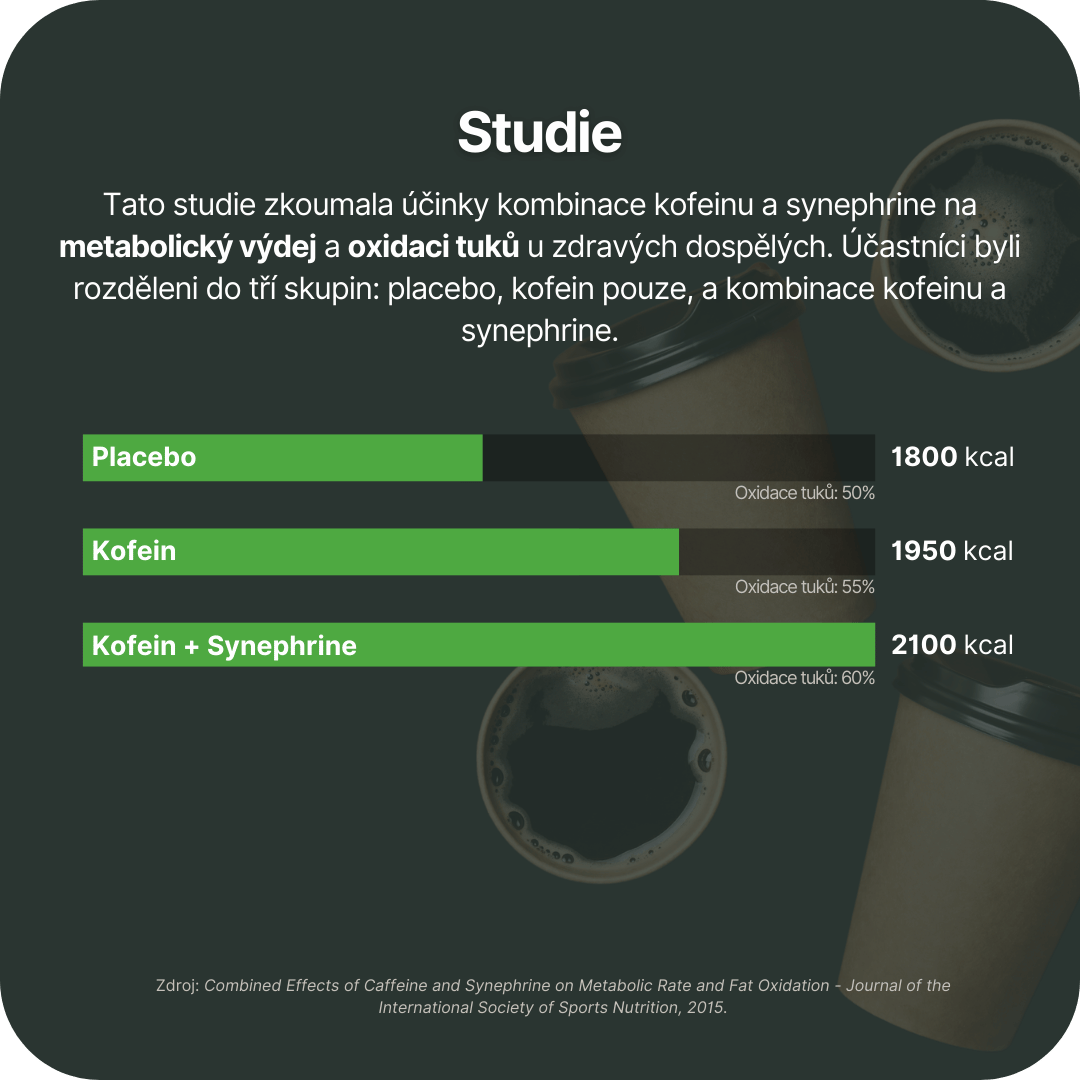
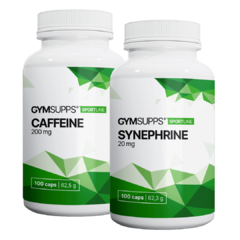
The combination of caffeine and synephrine (caffeine + synephrine) is very popular, as both substances act on the central nervous system and can reinforce each other's effects. Caffeine itself increases alertness, promotes thermogenesis and increases fat oxidation. When combined with synephrine, there is an even more pronounced shift in the utilization of fat stores during exercise.
The main benefits of this combination include:
- Increase in metabolic rate: The combination of the two substances leads to more efficient fat burning during exercise and at rest.2
- Improved athletic performance: Higher energy levels and improved fat utilization can help exercise last longer and improve endurance.
- Reduced perception of exertion: Some studies suggest that the use of caffeine and synephrine may lead to a reduction in the subjective feeling of fatigue, allowing for more intense training.1
However, it should be cautioned that caffeine + synephrine may also increase the risk of side effects, especially in individuals with increased sensitivity to stimulants. Therefore, it is important to follow recommended doses carefully and monitor for any unpleasant symptoms.
.png)
Recommendations and precautions
The following recommendations should be observed when taking supplements containing synephrine, and especially when combining them with caffeine:
- Consult a specialist: Persons with medical problems (especially cardiovascular) should consult a physician before taking synephrine.
- Adherence to recommended doses: Do not exceed the recommended dosage - studies typically use 2-3 mg/kg, with some regulatory bodies recommending lower daily doses.
- Caution when combining with other stimulants: if taking caffeine, monitor your total stimulant intake to avoid unpleasant side effects.
- Gradual dose increase: Start with a lower dose and monitor your body's response before gradually increasing.
- Individual tolerance: Each individual may have a different tolerance to stimulants, so it is important to adjust the dosage to your own needs.
Conclusion
The combination of synephrine and caffeine represents a promising approach to promoting weight loss due to its synergistic effects on thermogenesis and fat oxidation. Scientific studies confirm that the correct dosage of synephrine (typically 2-3 mg/kg body weight), when taken, can improve fat burning during exercise without significant changes in resting energy expenditure. However, if used inappropriately or in excess of recommended doses, the possibility of side effects such as increased blood pressure or nervousness should be considered. Combination with caffeine may provide additional benefits, but also requires increased caution.
In summary, synephrine and caffeine can be an effective addition as part of a comprehensive approach to weight loss that also includes a balanced diet and regular exercise. However, careful adherence to recommended dosages, monitoring of one's own reactions, and consultation with experts where appropriate are key to ensure a safe and effective approach to weight loss.
Recommended
References to the studies used:
- 1) Effects of p-Synephrine during Exercise: A Brief Narrative Review
- 2) Acute p-synephrine ingestion increases fat oxidation rate during exercise
- 3) Effects of p-synephrine in combination with caffeine: a review
No posts have been made yet.








