





How long does creatine stay in the body? The truth that scientists have discovered about the effects and safety of creatine!
 Author:
 Creatine is one of the most widely used dietary supplements used by athletes to increase performance and muscle growth. To understand how long creatine stays in the body, it is essential to look at scientific studies that analyze its metabolism, utilization in the body and elimination in detail.
Article Content:
- Creatine metabolism and absorption
- Maintenance of creatine stores and its half-life
- How long creatine stays in the body
- The effect of creatine on kidney health and its safety
Creatine metabolism and absorption
After creatine is ingested, the substance is absorbed in the small intestine and enters the bloodstream, where it circulates until it is transported to the muscle cells. A study by Crim, Calloway and Margen (1976) shows that creatine is stored in the body primarily in the muscles in the form of creatine phosphate. This is crucial for the recovery of adenosine triphosphate (ATP) during short-term, intense physical activities. Creatine therefore increases muscle endurance and the ability to recover quickly by restoring ATP, the main energy molecule for muscle work.


Maintenance of creatine stores and its half-life
According to a study by Francaux (n.d.), when the body reaches muscle saturation with creatine (which can take several days of intense dosing during the so-called "loading phase"), its levels remain stable for several weeks if a maintenance dose (3-5 g per day) is maintained. The half-life of creatine in plasma is approximately 3 hours, which means that the level of creatine in the blood drops by half during this period. During this process, unused creatine is converted to creatinine, which is subsequently excreted by the kidneys.

How long does creatine stay in the body
Scientific studies show that if you stop taking creatine, its level in the body gradually decreases. According to Crim et al. (1976), the length of time creatine stays in the body ranges between 4-6 weeks, depending on individual factors such as muscle mass, physical activity, and metabolism. People with higher muscle mass can retain larger amounts of creatine longer than people with lower muscle mass.
Effect of creatine on kidney health and safety
One of the most common concerns associated with creatine is its potential negative effect on kidney function. A study by Jo, Judelson and Earnest (2019) shows that in healthy individuals, long-term use of creatine does not negatively affect kidney function. Creatine is safe when taken in recommended doses. However, for individuals with previous kidney problems, it may be helpful to consult a doctor about taking creatine.
.png)
Conclusion
Scientific studies confirm that creatine is a safe and effective dietary supplement that can significantly improve physical performance and muscle growth. Creatine remains in the body for several weeks after discontinuation of use and its elimination depends on various factors, including metabolism and muscle mass. It is important to follow recommended dosages and maintain proper hydration to optimize its effects and minimize potential side effects.
Recommended
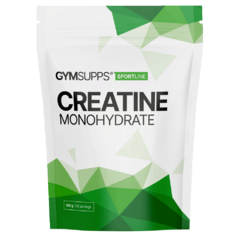
GymSupps Creatine Monohydrate

Creatine Monohydrate 500g 1+1
Sources:
- Crim, M. C., Calloway, D. H., & Margen, S. (1976).Creatine Metabolism in Men: Creatine Pool Size and Turnover in Relation to Creatine Intake; Creatine metabolism study
- Francaux, M. (n.d.).Kinetics of Plasma Creatine After an Ingestion of 2 g Creatine; Study on plasma creatine kinetics
- Jo, E., Judelson, D..A., & Earnest, C. P. (2019). Effects of Creatine Supplementation on Renal Function; Renal function and creatine study
No posts have been made yet.








