





How can you gain muscle mass without gaining unnecessary fat?
 Author:
 You’re sitting in the locker room after a tough workout, and instead of enjoying your well-deserved endorphins, you’re staring in horror at that giant box of rice that you “have to” shove down your throat right now. Somewhere in the back of your mind, an old, worn-out tape of bodybuilding myths is playing: if you don’t immediately load your body with a ton of carbs after a workout and flood it with a calorie avalanche, you’ll burn your muscles and lose everything you’ve just built. And so you force down another mouthful of dry carbs, even though you’re not the least bit hungry and feel more like a competitive eater than an athlete.
It’s time to put an end to this unnecessarily exhausting (and often weight-gaining) routine. Your body isn’t a dumb furnace whose ability to build muscle is activated only when you dump a mountain of sugar into it. It’s an incredibly adaptable mechanism that relies first and foremost on a steady supply of protein and high-quality training stimuli throughout the week. And that’s exactly why it makes the most sense to adopt a smarter approach—a moderate and sustainable caloric surplus (known as “lean bulk”), where carbohydrates serve purely as targeted fuel, not as mindless fattening. One sensible system that covers it all. Your digestion (and your swimsuit figure) will thank you.
Article Contents:
- A Mountain of Rice Isn’t Always King
- What Happens When You Actually Add Carbs
- Three specific situations where extra carbs excel
- Gaining Weight Without Unwanted Belly Fat
A Mountain of Rice Isn’t Always King
A common and very fundamental misconception is the belief that muscle growth can be achieved by following the rule “you have to eat like an elephant to be like an elephant” (so-called “dirty bulking”). To understand why, we need to look at what modern science actually says. People think that if they add a huge portion of carbs to their protein after a workout, their muscles will grow at a rocket-like pace.
However, once your muscles reach a certain threshold, they won’t use any additional calories for growth. While they remain sensitive to nutrient intake, excess energy no longer builds new muscle tissue—it’s stored as fat. The most effective way to build muscle, therefore, isn’t a massive calorie surge, but sustainable, slow progress. Don’t try to be the biggest at the cost of gaining 10 kilos of fat. Create a stable environment in which your body receives exactly as much energy as it needs for recovery.

What Happens When You Actually Add Carbs
Does this mean that carbohydrates are unnecessary? Not at all. The key is to understand what they’re actually for. A new study followed athletes with nearly a decade of experience. It divided them into two phases:
- Phase 1: After their workout, they received only a pure protein shake.
- Phase 2: After training, they received the same protein, but with 50 grams of carbohydrates added.
The result? In terms of muscle growth and strength, there was no meaningful difference between the phases. Why? Because after many years of training, muscle growth slows down dramatically. In 8 weeks (the duration of the study), you simply won’t build kilograms of muscle on an advanced athlete, no matter how much sugar you pour into them. Carbohydrates don’t primarily build muscle—carbohydrates are fuel.
Three Specific Situations Where Extra Carbs Excel
You can have anything in your fridge, but debating how much rice to eat only makes sense if you know what problem you’re trying to solve. Here are three situations where a higher carbohydrate intake completely outperforms strict sugar-free diets:
1. Emergency fuel for extreme workouts
Imagine a typical non-gym day: you go for a run, a tough leg workout awaits you in the afternoon, and on top of that, you’re on your feet all day. That’s when you need carbs. They act as high-octane fuel, allowing you to train harder, longer, and with greater intensity. Better performance at the gym = better stimulation for growth.
2. Beginners and People Returning After a Long Break
If you’re new to the gym or returning after years away, your body is in a phase where it can build muscle much faster (so-called “newbie gains”). During this phase, your body will actually make effective use of a slightly higher caloric surplus, and carbohydrates will help support this rapid anabolic process.
3. Supporting overall recovery
Carbohydrates trigger the release of insulin in the body, which—though often demonized—is a highly anti-catabolic hormone. It helps stop muscle breakdown after a hard workout and replenishes glycogen (the body’s stored sugar in the muscles) so you’re ready for another challenging day.
How to Refuel Wisely Without Gaining Unwanted Weight
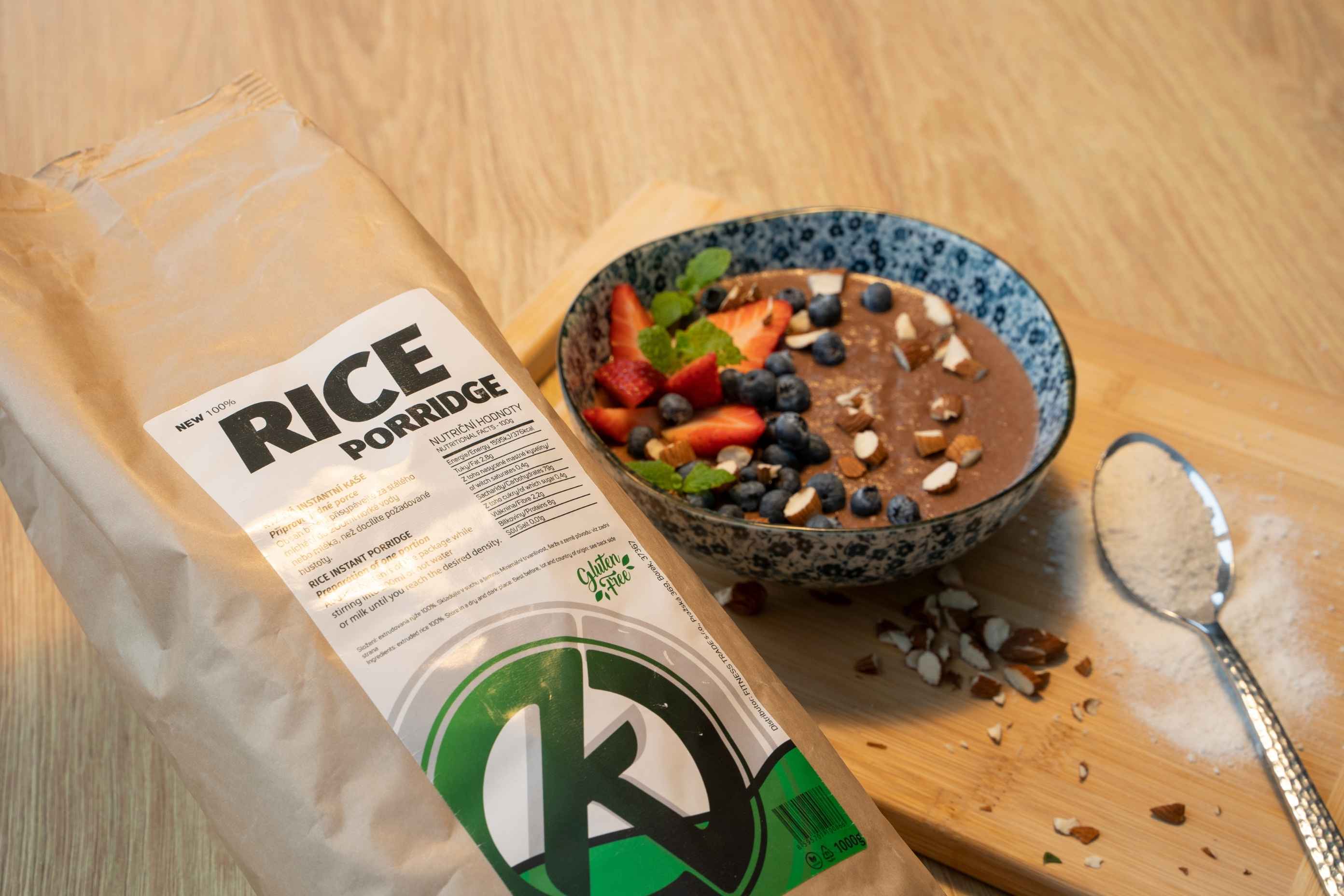
Improving your diet sounds great in theory, but if you’ve been training hard for a long time and your body is running on empty, you won’t be able to replenish your energy just by forcing yourself to eat huge portions of plain rice. Until you choose the right approach and strategy, your muscles will remain unfueled and your digestion will suffer unnecessarily.
Don’t look for esoteric shortcuts—start smart. Instead of heavy meals, opt for easily digestible instant rice porridge. It’ll give you clean energy for your muscles without leaving you feeling bloated. But if your workout is being held back by a chronic lack of energy and you need to bring in some heavy-hitting external fuel, reach for smart carbs. Avoid cheap junk from the supermarket—low-quality carb supplements packed with regular sugar will just spike your insulin levels and end up being an expensive way to gain fat. Opt for highly absorbable forms, such as cyclic dextrin, for consistent performance. And don’t forget to round it all off with high-quality protein after your workout. Choose GymSupps XWhey Protein, which will instantly flood your bloodstream with amino acids for maximum recovery support.
Recommended
GymSupps XWhey Protein

| Your Daily Routine | How It Works in Practice | Your Smart Move |
|---|---|---|
| Advanced Trainer (More than 5 years at the gym) | You’re eating 1,000 kcal more than usual to “grow,” but in reality, you’re just increasing your waistline. Your muscles are growing extremely slowly. | Mild Calorie Surplus: Add just 100–200 calories. Your body doesn’t need any more than that. Muscle growth for advanced lifters is a marathon, not a sprint. |
| Exhausting Workouts (Long Bulking Phases) | Halfway through your workout, you’re yawning, your strength is fading, and you don’t have the energy to finish the last set. | Pre- and Post-Workout Fuel: Focus most of your daily carbohydrate intake on the periods before and after your workout. They’ll provide energy for performance and replenish lost glycogen. |
| The Fat Fighter (Fear of Gaining Weight) | You’re terrified of carbs, eating only meat and salad, but your muscles are flat and lacking energy. | The Happy Medium: Carbs after a workout don’t turn into fat—they go to your exhausted muscles. A handful of rice or fruit after your workout won’t ruin your figure. |
5 Simple Steps to Maximum Results
Save yourself the money on unnecessarily large portions, slowed progress, and the stress of constantly counting hundreds of grams of rice. Try these essential adjustments that will make building muscle mass truly worthwhile:
- Make this your top priority: First, calculate your protein intake (1.6–2.2 g per kg of body weight) and give your workout your all. That’s your foundation.
- Treat carbs as fuel, not magic: If you’re sitting in an office all day, you don’t need mountains of pasta. If you have a tough workout, treat yourself to some.
- Have realistic expectations: If you’re not in your first year of training, don’t expect to gain 5 kilos of muscle in two months. Growth is slow. Rapid weight gains mean only one thing—fat.
- Forget the “anabolic window” myth: Adding sugar or a banana to your post-workout protein is fine for energy, but in terms of muscle growth, the world won’t end if you wait until you’re comfortably at home to eat a full meal.
A quality workout and a sensible diet form a great and safe foundation that has ended the era of mindless overeating. You just need to show it the right path. Start using carbohydrates as a strategic tool to replenish energy, not as a blunt instrument that you have to force down at all costs. Try this small shift in mindset, and you’ll see how your body (and your healthy digestion) will gradually reward you.
Recommended
Prom-in Pentha Pro Balance
New 100% Whey Protein 800g 1+1
No posts have been made yet.








