




Can magnesium affect vitamin D levels? Why do their effects influence each other?
 Author:
Imagine that you take vitamin D regularly. Every morning, you take the recommended dose, watch your diet, and do your best to stay healthy. Yet, when you get tested, you might find that your vitamin D levels aren’t what you’d expect. Does that mean you need a higher dose? Maybe. However, scientists point out another important factor that we often overlook when it comes to supplementation: magnesium.
These two nutrients do not function entirely independently in the body. Magnesium plays a role in the processes through which the body metabolizes and utilizes vitamin D. However, their relationship is more complex than it might seem. New findings show that adding magnesium does not always increase vitamin D levels. Under certain circumstances, it can even lower them.
Article Contents:
- Why Does Vitamin D Also Need Magnesium?
- What Does Science Say? Magnesium Doesn’t Always Increase Vitamin D Levels
- Does this mean we should take vitamin D and magnesium together?
- How can we tell if we’re deficient in magnesium or vitamin D?
- Vitamin D, magnesium, and sports: Will they help us perform better?
- How can we supplement both nutrients sensibly?
- The biggest mistake? Thinking that more supplements mean better health
Why does vitamin D also need magnesium?
Vitamin D is one of the nutrients essential for bone health, normal muscle function, and proper immune system function. Unlike most vitamins, the body can also produce it in the skin through exposure to sunlight.
But its journey through the body doesn’t end there. Vitamin D obtained from the sun, diet, or supplements must undergo several metabolic transformations. First, it is converted in the liver to 25-hydroxyvitamin D, known as 25(OH)D. It can then be converted into a biologically active form that helps regulate calcium metabolism and other bodily processes.
Magnesium plays a key role in these reactions. Magnesium acts as a cofactor for the enzymes involved in vitamin D metabolism. A significant deficiency of magnesium can therefore disrupt the way the body processes vitamin D.
However, this does not mean that everyone taking vitamin D automatically needs an additional magnesium capsule. It depends primarily on whether they have sufficient levels of both nutrients.
What Does Science Say? Magnesium Doesn’t Always Increase Vitamin D Levels
Arnold Schwarzenegger also highlighted this issue in his magazine, Arnold’s Pump Club. In the November 18, 2026, issue, he analyzed research showing that the effect of magnesium may depend on baseline vitamin D levels. One of the most interesting studies is a randomized trial published in 2018 in *The American Journal of Clinical Nutrition*.
The researchers followed 180 adults aged 40 to 85. For twelve weeks, one group of participants took magnesium, while the other group received a placebo. The researchers were primarily interested in whether magnesium supplementation would affect the concentrations of various vitamin D metabolites in the blood. And the results were surprising.
In people whose baseline vitamin D levels were around 30 ng/ml, magnesium supplementation led to an increase in 25(OH)D3 concentrations. However, in individuals with higher baseline levels—approximately between 30 and 50 ng/ml—the concentration of this metabolite actually decreased.
At lower baseline levels, no clear positive effect was demonstrated. Magnesium, therefore, did not act as a simple booster that would automatically increase vitamin D levels. Rather, the results suggest that it may influence vitamin D metabolism in various ways depending on the body’s baseline condition.
The authors also pointed out the limitations of their study. It did not prove that magnesium supplementation improves health, athletic performance, or prevents disease. The research primarily monitored changes in laboratory markers, and its results need to be confirmed by further studies.

Does this mean we should take vitamin D and magnesium together?
This is where one of the most common misconceptions arises. If two nutrients work together in the body, it’s easy to conclude that taking them together must be more effective than supplementing with each one separately. However, a biological connection alone does not prove a health benefit.
Another randomized study from 2022 followed 95 overweight or obese adults who were divided into groups taking vitamin D, a combination of vitamin D and magnesium, or a placebo. After twelve weeks, the researchers observed the greatest increase in vitamin D levels in the group that took both nutrients together.
This suggests that in certain situations, combined supplementation may be beneficial. However, this does not mean it will have the same benefit for everyone. The study focused on a specific group of participants and primarily monitored laboratory and certain cardiometabolic markers.
Therefore, what matters is not only whether we take vitamin D and magnesium together, but also what our actual nutritional status is.
How can we tell if we’re deficient in magnesium or vitamin D?
Insufficient magnesium intake may not be obvious at first glance. This mineral is involved in hundreds of enzymatic reactions. It contributes to normal energy metabolism, nervous system and muscle function, and helps reduce fatigue and exhaustion. Natural sources include pumpkin seeds, almonds, legumes, whole grains, and leafy green vegetables.
We obtain vitamin D primarily through exposure to sunlight and, to a lesser extent, from our diet. Food sources include fatty fish, egg yolks, and certain fortified foods. However, especially during the Czech fall and winter, vitamin D production in the skin may be limited. If a deficiency is suspected, the situation can be assessed based on the individual’s health status and, if necessary, a laboratory test for 25(OH)D.
This does not mean, however, that every healthy person should have their vitamin D levels measured regularly. The Endocrine Society’s 2024 guidelines do not recommend widespread testing in the general healthy population.
The situation is even more complex when it comes to magnesium. Its concentration in the blood may not always reliably reflect total body stores. Therefore, it is important to also evaluate long-term dietary intake and individual health circumstances.
Don’t forget to ensure adequate intake of both nutrients
When taking supplements, we often focus on a single specific nutrient and overlook our overall diet. Yet it is precisely an adequate intake of individual nutrients that creates the conditions for the body to function properly. For example, if you’re not getting enough vitamin D during the winter or have a chronically low magnesium intake, a carefully chosen dietary supplement can be a practical solution.
To supplement your vitamin D, you can use GymSupps Vitamin D3, which contains 25 micrograms—or 1,000 IU—of vitamin D3 per capsule. If you also need to supplement magnesium, one option is GymSupps Magnesium Malate, which provides 240 mg of magnesium in two capsules.
However, it’s important not to view this combination as a one-size-fits-all solution. No specific form of magnesium has been conclusively proven to be the best way to enhance the effectiveness of vitamin D. Supplementation should be based on actual needs, total intake, and recommended dosages.
Recommended
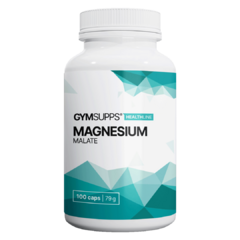
GymSupps Magnesium Malate

Vitamin D, Magnesium, and Sports: Will They Help Us Perform Better?
For athletes, both nutrients are also of interest because of their role in muscle function. Vitamin D contributes to normal muscle function, and magnesium plays a role in normal energy metabolism and the proper functioning of the neuromuscular system. A deficiency in these nutrients can therefore be one of the factors that negatively affect overall health.
However, it cannot be automatically concluded that taking vitamin D and magnesium together will increase strength, speed up recovery, or lead to faster muscle growth. Correcting a deficiency in a particular nutrient is not the same as improving athletic performance beyond normal levels.
So if you strength train regularly and have an adequate intake of both nutrients, adding more capsules may not provide any benefit. For real athletic progress, systematic training, adequate energy and protein intake, sleep, and recovery remain essential.
How can you supplement both nutrients sensibly?
The key is a varied diet that takes individual needs into account. Before starting supplementation, it’s a good idea to determine how much magnesium and vitamin D you’re getting from your regular diet and, if applicable, other supplements. With vitamin D, it’s especially important to monitor your total daily intake. Long-term excessive intake can lead to hypercalcemia and other health complications. An excess of magnesium from supplements can also have side effects, particularly diarrhea, nausea, or digestive issues. Extra caution is required for certain kidney conditions and when taking medications with which magnesium may interact.
If you have repeatedly been diagnosed with low vitamin D levels or are experiencing health issues, it is not advisable to address the problem simply by increasing your dosage on your own. In such a situation, it makes sense to consult a doctor about the next steps.

The biggest mistake? Thinking that more supplements mean better health
Magnesium and vitamin D provide an interesting example of how the human body processes individual nutrients in a complex manner. Research shows that magnesium can influence vitamin D metabolism. At the same time, however, it reminds us that no nutrient functions in isolation within the body. This doesn’t mean we should automatically take both substances at the same time or increase their doses in the hope of better results. It’s much more important to ensure that the body isn’t lacking what it actually needs.
And that is precisely one of the most important principles of sensible supplementation: not to seek the highest possible dose, but the right amount that meets our body’s needs.
Recommended

New 100% Whey Protein 800g 1+1

XGen 90cps + Omega 3 90cps
No posts have been made yet.