





Butter Prices Are Falling, but Protein Prices Are Rising—Why Have Prices Skyrocketed by 120%?
 Author:
 You know how it goes. You open our online store, just wanting to add your favorite protein to your cart like you do every month, and suddenly you pause. The price is different from what you’re used to. Your first thought: “So someone’s making money off us here, too.” But this time, everything is different. The higher price of the protein shake isn’t due to a greedy merchant or general inflation. It’s the result of a global battle over a raw material that dairies used to practically throw away, but that food giants from around the world are now fighting over. This article will show you what’s really going on in the whey market, why it’s not going to end anytime soon, and, most importantly, how to shop smart so you get the most protein for your money—not just a bunch of marketing hype.
Article Contents:
- Butter Prices Are Falling, Whey Prices Are Soaring
- Protein isn’t manufactured. Protein is a byproduct of cheese production
- Who’s raking in the whey profits?
- Numbers That’ll Make Your Head Spin
- Watch out for silent recipe changes
- How to get the most out of every crown
- Five mistakes that cost you the most money when prices go up
Butter is getting cheaper, whey is skyrocketing
Here’s a paradox that most people overlook. Dairy products in the Czech Republic have actually been getting cheaper in recent months. Semi-skimmed long-life milk and butter were more than 40% cheaper in July than a year ago, while basic dried whey in the EU rose by 66% year-over-year, and WPC80 whey concentrate more than doubled in price in less than a year.
Thus, the same milk gives rise to two completely different price trends. No one wants more butter than last year. Suddenly, the whole world wants whey protein.
Protein isn’t manufactured. Protein is a byproduct of cheese production
This is the key to the whole story. Whey protein isn’t something a factory can produce whenever it wants. It’s a byproduct of cheese production. The milk is curdled; the solid part goes into cheese, and the remaining liquid—whey—is then filtered, concentrated, and dried into the powder you’re familiar with from your shaker.
This results in two major limitations. First, there’s only as much whey as there is cheese produced. Second, even when whey is available, you need expensive filtration and drying lines to turn it into high-quality WPC 80 or isolate.
Now here’s the reality in the Czech Republic: no one here produces whey concentrate because the necessary microfiltration technology is lacking. Yet it takes roughly 130 liters of liquid whey to produce one kilogram of high-quality protein. Czech manufacturers therefore purchase raw protein abroad and only mix it with flavors, sweeteners, and enzymes here. When the price of raw materials rises globally, the price of your bag here in the Czech Republic will rise too. There’s no way around it.
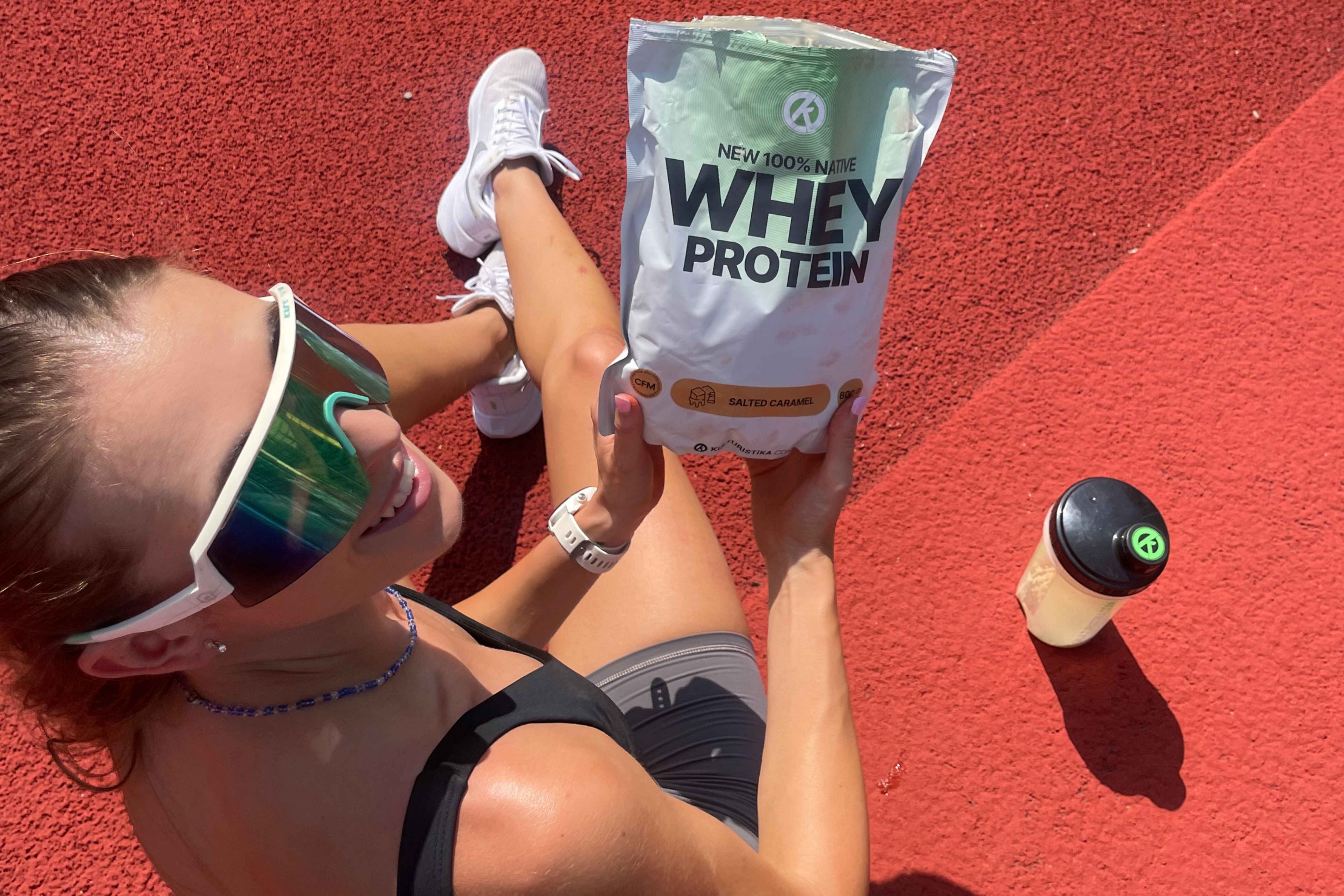
Who’s Snapping Up the Whey?
Just a few years ago, it was mainly sports nutrition manufacturers who were competing for whey protein. Today, you’re standing in line for the same raw material alongside completely different players:
- The food industry. Protein yogurts, puddings, bars, porridge, and ready-to-drink beverages. The word “protein” on the packaging sells just as well today as “light” used to. Every such product takes a bite out of the same pie.
- People on weight-loss medications. The boom in GLP-1-type drugs has brought in millions of new customers. When losing weight quickly, it’s important to monitor protein intake so that you don’t lose muscle along with fat.
- Global trade. Demand is growing in both Asia and the U.S. According to the Washington Post, American manufacturers have begun building new factories, but these won’t be completed until 2027. Furthermore, American and Asian buyers are increasingly sourcing from Europe and outbidding European suppliers, who are then forced to match those prices.
The result? A raw material that was cheap and ubiquitous for years is now one of the most sought-after ingredients in the food industry.
Numbers That Make Your Head Spin
To back this up with more than just talk, here are the hard facts:
- Europe: According to Rabobank, the European price of WPC 80 jumped from roughly 12,500 to 27,500 euros per metric ton between October 2025 and July 2026. That’s a 120% increase in nine months. Isolate prices rose by approximately 59% during the same period.
- U.S.: According to an estimate cited by Food Business News, the spot price of WPC 80 rose from approximately $2.50 per pound in mid-2023 to $13.50 in August 2026—more than a fivefold increase.
- Czech Republic: Protein prices here have risen by about 20% so far . However, domestic producers are still operating on stocks purchased at lower prices . According to the companies surveyed, these stocks will run out around the end of the year, at which point prices will have to adjust to the more expensive raw material.
Marek Zemánek, spokesperson for the Czech Chamber of Food Industry, summed it up clearly:
“We cannot expect a turnaround even in the near future.”
New processing capacities are indeed being built, but construction takes years. And even if the market stabilizes over time, many analysts do not expect a return to previous price levels. Whey has definitively ceased to be treated as dairy waste and has begun to be viewed as a strategic raw material.
Watch Out for Silent Formula Changes
Here’s the part that could cost you more than the price hike itself. When a manufacturer is unwilling or unable to raise the price on the label, it has other tools at its disposal. And not all of them will be clearly stated in large print on the packaging.

| What's Happening in the Market | How to Tell | Your Smart Move |
|---|---|---|
| Smaller packages for a similar price | Instead of a kilo, you get 750 or 800 g at a time, for almost the same price. | Calculate the price per gram of protein— not per package. Otherwise, the packaging will fool you. |
| Lower protein content | In the nutrition facts panel, the protein content per 100 g drops—say, from 78 g to 65 g. | The nutrition facts label is your friend: Two packages that cost the same can have completely different nutritional values. |
| Cheaper ingredients mixed into the blend | The ingredients list will include plant-based protein, collagen, or a “protein complex,” while whey is pushed further down the list. | Read the ingredients: If you want high-quality whey, whey protein must be listed first. |
| “Protein” is just a label | A snack with a big “PROTEIN” label, but only 8 g of protein per serving and a ton of sugar. | Look at the grams, not the slogan: What matters is the protein content per serving, not the font size on the package. |
Multi-source and plant-based proteins aren’t bad in and of themselves. They make sense for vegans or people with lactose intolerance. You just need to know what you’re buying. Different protein sources have different amino acid profiles, and the body doesn’t utilize them with the same efficiency. Whey is still the gold standard in this regard.
How to Get the Most Out of Every Crown
Forget the price per bag. The only number that matters is how much you pay per gram of actual protein. The calculation is simple:
price of the package ÷ (weight of the package × protein content per 100 g ÷ 100)
Let’s illustrate this using our Kulturistika.com New 100% Whey Protein in the unflavored version. It contains 78 g of protein per 100 g, and the ingredients consist solely of whey concentrate and sunflower lecithin. An 800-gram package therefore contains 624 grams of pure protein.
- At the regular price of 899 Kč, each gram of protein costs 1.44 Kč. A 30-gram serving of protein costs you about 43 Kč.
- With the current 1+1 promotion, where the second package costs 799 Kč, the price drops to 1.36 Kč per gram.
Flavored varieties contain slightly less protein due to the added flavorings and cocoa, typically around 70 to 77 g per 100 g. Therefore, always refer to the nutritional information for the specific flavor.
Recommended
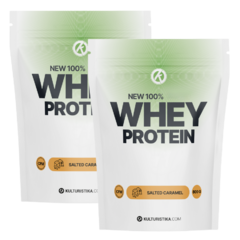
New 100% Whey Protein 800g 1+1
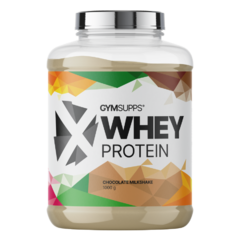
GymSupps XWhey Protein
Your smart move:
If you want maximum protein at a reasonable price, go for a high-quality, high-protein concentrate. New 100% Whey Protein is a gently microfiltered CFM protein, and its unflavored version contains nothing extra. If you train hard and want a combination of fast- and slow-absorbing forms, try GymSupps XWhey Protein. It combines concentrate, Volactive® isolate, and hydrolysate, supplemented with Opti-7 Digest digestive enzymes. However, only buy isolate if you’ll truly benefit from it—for example, if you’re lactose intolerant or following a strict diet. For general protein supplementation, a high-quality concentrate is more than enough and will save you money.
Five Mistakes That Cost You the Most Money When Prices Rise
- “I’ll just get the cheaper package—it’s the same thing, after all.” It’s not. Comparing the price per package is the most costly mistake. A cheaper packet may contain tens of percent less protein and end up costing you more in the long run.
- Choosing isolate as a default option. Isolate is one of the most expensive whey ingredients, and it’s currently seeing the biggest price hikes. Unless you have a specific reason, you’re paying more than you need to.
- Panic-buying a year’s supply. Stocking up on ten kilos “before prices go up” sounds smart—until half of it goes bad. Larger packages are only worth it if you use them up before the expiration date.
- Believing the label. “High protein” isn’t a guarantee of anything. What matters is the nutrition facts panel and the order of ingredients listed. Everything else is marketing.
- The idea that protein has to come only from a shaker. Protein powder is great because it’s quick and convenient. But the foundation lies in your meals. You’ll also find 30 grams of protein in about 300 g of cottage cheese, four to five eggs, or 120 g of chicken breast. A protein shake is meant to supplement your diet, not replace it.
You can’t stop prices from rising. But you can stop paying for empty promises and marketing hype. So don’t wait for your next order—do one simple thing today: take the protein package you have at home, flip it over, and calculate how much 30 grams of protein costs you. Then do the same with the product you’re considering next time. You’ll find that smart shopping doesn’t require more money—just five seconds with a calculator. Protein is still protein. It’s just not worth buying it blindly anymore.
Recommended
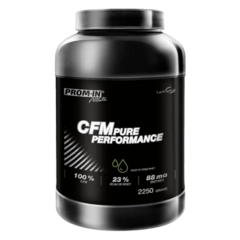
Prom-in CFM Pure Performance

No posts have been made yet.








