





Beta Alanine in sports: evidence of improved performance
 Author:
 The field of sports science and nutrition is constantly looking for legal and safe ways to optimize physical performance and delay fatigue. One substance that has gained considerable attention in this context is beta-alanine. This amino acid has become the subject of much research aimed at elucidating its potential benefits for athletes. Although a number of qualitative review articles have already been written on this topic, the need for a quantitative assessment of the overall evidence has led to meta-analyses that combine data from multiple studies to reach a more robust conclusion. One such preliminary quantitative analysis of the literature has provided valuable insights into the effects of beta-alanine supplementation on athletic performance.
Article Content:
- A methodological approach to quantitative assessment
- Overall performance improvement
- Mechanism of action
- Quantification of improvement and dosage
- Final evaluation
Methodological approach to quantitative evaluation
A comprehensive literature search approach was applied to conduct this meta-analysis to identify all studies suitable for inclusion in the analysis. At the same time, strict exclusion criteria were applied to ensure the relevance and quality of the included studies. Although desirable characteristics of studies, such as the homogeneity of the participant population or the availability of information on the reliability of the tests and power measures used, were mentioned in the study discussion, the inclusion criteria for the analysis remained set to be consistent with the original design of the meta-analysis. The aim was to provide a quantitative summary of the findings to date based on the available data.
.png)
Overall performance improvement: significant but variably manifested
The results of this meta-analysis suggested that beta-alanine supplementation resulted in a significant improvement in performance on the performance measures assessed compared with placebo. This improvement was statistically significant (P = 0.002), suggesting that the observed effect was highly unlikely to have been due to chance. To illustrate the magnitude of this improvement, median effect size values were presented to quantify the difference between the beta-alanine group and the placebo group.
The median effect size for beta-alanine was 0.374 (with an interquartile range of 0.140-0.747), whereas for placebo the median effect size was only 0.108 (with an interquartile range of -0.019 to 0.487). The higher median effect size for beta-alanine clearly indicates its positive effect on the observed performance parameters compared to the ineffective placebo.
However, it is crucial to note that the benefit of beta-alanine supplementation was not universally demonstrated for all types of physical activity. Data analysis also took into account the duration of exercise and showed that the effects of beta-alanine were dependent on the specific duration of exercise. Consistent with the hypothesized mechanisms of ergogenic effect, which will be discussed later, exercise lasting between 60 and 240 seconds was found to be significantly improved (P = 0.001) in the beta-alanine group compared with placebo.
Similarly, exercise lasting longer than 240 seconds also showed improvement (P = 0.046). Conversely, no benefit from beta-alanine supplementation was seen for exercise of short duration, specifically up to 60 seconds (P = 0.312). This finding has important practical implications, as it suggests that beta-alanine supplementation is likely to be most effective in higher intensity activities with durations of one to several minutes, where there is a more pronounced accumulation of acidity in the muscles, whereas its benefit is not evident in short, explosive exercise.
Mechanism of action: the role of carno zine as a key buffer
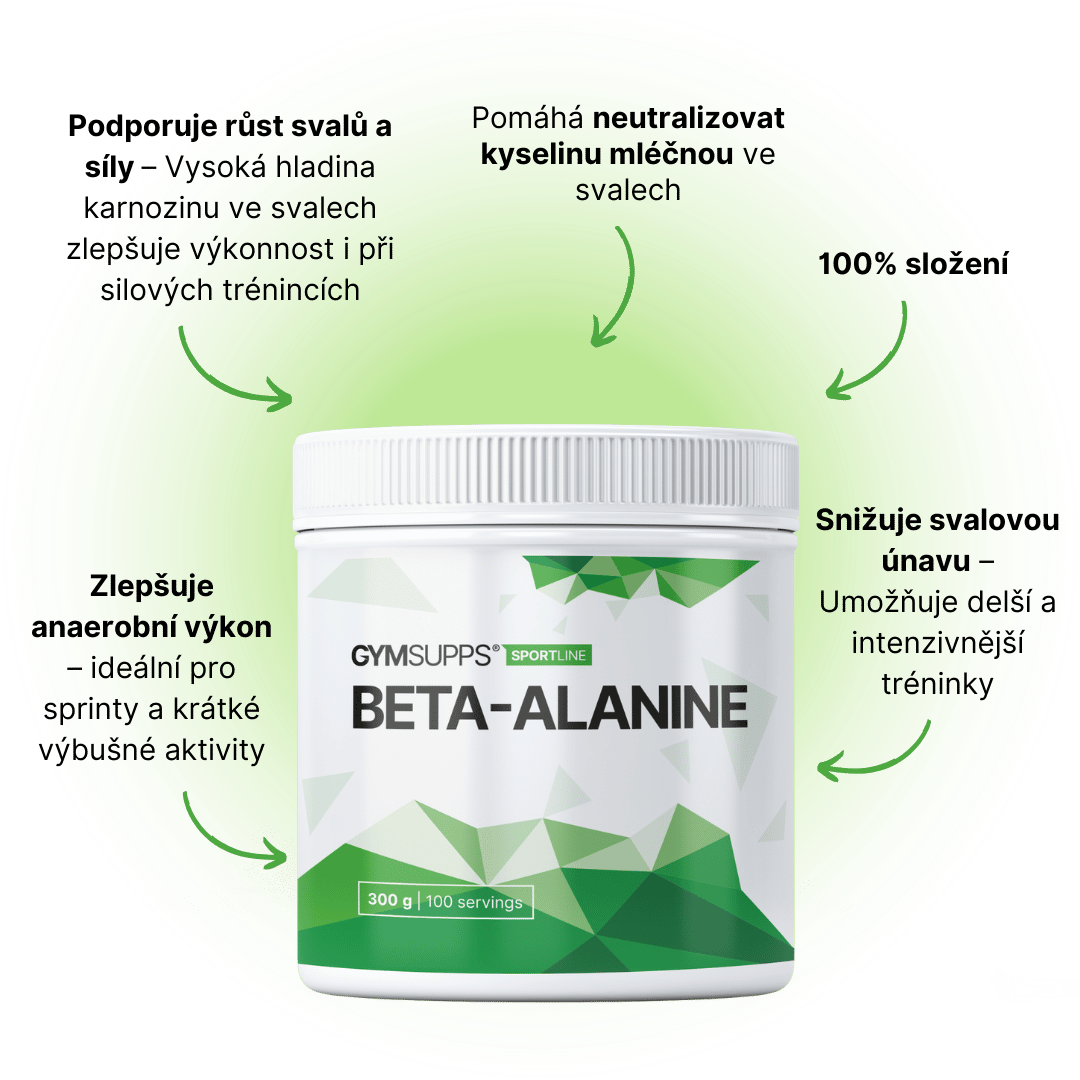
The beneficial effects of beta-alanine on performance during prolonged high-intensity exercise may be explained by its role in carnosine synthesis. Beta-alanine is the rate-limiting substance in muscle fibers for carnosine synthesis. Carnosine is a dipeptide present in high concentrations in muscle and functions as an important intracellular buffer, meaning it helps to neutralize the acidic environment. During intense muscle work, hydrogen ions (H+) are produced, leading to a drop in muscle pH - called muscle acidosis. This acidosis is probably one of the factors contributing to the onset of muscle fatigue during high-intensity exercise.
Theoretically, then, increasing the concentration of carnosine in muscle should increase the capacity of the intracellular buffering system, thereby potentially delaying the onset of fatigue. Supplementation with beta-alanine, as a precursor to carnosine, has been shown to be an effective way to achieve these higher muscle carnosine concentrations. Studies have confirmed that beta-alanine supplementation leads to significant increases in carnosine levels in human muscle fibers of both types (type I and type II) in a variety of muscles, including vastus lateralis, tibialis anterior, soleus, and gastrocnemius. This demonstrated effect on increasing carnosine levels provides a biological basis for the observed improvement in exercise performance where muscle acidosis plays a role.
Quantification of improvement and dosage
The meta-analysis also provided a quantification of the typical magnitude of performance improvement associated with beta-alanine supplementation. The median effect of beta-alanine supplementation represents a 2.85% improvement in the outcome of a given performance measurement. The range of this improvement was from -0.37% to 10.49%, suggesting some variability in individual response, although the median value indicates a clear positive trend. This median improvement was observed with supplementation of a median total amount of 179 grams of beta-alanine.
It is important to emphasize that this is the total amount of beta-alanine supplemented during the studies included in the analysis, not the daily dose. Dosing protocols may vary between studies (e.g., daily doses divided into multiple servings over several weeks). However, this information provides some idea of the total amount of substance needed to achieve the observed effects.
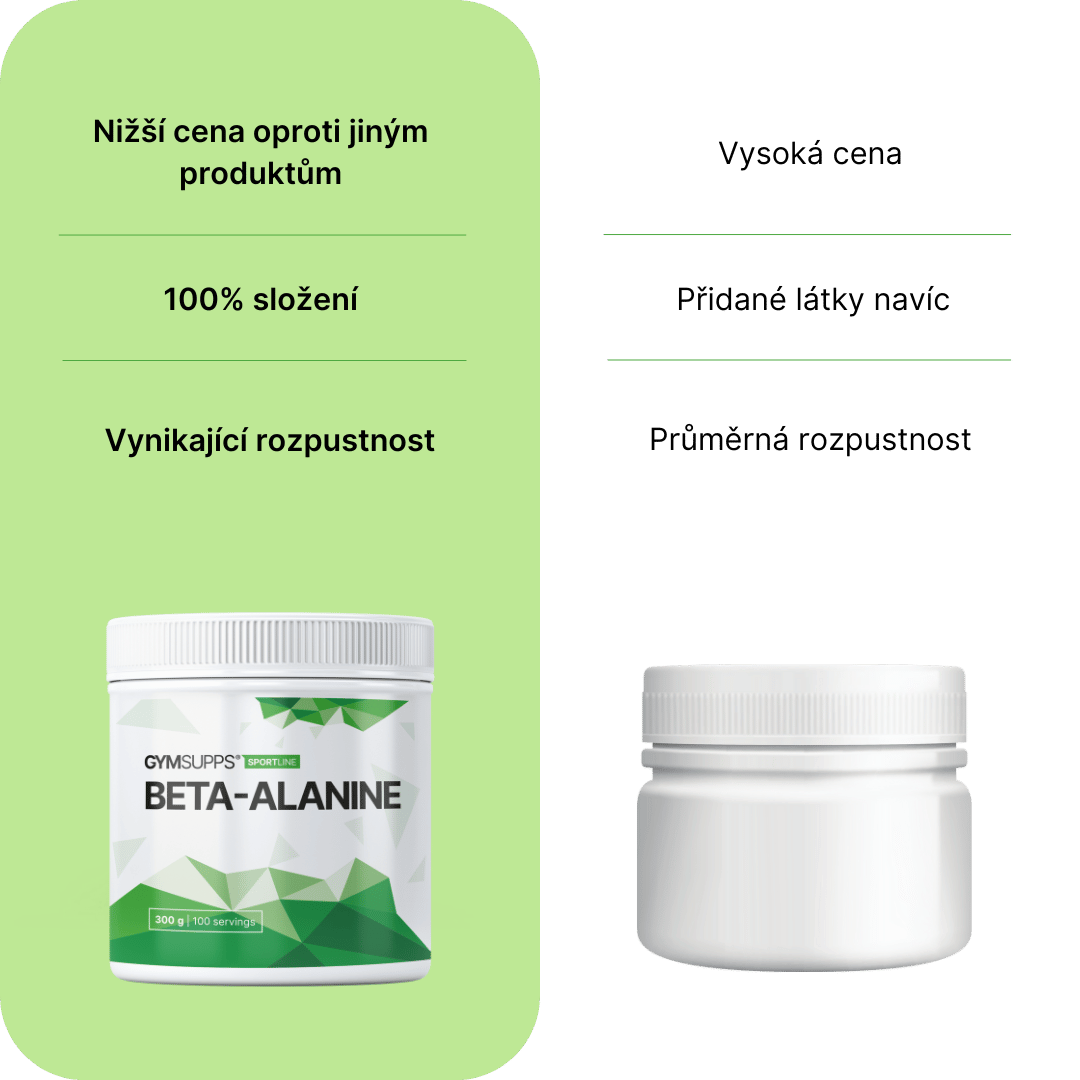
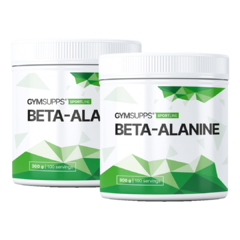
GymSupps Beta Alanine vs competition
Final evaluation based on quantitative analysis
Based on the results of this preliminary meta-analysis, it can be concluded that beta-alanine supplementation demonstrates a statistically significant potential for improving athletic performance, particularly for activities lasting longer than 60 seconds where there is significant accumulation of lactate and hydrogen ions. The mechanism of action is well supported by the role of beta-alanine as a precursor of muscle carnosine, which effectively buffers muscle acidosis and thus helps to delay fatigue. Although there is some variability in the individual response, the median performance improvement of less than 3% with a given total beta-alanine intake is a relevant finding in terms of sports science and practice.
Thus, this meta-analysis provides quantitative evidence supporting the ergogenic effect of beta-alanine in specific types of exercise and reinforces the rationale for its use as a dietary supplement in relevant sporting disciplines. However, it should be kept in mind that this is a preliminary meta-analysis and further research with higher quality studies may further refine these conclusions.
Recommended
Source:
- 1) Effects of β-alanine supplementation on exercise performance: a meta-analysis - PMC
No posts have been made yet.








