Back to School Without Burnout: A Science-Backed “Hack” for Brain Fog and Test Anxiety
 Author:
 September is here, textbooks are piling up on your desk to dangerous heights, and you already subconsciously know how it’s all going to end. That third cup of coffee is slowly losing its effect, the text on the screen is blurring into a single smudge, and instead of effectively retaining information, sheer panic sets in. “Brain fog” and absolute mental exhaustion are every student’s worst enemies.
The feeling that your mind has suddenly gone blank, that you’re falling asleep in your chair, and that you have a fatal “brain freeze” during the exam itself is by no means proof of a lack of intelligence. It’s a clear sign of an overloaded nervous system that, under the strain of stress and without the right nutrients, simply shuts down. But what if you could do things completely differently this year?
Article Contents:
- Stimulants Don’t Help—They Just Delay the Crash
- A hardware upgrade for your brain: Science instead of coffee
- Comparison: The Average Student vs. The Optimized Approach
- 3 Golden Rules of Biohacking
- How to tackle all this smartly without blowing your scholarship?
Stimulants don’t help—they just delay the crash
Most students tackle crises with liters of energy drinks. But caffeine and taurine don’t solve your memory problems. They only provide a momentary “high” and a false sense of alertness caused by an artificial increase in heart rate and a rush of adrenaline. Once this effect wears off, a hard crash follows, leaving your brain even more exhausted than before. The nervous system needs deeper cellular regeneration and specific nutrients to effectively store information and cope with extreme pressure—not just another kick in the pants.
A Hardware Upgrade for Your Brain: Science Instead of Coffee
Modern biohacking takes a different approach to the problem. Research in neuroscience clearly shows that if you want extreme performance from your brain, you have to provide it with extremely high-quality fuel. Regular vitamins from the pharmacy aren’t enough. You need to turn to specific nootropics that target the three main obstacles to learning:
Memory: No More “Instant Memory”
You know the drill: you spend the whole evening studying the material, you can stay focused, but by morning you can’t even remember the chapter title. Your body lacks the substances needed to form strong memory traces. Scientific studies clearly highlight citicoline, which supplies the brain with the choline necessary for forming new connections. Its ideal partner is an extract from Bacopa monnieri. It acts as a “hardware accelerator”—helping the brain process new information faster and store it more firmly in long-term memory. When you add Phosphatidylserine to this mix—which has been proven to protect and support short-term memory—your brain gains the ideal environment for information to truly take root and not fade away.
Stress: How Not to Burn Out During an Exam
You’ve been studying for weeks, but as soon as you draw a question and your body is flooded with the stress hormone cortisol, your brain rapidly depletes its neurotransmitters—and in that moment, you’ll forget even your own name. The amino acid L-tyrosine acts as a perfect shield against this mental breakdown. Academic research confirms that L-tyrosine supplementation excels precisely during moments of acute stress and pressure, when it helps maintain peak cognitive performance and prevents mental breakdown. To help calm an overstimulated nervous system, scientists recommend the herb Gotu Kola (Centella asiatica), which exhibits strong neuroprotective properties.
Cellular Energy: No More Afternoon Slumps
After lunch, the slump hits and you start to doze off. Coffee may speed up your heart rate, but it doesn’t provide your brain cells with real energy. You need to get blood and oxygen flowing to your brain. Traditional Ginkgo biloba has been extensively studied for its ability to dramatically improve blood microcirculation in the brain. Acetyl-L-carnitine, meanwhile, is responsible for energy production directly within the cells. And if you have a long night shift ahead of you, powerful antioxidants—such as anthocyanins from Aronia (patented as Brainberry®)—will help maintain your mental performance over the long term without any fluctuations.
Comparison: The Average Student vs. The Optimized Approach
See why old methods don’t work and what you need to replace them with:
| Daily Phases | Goal for Your Brain | Practical Tip for Exam Season |
|---|---|---|
| Morning (until 10:00 a.m.) | Boosting blood flow and cellular energy |
Ideally, wait up to 90 minutes after waking up before having your first cup of coffee. To boost oxygen and real energy in your brain cells, take Ginkgo biloba and Acetyl-L-carnitine right away. |
| Afternoon | Information retention and memory traces |
During periods of deep work, it’s the ideal time to take Citicoline and Bacopa monnieri. They’ll help you process and firmly store new information more quickly without the “instant-heater” effect. |
| Evening (and D-Day) | Stress Protection and Memory Consolidation |
Put your notes aside and get a good night’s sleep (sleep acts as a “save” button). Right before the exam, take L-tyrosine, which will keep your neurotransmitters calm and prevent a “brain freeze” caused by nerves. |

3 Golden Rules of Biohacking
For nootropics to work at 100%, you need to create the right environment for them. Add these three habits to your supplementation routine, and your performance will skyrocket:
- Respect your ultradian rhythms (the 90-Minute Rule): The human brain can’t maintain maximum concentration for more than 90 minutes. Don’t try to study for 4 hours straight. Set a timer for an hour and a half of “deep work” (without your phone), and then take a 15-minute break to walk around or stretch.
- Sleep acts as a “Save” button: Cramming all night before an exam makes no biological sense. The transfer of information from short-term to long-term memory (consolidation) occurs exclusively during deep sleep phases. If you don’t sleep, it’s as if you’d spent the whole day typing in Word and then forgotten to save the document at the end.
- Synergy and proper timing of supplements: Kickstart your blood circulation in the morning (Ginkgo). Incorporate memory-boosting supplements (Citicoline) during your first study session. And on D-day, fuel your nervous system with L-tyrosine.
How can you handle all this smartly without blowing your scholarship?
When you read neuroscience studies, it makes sense to want to buy all these supplements. But here’s the harsh reality: buying nine different supplements is completely unrealistic financially. Furthermore, many of these substances are very poorly absorbed on their own unless you add a bioavailability enhancer, such as black pepper extract (Piperine).
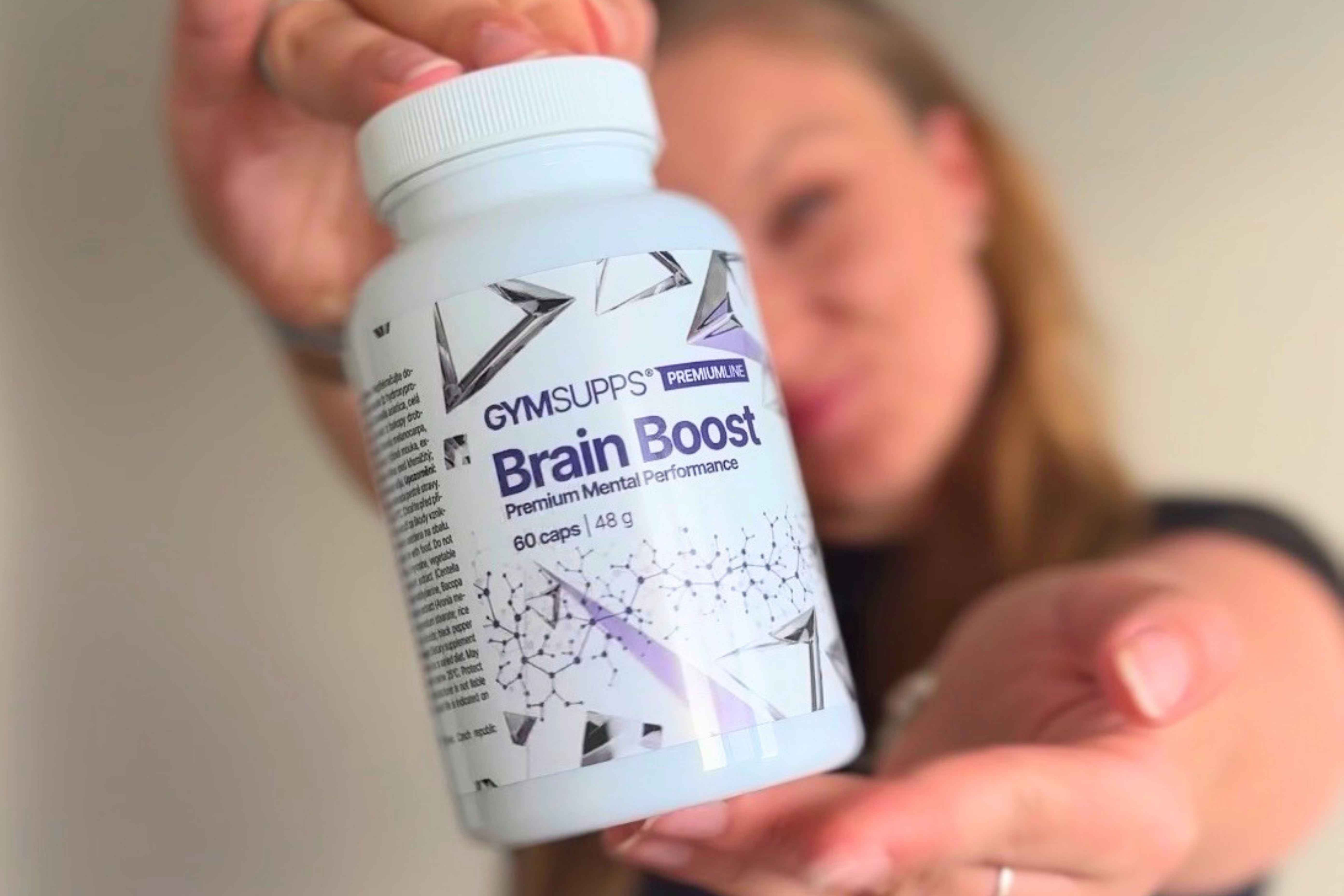
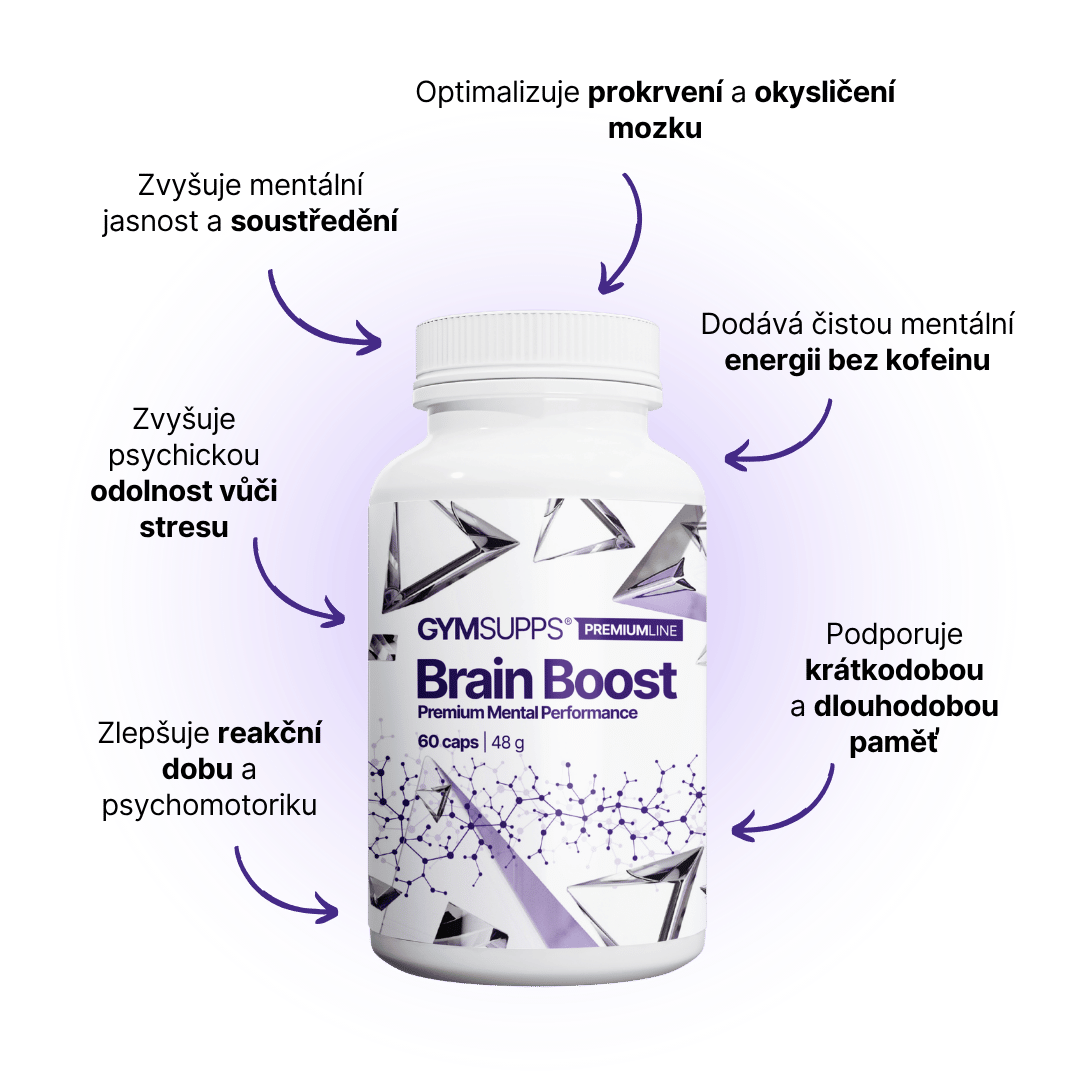
And that’s exactly why it makes sense to opt for a cleverly formulated complex. In a single capsule of a product like GymSupps Brain Boost, you’ll find exactly this scientifically backed blend—Citicoline with Bacopa for memory, L-tyrosine to combat exam stress, Ginkgo to improve blood flow, and Piperine, which ensures your body absorbs it 100% so you don’t waste your money.
Nootropics aren’t a magic pill from the movie *The Omnipotent* that will write your thesis for you overnight. But if you don’t want to study through tears this year and want to give your brain exactly the kind of fuel it’s missing, this is the best academic hack. Kick off this year with a clear head!
Recommended
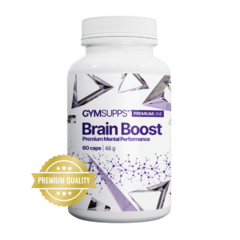
GymSupps Brain Boost
GymSupps Creatine HCL
Sources:
- 1) Citicoline for Supporting Memory in Aging Humans.
- 2) The Neurocognitive Effects of Bacopa monnieri.
- 3) Effects of a dietary supplement containing phosphatidylserine on cognitive function.
- 4) Impact of L-theanine and L-tyrosine on markers of stress and cognitive performance.
- 5) Centella asiatica Extract Improves Behavioral Deficits.
- 6) Clinical Improvement of Memory and Other Cognitive Functions by Ginkgo biloba
- 7) Long-term acetyl-L-carnitine treatment in Alzheimer’s disease.
- 8) The Effect of Long-Term Aronia melanocarpa Extract Supplementation on Cognitive Performance.
- 9) Piperine Prevents Scopolamine-Induced Cognitive Impairment Through Its Antioxidant and Anti-Inflammatory Effects
No posts have been made yet.