





The Secret Weapon Against High Blood Pressure—Why Is Simply “Sitting Against a Wall” More Effective Than Even Jogging?
 Author:
 Most of us associate fighting high blood pressure with having to put on sneakers and go for a long run, or spend hours on a stationary bike. Cardio is undoubtedly great for heart health, but science has recently revealed a surprising winner. It’s not some dynamic exercise that leaves you gasping for breath. It’s an exercise so unassuming that you’ll rarely see it on social media: the isometric wall sit.
A comprehensive analysis of 270 scientific studies confirmed that isometric exercises—that is, those in which you hold your muscles tense without moving — lower resting blood pressure nearly twice as much as traditional aerobic exercise or weightlifting.

How does the isometric magic work?
When you lean against a wall and lower yourself into a squat, your thigh muscles tense up tightly. This strong and sustained contraction compresses the blood vessels in that area. But the real health benefit happens the moment you release the contraction. Blood immediately rushes back into the relaxed blood vessels. If you repeat this process regularly, your blood vessels learn to relax and dilate more effectively. The result is a long-term and sustained decrease in resting blood pressure.
The Winning Protocol: 24 Minutes a Week
To get the most out of this discovery, you don’t need to spend hours exercising. Scientists have precisely described the protocol that yields the best results. It takes just 24 minutes a week.
Here are the exact steps:
- Exercise: Lean your back against a wall and lower yourself into a squat so that your thighs are parallel to the floor.
- Hold: Hold the position for 2 minutes.
- Rest: Stand up, shake out your legs, and rest for 2 minutes.
- Repetitions: Repeat the entire cycle (2 minutes of exercise, 2-minute break) four times in a row.
- Frequency: Perform this workout 3 days a week.

How do you get started if 2 minutes is too long?
Holding the correct angle for a full two minutes is challenging, and your thighs are sure to burn. If this amount of time seems unrealistic for you at first, there’s no reason to give up right away. Adjust the intensity:
- Shorten the time: Start by holding the position for 30 or 45 seconds instead of the full two minutes.
- Progressive intensity: Try to extend the time by 5 to 10 seconds each week until you reach your goal.
- Change the angle: If the position with your legs parallel to the floor is too difficult for you, lower yourself into a gentler half-squat. Gradually deepen the angle as your strength increases.
Wall sits may not be the most fun exercise in the world. But if you’re looking for maximum effectiveness and the best ratio of time invested to proven health benefits, you’ll be hard-pressed to find a better option.
It’s a beautiful theory, but what if your body won’t let you do it?
Scientific studies sound absolutely great, and the idea that leaning against a wall for a few minutes is enough to optimize your blood pressure is incredibly appealing. But theory is one thing, and the reality of everyday life can be unforgiving.
The moment you lower yourself into a squat for the first time and start counting the seconds, your thighs—which are suddenly on fire—and your protesting knees will make it crystal clear just how you’re really doing. Tensing your muscles to the max and holding a static hold requires not only strong willpower but, above all, a fully functional “frame.” If, after half a minute, your muscles start burning so much that you’re at risk of cramping, or if your worn-out tendons start to ache, you simply won’t be able to complete the entire routine. And as your frustration builds, you’ll likely give up on the exercise altogether.
For that “miraculous” effect of compressing and releasing the blood vessels to work at all, you can’t spend the whole time thinking only about the pain. The secret to success isn’t gritting your teeth, but smart preparation.
The absolute foundation for handling the pressure on your legs with ease and protecting your joints from wear and tear is high-quality collagen or a comprehensive joint supplement. These substances will “lubricate” your knees, provide the necessary flexibility to your tendons and cartilage, and give you stable support that won’t let you down during those challenging minutes.
And how can you support that crucial moment when you release the exercise and your blood vessels need to relax? Your absolute best ally will be a generous dose of magnesium (ideally in chelated form). It effectively delays muscle cramps and plays an absolutely critical role in vascular relaxation. If you add high-quality omega-3 fatty acids—which are the holy grail for heart health and maintaining normal blood pressure—you’ll create the perfect conditions for your body to recover.
Don’t let your efforts to improve your health be derailed by leg cramps or sore joints. Equip your body with the right nutrients, give it your all, and finally checkmate high blood pressure.
Recommended
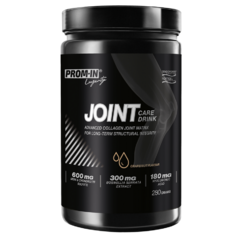
Prom-in Joint Care Drink
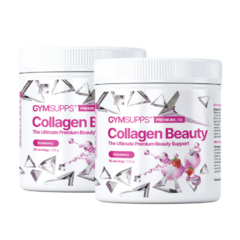
Collagen Beauty 120g 1+1
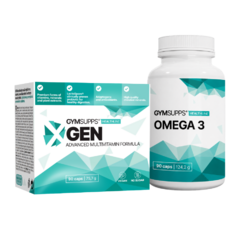
XGen 90cps + Omega 3 90cps
No posts have been made yet.








